
This Crockpot Minestrone Soup isn’t just about convenience; it’s about letting the slow cooker do the heavy lifting while you gather the little moments of peace in a busy day. There’s a certain joy in knowing that, after a few hours, you’ll come back to a pot bubbling with rich, savory aromas and a thick, hearty broth that feels like a warm hug.
What I love most is how forgiving it is—no need to chop everything perfectly or watch the clock constantly. You toss in your ingredients, set it, and forget it. The slow simmer develops deep flavors that are so much better than rushed stovetop versions, making it a perfect, no-fuss dish for those hectic days when comfort food is what you really need.
This recipe focuses on the art of slow-cooking comfort, transforming humble ingredients into a soulful, nourishing meal that gets better with time. It’s about embracing the chaos of a busy kitchen while still savoring a homemade, hearty soup that warms you from the inside out.
The story behind this recipe
- This soup came from a Sunday afternoon craving for something simple yet soulful. I was rummaging through my pantry, looking for a way to use up those last bits of vegetables that were just about to turn. The slow cooker seemed like a lazy hero, turning everyday leftovers into something comforting and filling.
- One chilly fall evening, I threw everything in, and by dinner, the house was filled with the kind of aroma that makes you forget about the cold. That moment of opening the lid and smelling that smoky tomato and herb scent became a little ritual for me. It’s a reminder that sometimes, the best meals come from just tossing things together and letting time do its magic.
- heading
- story_type
Ingredient breakdown: key components
- Carrots: I love how their natural sweetness deepens as they cook, releasing a warm, earthy aroma. If you prefer a milder flavor, peel and slice thinly for quicker softening.
- Canned tomatoes: The oozy, tangy base that ties everything together. For a richer, smoky note, try fire-roasted varieties—just watch the salt if you’re sensitive.
- Dried herbs: I rely on dried basil and oregano for that nostalgic, herbaceous punch. Crush them in your palms first to awaken their essential oils and boost flavor.
- Pasta or beans: I toss in small shells or cannellini beans for heartiness. If you’re gluten-free, swap pasta for rice or quinoa—still cozy, just different texture.
- Vegetable broth: The foundation that builds the soup’s soul. Use a good-quality store-bought or homemade broth; it makes a noticeable difference in richness and depth.
- Olive oil: I drizzle a splash at the start and finish for a vibrant, fruity note. If you prefer a milder taste, swap with a neutral oil but add a squeeze of lemon at the end.
- Spinach or kale: I add greens at the end for a pop of color and freshness. They wilt quickly, so don’t overdo it—just enough to wilt and brighten the broth.
Spotlight on key ingredients
Carrots & canned tomatoes:
- Carrots: I love how their natural sweetness deepens as they cook, releasing a warm, earthy aroma. If you prefer a milder flavor, peel and slice thinly for quicker softening.
- Canned tomatoes: The oozy, tangy base that ties everything together. For a richer, smoky note, try fire-roasted varieties—just watch the salt if you’re sensitive.
- Dried herbs: I rely on dried basil and oregano for that nostalgic, herbaceous punch. Crush them in your palms first to awaken their essential oils and boost flavor.
Notes for ingredient swaps
- Dairy-Free: Omit Parmesan or use nutritional yeast for a cheesy flavor without dairy, though it won’t melt like cheese.
- Vegetable Broth: Swap with chicken broth for a richer, meaty undertone, or use water plus extra herbs to boost flavor.
- Pasta: Replace with gluten-free options like rice or quinoa—still hearty but with a different, nutty texture.
- Canned Tomatoes: Use fresh, ripe tomatoes when in season; chop and cook down to concentrate their sweet, bright flavor.
- Beans: Swap cannellini for chickpeas or lentils; each brings a slightly different texture and earthy note to the soup.
- Greens: Kale can be replaced with spinach or Swiss chard; add greens later in cooking to keep bright color and texture.
- Olive Oil: Use avocado oil or neutral vegetable oil if you prefer a milder, less fruity finish—just add a squeeze of lemon for brightness.
Equipment & Tools
- Slow cooker: Main vessel for slow, even cooking and flavor melding.
- Sharp knife: Chop vegetables precisely and safely.
- Cutting board: Protect surfaces and provide a sturdy chopping area.
- Wooden spoon: Stir ingredients without scratching the crockpot.
- Ladle: Serve the soup easily and neatly.
Step-by-step guide to minestrone
- Gather your equipment: a large slow cooker, a sharp knife, a cutting board, a wooden spoon, and a ladle. The slow cooker is your main tool for slow, even cooking.
- Prep the vegetables: peel and dice 2 carrots, 2 celery stalks, and 1 onion into bite-sized pieces. This helps them soften evenly and meld into the broth.
- Lightly sauté aromatics: in a small skillet, heat 1 tbsp olive oil over medium heat. Add the onion, carrot, and celery. Cook until fragrant and slightly softened, about 5 minutes. This step boosts flavor but can be skipped for a dump-and-go version.
- Add ingredients to the slow cooker: transfer the sautéed aromatics to the crockpot. Pour in 1 can (28 oz) of crushed tomatoes, 4 cups vegetable broth, 1 tsp dried basil, 1 tsp dried oregano, and 1 bay leaf. Stir to combine.
- Toss in hearty additions: add 1 cup small pasta shells or chopped zucchini, 1 can (15 oz) cannellini beans, and 1 cup chopped kale or spinach. Stir gently to distribute evenly.
- Set to low: cover the crockpot and cook on low for 6-8 hours, or on high for about 4 hours. The aroma should start wafting through your kitchen after 2 hours, rich with herbs and tomato.
- Check the soup: after the cooking time, test a piece of carrot or pasta—should be tender but not mushy. If not, cook longer or raise the heat for 30 minutes.
- Adjust seasoning: taste and add salt, pepper, or a splash of lemon juice if needed. Remove the bay leaf before serving.
- Finish with freshness: drizzle with a bit of olive oil or sprinkle grated Parmesan on top. Serve hot, with crusty bread if you like.
- Rest briefly: let the soup sit for 5 minutes before ladling into bowls. This allows flavors to settle and makes serving easier.
Let the soup rest for 5 minutes after cooking. Finish with a drizzle of olive oil or a squeeze of lemon. Ladle into bowls and serve hot, garnished with grated cheese if desired.
How to Know It’s Done
- Vegetables are tender and fragrant after sautéing.
- Pasta or beans are cooked through, tender but not mushy.
- Broth has thickened slightly and developed rich flavor with herbs.
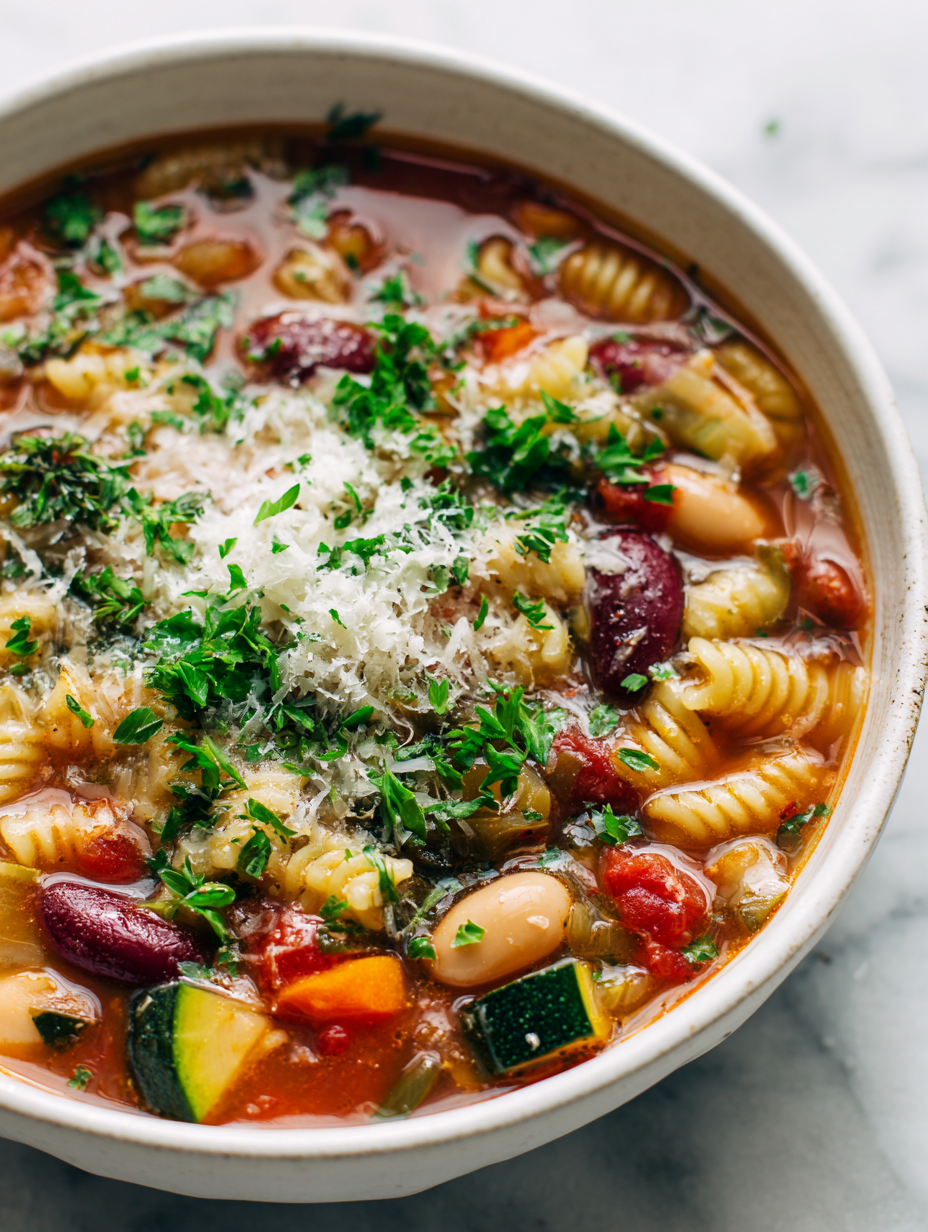
Crockpot Minestrone Soup
Ingredients
Equipment
Method
- Start by preparing your ingredients: peel and dice the carrots, chop the celery and onion into small, even pieces to help them soften uniformly.
- Heat a tablespoon of olive oil in a skillet over medium heat. Add the diced onion, carrots, and celery, and cook until fragrant and slightly softened, about 5 minutes. This step enhances their flavor with a gentle caramelization and aroma.
- Transfer the sautéed vegetables into your slow cooker. Pour in the crushed tomatoes and vegetable broth, then sprinkle in the crushed dried basil and oregano. Stir everything together to combine the flavors evenly.
- Add the small pasta shells (or chopped zucchini if you prefer a variation), rinsed cannellini beans, and chopped greens like kale or spinach. Gently stir to distribute all the ingredients throughout the broth.
- Cover the slow cooker and set it to low for 6 to 8 hours, or high for about 4 hours. During this time, the vegetables will become tender, and the flavors will meld into a hearty, savory broth filled with rich aromas.
- Once cooking is complete, check that the vegetables and pasta are tender. Remove the bay leaf, and season with salt and pepper to taste. For added brightness, squeeze fresh lemon juice over the soup just before serving.
- Finish by drizzling a little more olive oil over the top for a fruity aroma and silky texture. Ladle the hot minestrone into bowls, and serve with crusty bread for a complete, satisfying meal.
Pro tips for perfect minestrone
- Bolded mini-head: Sauté aromatics until fragrant and slightly caramelized for a richer base.
- Bolded mini-head: Use crushed dried herbs to release essential oils and maximize flavor impact.
- Bolded mini-head: Add greens at the end to retain vibrant color and fresh texture.
- Bolded mini-head: For a thicker soup, remove the lid and simmer for an extra 15 minutes to reduce.
- Bolded mini-head: When adding pasta, stir frequently in the first 10 minutes to prevent sticking.
- Bolded mini-head: Drizzle olive oil at the end for a fruity aroma and silky finish.
- Bolded mini-head: Use a ladle to serve, allowing you to pick up the hearty bits settled at the bottom.
Common mistakes and how to fix them
- FORGOT to check seasoning? Taste and adjust salt and herbs before serving.
- DUMPED too much liquid? Remove lid and simmer uncovered to thicken broth.
- OVER-TORCHED vegetables? Lower heat or add splash of water to prevent burning.
- MISSED the resting step? Let soup sit 5 minutes for flavors to settle and deepen.
Quick fixes and pantry swaps
- When soup is too thin, splash in a little tomato paste and simmer for 5 minutes.
- If flavor feels flat, patch with a squeeze of lemon or a splash of vinegar to brighten.
- Splash some hot broth into stubborn greens to wilt them faster and keep vibrant color.
- When vegetables are over-tender, do a quick rescue by blending part of the soup for a thicker texture.
- Pantry swap: use frozen mixed vegetables if fresh are unavailable—still hearty and colorful.
Prep, store, and reheat tips
- Chop vegetables a day ahead and store in an airtight container in the fridge; they’ll stay fresh for up to 24 hours and save time when cooking.
- You can prepare the entire soup up to 2 days in advance, refrigerate it in a sealed container, and reheat gently, watching for simmering and aroma revival.
- Store leftovers in an airtight container in the fridge for 3-4 days. The soup will develop deeper flavors overnight, with a richer, slightly melded taste.
- Reheat on the stove over medium-low heat, stirring occasionally. The soup’s aroma should brighten, and the broth will shimmer with flavor. Avoid boiling to prevent overcooking greens or pasta.
- For longer storage, freeze in portions for up to 3 months. Thaw overnight in the fridge, then reheat gently, ensuring the soup is steaming hot all the way through before serving.
Top questions about minestrone soup
1. Can I use store-bought broth?
Use a good-quality vegetable broth for a richer, more savory base. Store-bought works fine, but homemade adds depth.
2. Can I replace beans with pasta?
Yes, you can swap in cooked pasta or rice instead of beans for different textures. Add them later to avoid overcooking.
3. Can I add greens later?
Absolutely. Just add greens like kale or spinach in the last 10 minutes to keep their color and freshness.
4. How long should I cook it?
Cooking on low for 6-8 hours allows flavors to meld beautifully. Check tenderness after 4 hours on high.
5. My soup is too thin, what do I do?
If the soup is too watery, remove the lid and simmer for an extra 15-20 minutes to thicken.
6. Can I prepare this in advance?
You can make this soup ahead of time and refrigerate for up to 2 days. Flavors deepen overnight.
7. Can I freeze leftovers?
Yes, freeze leftovers in airtight containers for up to 3 months. Thaw in the fridge before reheating gently.
8. How can I enhance the flavor after cooking?
Adding a splash of lemon juice or vinegar at the end brightens the flavors and adds freshness.
9. Vegetables are mushy, what now?
If vegetables are overcooked, blend part of the soup to restore a hearty, thick texture.
10. Any serving tips?
Use a ladle to serve; it helps scoop up the hearty bits settled at the bottom of the pot.
This soup isn’t just about filling bellies; it’s about those cozy moments when the house smells like herbs and roasted tomatoes. It’s a simple pleasure that feels grounding, especially on chilly days when you want something nourishing and honest.
Once you get the hang of it, it’s easy to tweak with what’s in your pantry or fridge. Making it ahead and reheating keeps the flavors deep and comforting, perfect for busy nights or lazy weekends. Sometimes, all you need is a warm bowl and a quiet moment to appreciate how good a humble soup can be.

Hi, I’m Isabella Cury, the creator behind Elevating Simple. Food has always been my passion, but it’s not just about creating meals—it’s about taking everyday ingredients and transforming them into something extraordinary.
My journey in the culinary world has been a blend of education, dedication, and a deep love for sharing food with others. Through this blog, I aim to inspire people to find joy in simple, flavorful cooking.


