
This crockpot vegetable stew isn’t just about the end result, it’s about the slow, mindful process of letting flavors meld and deepen over hours. It becomes a quiet ritual—chopping, setting, forgetting—where patience rewards you with a bowl of rich, comforting warmth. It’s a way to slow down and appreciate the natural sweetness of seasonal produce, gently coaxed into perfection.
There’s something meditative about stirring a pot filled with vibrant chunks of carrots, peppers, and tomatoes, knowing that in a few hours, those raw edges will soften into tender, flavorful bites. The slow cooker turns simple vegetables into something more than just a meal—it’s a mindful pause, a cozy moment that blooms quietly in the background of busy days. It’s honest, unpolished, and deeply satisfying in its understated way.
Focusing on the meditative process of slow-cooking vegetables, this recipe turns a simple stew into a mindful, cozy ritual that highlights the beauty of patience and the natural sweetness of seasonal produce.
The story behind this recipe
I first stumbled upon this vegetable stew during a hectic week when I needed something nourishing but effortless. It was late autumn, and the kitchen smelled of roasted roots and fresh herbs, filling the house with a comforting aroma. That day, I realized how a slow cooker can turn simple vegetables into a soulful meal without much fuss, just patience and a little planning. Since then, it’s become my go-to for busy days and cozy weekends alike.
Ingredient breakdown: key components
- Carrots: I love how the natural sweetness intensifies as they cook, becoming tender and juicy—try adding a pinch of fresh thyme for a fragrant boost.
- Tomatoes: They bring a bright, tangy base that mellows into a rich, smoky flavor after hours—consider using fire-roasted for added depth.
- Bell Peppers: Their vibrant crunch gives a fresh pop, but if you prefer softer stew, add them in the last hour to prevent overcooking.
- Onions: They dissolve into a sweet, savory base that ties everything together—use yellow for sweetness, or red for color and a mild bite.
- Vegetable Stock: I opt for homemade or high-quality store-bought—nothing beats that umami punch, but water works in a pinch if you need a lighter stew.
- Herbs & Seasonings: Fresh thyme, bay leaves, and a dash of smoked paprika create a layered aroma—feel free to swap with dried herbs if fresh isn’t available.
- Olive Oil: A splash at the start adds richness and helps soften the veggies—skip it for a lighter version, but your stew might miss that velvety texture.
Spotlight on key ingredients
Carrots:
- I love how their natural sweetness intensifies as they cook, becoming tender and juicy—try adding a pinch of fresh thyme for a fragrant boost.
- Tomatoes: They bring a bright, tangy base that mellows into a rich, smoky flavor after hours—consider using fire-roasted for added depth.
- Bell Peppers: Their vibrant crunch gives a fresh pop, but if you prefer softer stew, add them in the last hour to prevent overcooking.
Tomatoes:
- They bring a bright, tangy base that mellows into a rich, smoky flavor after hours—consider using fire-roasted for added depth.
- Bell Peppers: Their vibrant crunch gives a fresh pop, but if you prefer softer stew, add them in the last hour to prevent overcooking.
Notes for ingredient swaps
- Broth: Chicken or beef stock can replace vegetable broth for a richer, meaty depth—just watch the salt levels.
- Vegetables: Frozen mixed vegetables work well if fresh aren’t available; they’ll cook faster but still add color and texture.
- Tomatoes: Canned diced tomatoes are a reliable substitute for fresh, especially in winter—look for fire-roasted for smoky flavor.
- Herbs: Dried thyme or oregano can stand in for fresh—use about a third of the fresh amount to avoid overpowering.
- Oil: Coconut oil adds a subtle sweetness and richness, swapping out olive oil—be mindful of its distinct aroma.
- Add-ins: For a protein boost, toss in canned chickpeas or lentils—ready in minutes and keep the stew hearty.
- Spices: Smoked paprika can be replaced with sweet paprika for milder flavor—adjust to taste for that smoky punch.
Equipment & Tools
- Slow cooker: Main cooking vessel for slow simmering
- Large skillet: Sauté vegetables and build flavor
- Chopping board: Prepare vegetables and herbs
- Sharp knife: Chop vegetables and herbs
- Measuring cups and spoons: Ensure accurate seasoning and liquid amounts
Guide to Making Vegetable Stew
- Gather all your ingredients: chopping board, sharp knife, and measuring cups. Chop carrots and bell peppers into bite-sized pieces, about 1-inch chunks. Dice onions finely. Have your vegetable stock ready—homemade or store-bought, just warm it up so it’s ready to pour in.
- Prepare your slow cooker. Set it to low heat, around 90°C (194°F). In a large skillet over medium heat, warm a tablespoon of olive oil. Add onions, cook until translucent, about 5 minutes, releasing a sweet aroma. Stir in carrots and peppers, cook for another 2-3 minutes until just starting to soften and smell fragrant.
- Transfer the sautéed veggies into the slow cooker. Pour in the warmed vegetable stock. Add in chopped tomatoes, bay leaves, a pinch of smoked paprika, and a sprig of thyme. Stir everything gently to combine. Cover with the lid.
- Cook on low for 6-8 hours. The house will fill with a rich, simmering vegetable scent. Check once or twice to ensure the stew is bubbling gently. If it starts to look dry, add a splash of water or more stock.
- Halfway through, taste and adjust seasoning—salt, pepper, maybe a little more thyme. If you want softer peppers, add them in the last hour. The stew is ready when vegetables are tender, and flavors meld: the carrots should be soft but not mushy, and the broth fragrant and slightly thickened.
- Once cooked, turn off the slow cooker. Let it rest for 10 minutes so flavors settle. Remove bay leaves and thyme sprigs. Ladle into bowls, and sprinkle with fresh herbs if desired.
- Serve hot with crusty bread or over cooked grains. The stew should have a vibrant, hearty aroma, with tender vegetables that melt on the tongue and a broth that’s deeply flavorful and smoky.
Once cooked, turn off the slow cooker and let the stew rest for 10 minutes. Remove bay leaves and thyme sprigs. Serve hot, garnished with fresh herbs if desired, alongside crusty bread or grains for a filling meal.
How to Know It’s Done
- Vegetables are tender but not mushy, with a vibrant, fresh appearance.
- Broth is fragrant and slightly thickened, with a smoky, umami aroma.
- Stew reaches a gentle simmer—small bubbles break the surface without vigorous boiling.
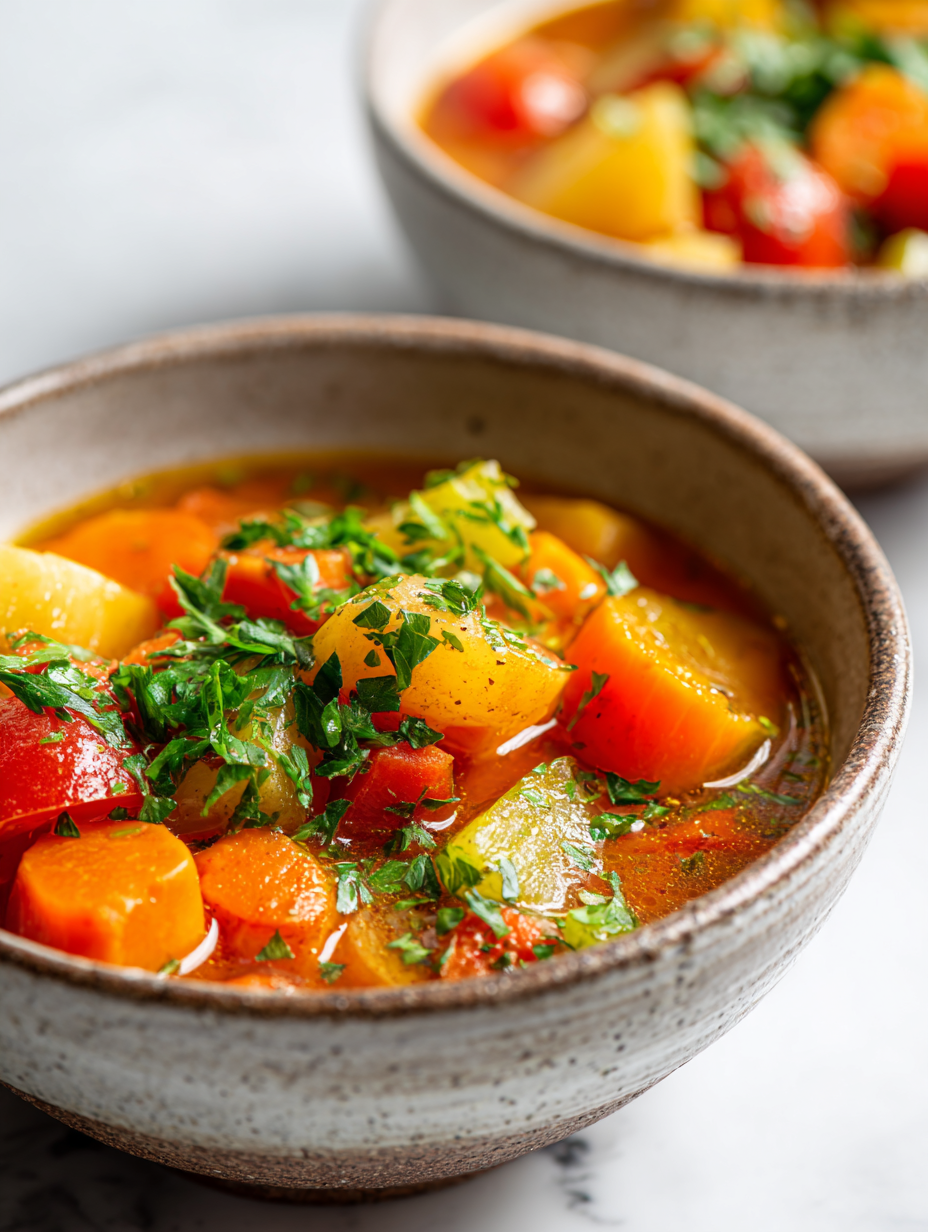
Crockpot Vegetable Stew
Ingredients
Equipment
Method
- Begin by chopping the carrots into 1-inch chunks, dicing the bell peppers and onions, and setting all aside. Prepare your vegetable stock, warming it slightly for easier pouring.
- Heat a large skillet over medium heat and add a tablespoon of olive oil. Once shimmering, add the diced onions and sauté until they become translucent and fragrant, about 5 minutes. The onions will release a sweet aroma as they soften.
- Add the carrots and bell peppers to the skillet, stirring for another 2-3 minutes. This quick sauté helps develop deeper flavor and slightly starts softening the vegetables. The mixture will smell fragrant and look vibrant with bright colors.
- Transfer the sautéed vegetables into the slow cooker. Pour in the warm vegetable stock, then add the diced tomatoes, thyme, bay leaf, smoked paprika, and a pinch of salt and pepper. Gently stir everything together to combine.
- Cover the slow cooker with its lid and set it to low. Let the stew simmer gently for 6-8 hours. As it cooks, the vegetables will soften and the broth will deepen in flavor, filling your home with warm, savory aromas.
- About halfway through, check the stew and give it a gentle stir. Taste and adjust the seasoning with more salt and pepper if needed. If you want softer peppers, add them in the last hour of cooking.
- Once the vegetables are tender and the flavors meld into a rich broth, turn off the slow cooker. Remove the bay leaf and thyme sprigs. Let the stew rest for a few minutes to allow flavors to settle and deepen.
- Serve the vegetable stew hot, garnished with fresh herbs if desired, alongside crusty bread or grains. The vibrant, tender vegetables and fragrant broth make for a cozy, satisfying meal that invites slow, mindful enjoyment.
Pro tips for vegetable stew
- Bolded mini-head: Sear vegetables briefly before slow cooking to develop deeper flavor and caramelization.
- Bolded mini-head: Layer in hearty root vegetables first—these take longer to soften and benefit from extended cooking.
- Bolded mini-head: Use a splash of vinegar or lemon juice at the end—brightens flavors and balances the richness.
- Bolded mini-head: Keep the lid slightly ajar during the last 30 minutes—helps thicken the stew naturally.
- Bolded mini-head: Add fresh herbs at the end of cooking—preserves their vibrant aroma and flavor.
- Bolded mini-head: If stew is too thick, stir in a bit more warm broth—avoids breaking down the vegetables further.
- Bolded mini-head: For extra smoky depth, sprinkle a pinch of smoked paprika just before serving—adds a subtle shimmer of flavor.
Common mistakes and how to fix them
- FORGOT to brown vegetables first → Skip sautéing, will lack depth and sweetness.
- DUMPED too much liquid → Keep an eye on broth levels; reduce or thicken as needed.
- OVER-TORCHED the stew → Use low heat after initial simmer to prevent burning or scorching.
- UNDERESTIMATED cooking time → Stew benefits from longer slow cooking for tender, melding flavors.
Quick fixes and pantry swaps
- When stew tastes flat → Splash vinegar or lemon juice to brighten flavors.
- If veggies are undercooked → Patch with extra cooking time and gentle heat.
- Splash overcooked or mushy veggies → Shield with a quick stir, add fresh herbs to revive texture.
- When stew is too thick → Rescue with a splash of warm broth or water, stir gently.
- Dumped too much salt → Swap with a potato or a splash of cream to mellow saltiness.
Prep, store, and reheat tips
- Chop vegetables a day in advance; store in airtight containers in the fridge for up to 24 hours, keeping them crisp and fresh.
- Prepare and warm the broth ahead; it flavors the stew better and reduces overall cook time, with a fragrant, savory aroma ready to pour.
- The stew can be cooked and stored in the fridge for 3-4 days, with flavors mellowing and intensifying overnight, making it even more comforting.
- Reheat gently on the stove over low heat, stirring occasionally; expect a bubbling, fragrant stew with tender vegetables and vibrant aroma, ready in about 10 minutes.
Top questions about Crockpot Vegetable Stew
1. Which vegetables are best for slow-cooking?
Use sturdy vegetables like carrots, potatoes, and squash that hold up well over long cooking. Softer veggies like zucchini can turn to mush if added too early.
2. Should I remove the lid while cooking?
Keep the lid on during cooking to retain moisture. If it gets too thick, stir in a splash of water or broth to loosen it up.
3. When should I add herbs?
Add delicate herbs like parsley or basil in the last 10 minutes to preserve their fresh aroma. Hardier herbs like thyme or rosemary can go in earlier.
4. How can I enhance the flavor?
A pinch of smoked paprika adds a smoky depth, while a squeeze of lemon brightens the broth unexpectedly. Adjust to your taste.
5. How do I thicken the stew?
If the stew is too watery, remove the lid in the last 30 minutes to help it thicken. Or stir in a cornstarch slurry.
6. Can I make this in advance?
This stew can be prepped a day ahead. Keep it in the fridge for up to 24 hours, then reheat gently until steaming hot.
7. Can I use frozen vegetables?
Frozen vegetables work well, but they tend to cook faster. Adjust the cooking time accordingly and check for tenderness.
8. What if the stew tastes bland?
If you forget to add salt, stir in a little soy sauce or miso paste near the end for instant umami boost.
9. Can I use water instead of broth?
Use a meat or vegetable broth for a richer flavor. Water works, but the broth adds depth and a savory aroma.
10. How do I add a final flavor boost?
Stir in a splash of vinegar or lemon juice just before serving to brighten the flavors and add a fresh note.
This vegetable stew is more than just a cozy meal; it’s a reminder that patience in the kitchen often rewards you with the purest flavors. The slow cooker makes it effortless to create something nourishing and deeply satisfying, especially when the house smells of roasted vegetables and herbs. It’s a simple ritual that grounds you, even on the busiest days.
In the end, it’s these uncomplicated, hearty dishes that bring comfort and a quiet sense of achievement. Whether served with crusty bread or over grains, the stew’s tender vegetables and smoky broth linger in your memory long after the last spoonful. It’s a humble reminder that good, honest food can be both easy and soul-warming.

Hi, I’m Isabella Cury, the creator behind Elevating Simple. Food has always been my passion, but it’s not just about creating meals—it’s about taking everyday ingredients and transforming them into something extraordinary.
My journey in the culinary world has been a blend of education, dedication, and a deep love for sharing food with others. Through this blog, I aim to inspire people to find joy in simple, flavorful cooking.


