
This lemon butter asparagus pasta isn’t just about quick comfort; it’s about unlocking a surprisingly sophisticated flavor combo with minimal fuss. The lemon’s brightness cuts through the richness of butter, creating a lively, balanced sauce that makes humble ingredients feel special. It’s the kind of dish I turn to when I want something fresh but also crave that cozy, creamy finish.
What I love most is how the lemon butter elevates every bite—bright, slightly tangy, with a silky richness that coats the pasta and tender asparagus. It’s a reminder that simple ingredients, when combined thoughtfully, can surprise you with depth and complexity. Plus, it’s perfect for those busy nights when you need something fast but don’t want to compromise on flavor.
Focusing on the surprisingly complex flavor balance that lemon butter adds to this simple dish, elevating humble asparagus and pasta into something bright, rich, and unexpectedly sophisticated.
The story behind this recipe
This dish came about after a particularly chaotic week when I needed something quick but wanted it to feel special. I remember the first time I added lemon butter to asparagus and pasta—how the tangy brightness tied everything together and lifted the dish from ordinary to memorable. It’s one of those recipes I keep coming back to, especially when I crave a balance of comfort and freshness that’s hard to find in takeout or pre-made meals. The simplicity hides a secret: a little zest, a silky butter, and tender asparagus can turn into something surprisingly refined.
Key ingredients at a glance
- Lemon: I squeeze fresh lemon juice until it’s bright and zesty, then add a touch of zest for extra punch. You can dial it back if citrus isn’t your thing, but a good squeeze really wakes up the dish.
- Butter: I use unsalted, high-quality butter for that rich, silky feel. If you want a lighter version, a splash of olive oil works, but it won’t have that lush melt-in-your-mouth quality.
- Asparagus: I prefer thin spears for even cooking and a tender bite. Roast or blanch until just tender—too soft and it loses its snap, too firm and it feels raw.
- Pasta: I go for spaghetti or linguine—something that coils around the sauce nicely. Cook until al dente, then toss immediately to keep the pasta from sticking together.
- Garlic: I love a generous few cloves, minced finely so they melt into the butter. Be careful not to burn it—just a faint golden hue is perfect, then add the lemon for a fragrant burst.
- Olive Oil: A dash of good extra virgin olive oil at the end adds a fruity note. Skip it if you prefer a more buttery flavor, but I find it rounds out the sauce beautifully.
- Seasoning: I keep it simple with salt and freshly cracked black pepper, tasting as I go. A pinch of red pepper flakes can add a subtle kick if you like a bit of heat.
Spotlight on key ingredients
Lemon:
- I squeeze fresh lemon juice until it’s bright and zesty, then add a touch of zest for extra punch. You can dial it back if citrus isn’t your thing, but a good squeeze really wakes up the dish.
- Butter: I use unsalted, high-quality butter for that rich, silky feel. If you want a lighter version, a splash of olive oil works, but it won’t have that lush melt-in-your-mouth quality.
Asparagus:
- I prefer thin spears for even cooking and a tender bite. Roast or blanch until just tender—too soft and it loses its snap, too firm and it feels raw.
- Pasta: I go for spaghetti or linguine—something that coils around the sauce nicely. Cook until al dente, then toss immediately to keep the pasta from sticking together.
Notes for ingredient swaps
- Dairy-Free: Swap butter for coconut oil or a neutral oil blended with a splash of plant-based milk. It won’t be as rich but still adds moisture.
- Gluten-Free: Use gluten-free pasta made from rice, corn, or chickpeas. Keep in mind, texture differs and might be a bit softer.
- Vegan: Replace butter with vegan margarine or olive oil. Lemon brightness remains, but the silky richness is slightly different.
- Herb Variations: Fresh basil or parsley can replace chives or thyme. They add freshness but change the flavor profile.
- Lemon: Use bottled lemon juice if fresh isn’t available, but the flavor will be less vibrant and more tart. Fresh zest is best for brightness.
- Asparagus: Green beans or zucchini can substitute for asparagus. They cook faster and have a different snap and flavor.
- Oil Choice: Extra virgin olive oil adds fruity notes, but a neutral oil like avocado oil can keep the focus on lemon and butter without competing.
Equipment & Tools
- Large deep skillet: For sautéing asparagus and mixing the sauce.
- Large pot: To boil pasta efficiently.
- Tongs: To handle asparagus and toss pasta.
- Zester or microplane: To extract lemon zest for bright flavor.
- Measuring cup: To measure lemon juice and other liquids accurately.
- Sharp knife: For trimming and preparing asparagus and garlic.
Step-by-step guide to lemon butter asparagus pasta
- Equipment & Tools: Use a large, deep skillet for sautéing; tongs for handling asparagus; a large pot for boiling pasta; a zester or microplane for lemon zest; a measuring cup for liquids; and a sharp knife for prep.
- Fill the large pot with water, add a generous pinch of salt, and bring to a rolling boil (about 100°C / 212°F).
- While the water heats, trim the woody ends off the asparagus, then halve or quarter thicker spears for even cooking.
- Add pasta to boiling water, stirring occasionally. Cook until al dente—about 8 minutes—then drain, reserving a cup of pasta water.
- Meanwhile, heat the skillet over medium heat (about 160°C / 320°F). Add a tablespoon of butter and a splash of olive oil. Let it melt and shimmer.
- Toss in the asparagus, sauté for about 3-4 minutes, until tender but still bright green. They should emit a slight sizzle and smell grassy.
- Push asparagus to one side of the pan. In the cleared space, add another tablespoon of butter, minced garlic, and cook for 30 seconds until fragrant and slightly golden.
- Pour in the lemon juice (about 2 tablespoons) and lemon zest (1 teaspoon). Cook for another 30 seconds, stirring constantly, until bright and aromatic.
- Add the drained pasta to the skillet, tossing to coat in the lemon butter. If the sauce seems thick, splash in reserved pasta water a tablespoon at a time until silky.
- Taste and adjust seasoning with salt, pepper, or more lemon juice if desired. The sauce should be shiny, tangy, and cling to the pasta.
- Finish with a final pat of butter or a drizzle of olive oil for sheen. Remove from heat once everything is well coated and fragrant.
- Rest the pasta for 1-2 minutes, allowing flavors to meld. Serve immediately, garnished with a little extra lemon zest or herbs if you like.
Serve immediately while warm, topped with extra lemon zest or herbs if desired. No need to rest; just plate and enjoy the bright, buttery harmony.
How to Know It’s Done
- Pasta is al dente, with a slight bite when tested.
- Asparagus is tender but still vibrant green, with a slight snap.
- Lemon butter sauce is silky, bright, and coats the pasta without pooling.
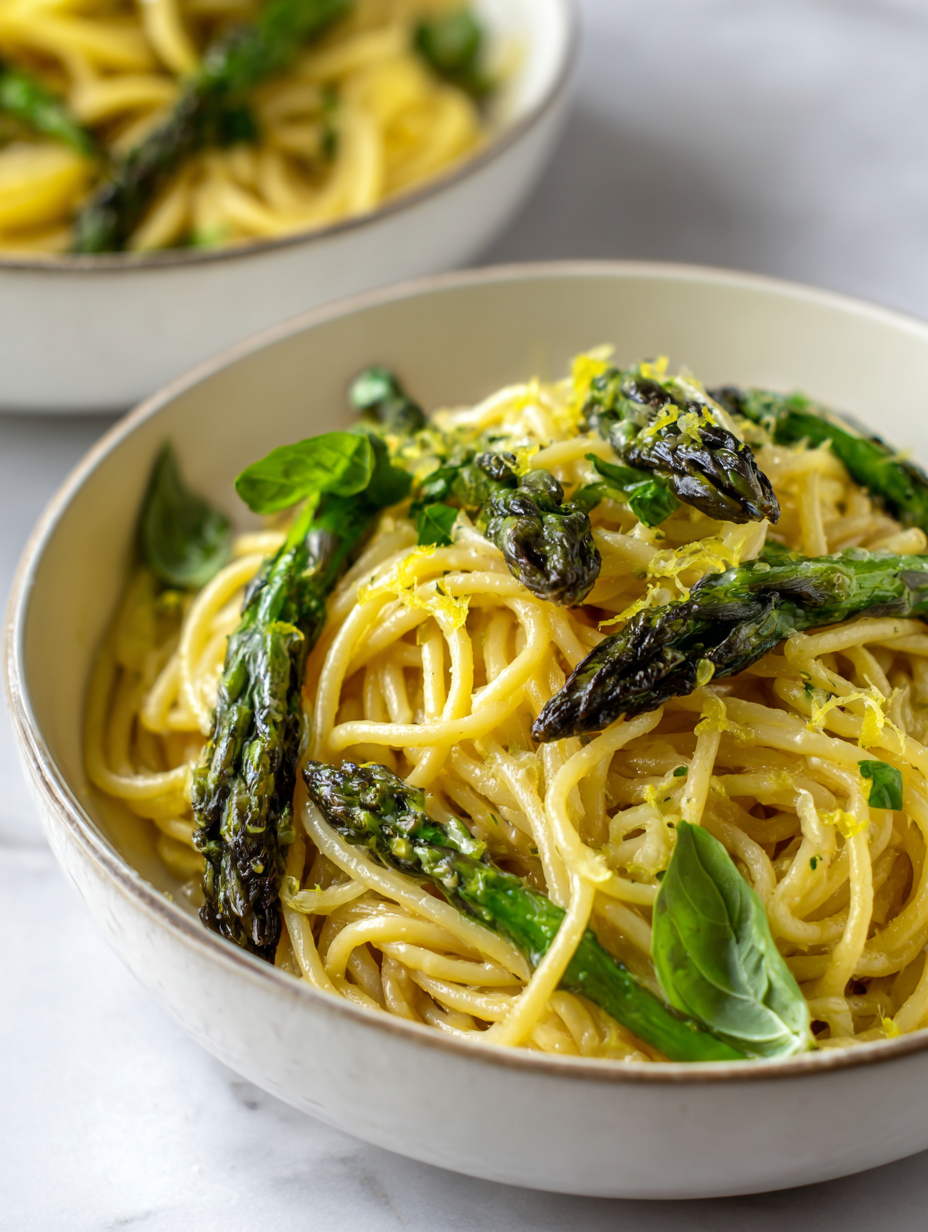
Lemon Butter Asparagus Pasta
Ingredients
Equipment
Method
- Bring a large pot of salted water to a rolling boil, then add the pasta. Cook until just al dente, about 8 minutes, stirring occasionally. Drain, reserving a cup of pasta water, and set aside.
- While the pasta cooks, trim the woody ends off the asparagus and cut the spears into halves or thirds for even cooking.
- Heat a large deep skillet over medium heat, then add the butter and olive oil. Let them melt together until shimmering and fragrant, about 1 minute.
- Add the trimmed asparagus to the skillet and sauté for 3-4 minutes, stirring occasionally, until they turn bright green and become tender but still crisp. You should hear a gentle sizzle and smell fresh grassy aroma.
- Push the asparagus to one side of the pan, then add the minced garlic to the cleared space. Cook for 30 seconds, stirring constantly, until the garlic is just golden and fragrant.
- Pour in the fresh lemon juice and sprinkle the lemon zest into the skillet. Stir everything together and cook for another 30 seconds, allowing the flavors to meld and brighten the butter sauce.
- Add the drained pasta directly into the skillet with the asparagus and lemon butter. Toss everything together gently using tongs, coating the pasta evenly with the sauce. If the mixture seems too thick, splash in a little reserved pasta water, a tablespoon at a time, until it becomes silky and glossy.
- Season with salt and freshly cracked black pepper to taste. Taste and adjust lemon or seasoning as desired, aiming for a vibrant, balanced flavor.
- Finish by adding a small pat of butter or a splash of olive oil for extra shine and richness. Give everything one last toss to incorporate.
- Serve immediately, garnished with additional lemon zest or herbs if desired, and enjoy the bright, buttery flavors and tender asparagus in every bite.
Pro tips for perfect lemon butter asparagus pasta
- Use a microplane to zest lemon finely—brightens the dish with a burst of citrus aroma.
- Sauté asparagus until just tender—snap and vibrancy fade if overcooked, so keep an eye on color and scent.
- Add pasta water gradually—starch helps create a silky sauce that clings perfectly without becoming greasy.
- Finish with a quick toss over low heat—preserves the gloss and ensures the lemon butter coats evenly.
- Use fresh lemon juice and zest—frozen or bottled won’t deliver the same zing or brightness.
- Keep garlic from burning—cook over medium heat just until fragrant, not browned, to avoid bitterness.
- Rest pasta for 1-2 minutes after tossing—allows flavors to meld and sauce to thicken slightly before serving.
Common mistakes and how to fix them
- FORGOT to taste and adjust lemon before serving → Fix with a squeeze of fresh lemon at the end.
- DUMPED too much pasta water into the sauce → Use reserved water sparingly to reach desired creaminess.
- OVER-TORCHED the garlic → Cook over medium heat just until fragrant, avoid browning too much.
- SEIZED the butter and lemon mixture → Remove from heat if it bubbles too vigorously, then stir slowly.
Quick kitchen fixes
- If sauce is too thick, splash in warm pasta water to loosen and shimmer.
- When lemon butter separates, gently warm and stir to unify the sauce again.
- Splash extra lemon juice if the dish feels dull or lacks brightness.
- Patch overcooked asparagus by quickly blanching in ice water to stop cooking.
- Shield burnt garlic by removing from heat immediately and starting fresh with new garlic.
Prep, store, and reheat tips
- Prep the lemon zest and juice, and blanch or roast the asparagus ahead—store in airtight containers in the fridge for up to 2 days. Bright citrus and tender asparagus keep their flavor and texture well.
- Cook the pasta until just al dente, then toss with a little olive oil to prevent sticking. Store in a sealed container in the fridge for up to 1 day; reheated pasta tends to clump but still tastes good.
- Make the lemon butter sauce in advance and refrigerate in a jar or bowl for up to 24 hours. Reheat gently over low heat, stirring until silky and warm—watch for separation.
- Reheat leftovers slowly in a skillet or microwave, adding a splash of reserved pasta water or lemon juice to refresh the sauce. Expect the flavors to mellow slightly but still bright and lemony.
- For best sensory results, reheat until piping hot and the sauce shimmers anew. The lemon brightness and buttery richness should revive with a gentle stir, not boil or overheat.
FAQs about Lemon Butter Asparagus Pasta
1. Can I use bottled lemon juice?
Use fresh lemon juice and zest for the brightest flavor. Bottled lemon works in a pinch but won’t be as vibrant.
2. Can I make this vegan?
Absolutely, you can swap the butter for olive oil or a plant-based margarine. It changes the richness but keeps the dish light.
3. How long should I cook the pasta?
Cook the pasta until just al dente, about 8 minutes. Overcooking will make it mushy and less flavorful.
4. How do I know when asparagus is perfectly cooked?
Blanch or roast the asparagus until tender but still bright green and slightly crisp. Overcooked asparagus loses its snap.
5. Why reserve pasta water?
Reserve some pasta water before draining. Use it to loosen the sauce if it becomes too thick or sticky.
6. When should I add lemon juice?
Add the lemon juice and zest at the end of cooking to keep their bright, fresh flavor from fading.
7. How do I fix a bland dish?
Adjust seasoning with salt, pepper, and more lemon if needed. Taste as you go to balance the buttery richness and acidity.
8. What heat should I cook the garlic at?
Use a gentle heat to melt butter and cook garlic, about medium (160°C/320°F). Avoid high heat to prevent burning.
9. How do I reheat this dish without losing flavor?
Reheat leftovers slowly over low heat, adding a splash of lemon juice or water to revive the sauce’s shine and brightness.
10. Can I use other vegetables instead of asparagus?
Yes, you can substitute green beans or zucchini for asparagus. They cook faster and have different textures and flavors.
This dish is a reminder that simple ingredients, when balanced carefully, can surprise with their subtle complexity. The bright lemon and silky butter contrast beautifully with the tender asparagus, making each bite lively yet comforting.
In a world of busy nights and quick fixes, this pasta offers a moment of clarity—fresh, flavorful, and deeply satisfying. It’s one of those recipes I keep coming back to, especially when I need a gentle reminder that good food doesn’t have to be complicated.

Hi, I’m Isabella Cury, the creator behind Elevating Simple. Food has always been my passion, but it’s not just about creating meals—it’s about taking everyday ingredients and transforming them into something extraordinary.
My journey in the culinary world has been a blend of education, dedication, and a deep love for sharing food with others. Through this blog, I aim to inspire people to find joy in simple, flavorful cooking.


