
This creamy asparagus risotto with Parmesan is more than just a comforting dish; it’s a quiet celebration of simple, seasonal ingredients. I love how the natural sweetness of asparagus balances the richness of the cheese, creating a harmony that’s both subtle and satisfying. It’s a meal that invites patience, rewarding you with a velvety texture and bright, fresh flavors in every bite.
Cooking this dish is like a gentle meditation—waiting for each grain of rice to absorb the broth, releasing its starchy creaminess slowly. The aroma of simmering stock with fresh asparagus hints at spring, even on the dullest days. It’s a reminder that good food often comes from a mindful approach, respecting each ingredient’s time to shine.
Focusing on the overlooked art of balancing the natural sweetness of asparagus with the richness of Parmesan, this risotto becomes a lesson in patience and flavor harmony, highlighting the subtle transformation of humble ingredients into something truly comforting.
The story behind this recipe
- This recipe was born out of a summer I spent chasing fresh asparagus at the market, eager to capture that fleeting peak of season. I wanted a dish that highlighted the vegetable’s tender sweetness without overpowering it with too much cream or butter. It’s a simple, honest risotto that lets the ingredients speak for themselves, with just enough Parmesan to tie everything together.
- One evening, I was rushing home after a long day, craving comfort but also freshness. Stirring the rice slowly while the aroma of asparagus and toasty Parmesan filled my tiny kitchen felt like a small victory. That quiet moment of patience—waiting for the creaminess to develop—reminded me how good things take time and care.
- story_type
Component notes for creamy asparagus risotto
- Asparagus: I love how the tender spears release a sweet, earthy aroma as they cook. If you prefer a more intense flavor, roast them beforehand for a smoky note.
- Arborio rice: Its starchy core gives risotto its creamy texture. Don’t rinse it — that starchy coating is what makes it luscious.
- Parmesan: I use freshly grated Parmesan for the best melt and flavor. For a nutty twist, try aged Pecorino Romano, but keep the salt in check.
- Vegetable broth: I prefer homemade or low-sodium broth to control the salt. For a richer flavor, add a splash of dry white wine during the cooking.
- Butter & olive oil: I start with a mix for depth. If you want a lighter version, cut back on the butter, but don’t skip the oil—it keeps everything glossy.
- Garlic & shallots: The sauté is key—cook until translucent and fragrant, about 2 minutes. If they brown too quickly, turn down the heat to avoid bitterness.
- Lemon zest (optional): A tiny bit brightens the dish, balancing the richness. Skip if you want a more traditional, mellow flavor.
Spotlight on key ingredients
Asparagus:
- I love how the tender spears release a sweet, earthy aroma as they cook. If you prefer a more intense flavor, roast them beforehand for a smoky note.
- Arborio rice: Its starchy core gives risotto its creamy texture. Don’t rinse it — that starchy coating is what makes it luscious.
- Parmesan: I use freshly grated Parmesan for the best melt and flavor. For a nutty twist, try aged Pecorino Romano, but keep the salt in check.
Parmesan:
- Freshly grated melts smoothly and infuses every bite with a sharp, salty richness. Aged Parmesan adds a deeper, nuttier flavor that really elevates the dish.
- ingredient
Notes for ingredient swaps
- Dairy-Free: Swap Parmesan for a nutty nutritional yeast. The flavor is different—less sharp, more umami, but still satisfying.
- Vegan: Use a plant-based cheese or cashew-based Parmesan. It melts well enough but lacks the same sharpness.
- Gluten-Free: Ensure your broth and any added thickeners are gluten-free. Most broths are naturally GF, but check labels.
- Vegetarian: The standard recipe is already vegetarian; just confirm broth ingredients if store-bought. No meat-based stocks needed.
- Low-Sodium: Use unsalted broth and skip added salt until final tasting. The Parmesan is salty enough for most palates.
- Extra Creaminess: Add a splash of coconut cream or full-fat canned coconut milk near the end for a subtle sweetness and rich texture.
- Herb Variations: Toss in fresh thyme or basil instead of lemon zest for different aromatic profiles. Fresh herbs brighten the dish.
Equipment & Tools
- Large skillet or wide saucepan: To cook the risotto evenly with enough space for stirring.
- Wooden spoon: For gentle stirring without damaging the rice.
- Ladle: To add broth in controlled, small amounts.
- Grater: To freshly grate Parmesan for optimal flavor and melt.
- Small pot: To keep the warm broth on low simmer.
Step-by-step guide to creamy asparagus risotto
- Gather your equipment: a large heavy-bottomed skillet or wide saucepan, a wooden spoon, a ladle, and a grater for Parmesan. Have everything within arm’s reach before you start.
- Prep the ingredients: snap off the woody ends of the asparagus, chop into 2-inch pieces, and grate about 1 cup of Parmesan. Keep warm vegetable broth in a pot on low simmer.
- Heat the skillet over medium. Add 1 tablespoon olive oil and 1 tablespoon butter. Once melted and shimmering, stir in 1 small finely chopped shallot and 1 minced garlic clove. Sauté until translucent and fragrant, about 2 minutes.
- Add the asparagus pieces. Cook, stirring occasionally, for about 3-4 minutes, until they start to soften but still hold some bite. They should smell sweet and fresh, with a slight sizzle.
- Pour in 1 cup of Arborio rice. Stir well to coat each grain in the oil and butter. Toast for about 2 minutes until the edges look translucent and the mixture smells nutty.
- Begin adding the warm broth, about ½ cup at a time. Stir constantly, allowing the rice to absorb most of the liquid before adding more. Maintain a gentle simmer. This slow addition process ensures creaminess.
- Continue adding broth, stirring regularly, for about 18-20 minutes. The rice should be tender but still slightly firm in the center, with a creamy, luscious texture. Check occasionally and adjust heat to prevent sticking or burning.
- When the rice is just about done, stir in ½ cup grated Parmesan, the zest of half a lemon (optional), and season with salt and freshly cracked black pepper. Taste and adjust seasoning as needed.
- Remove from heat. Cover and let rest for 2 minutes. The residual heat will meld flavors and settle the risotto into a silky consistency.
- Plate the risotto immediately. Finish with an extra sprinkle of Parmesan and a drizzle of good olive oil or a few fresh asparagus tips for visual contrast.
Once plated, let the risotto rest for a minute or two; this helps it settle and enhances creaminess. Finish with a sprinkle of Parmesan and a drizzle of olive oil before serving.
How to Know It’s Done
- The rice is tender with a slight bite, creamy but not mushy.
- The asparagus is bright green and tender, not overdone or limp.
- The risotto has a glossy, velvety appearance with a rich cheese aroma.
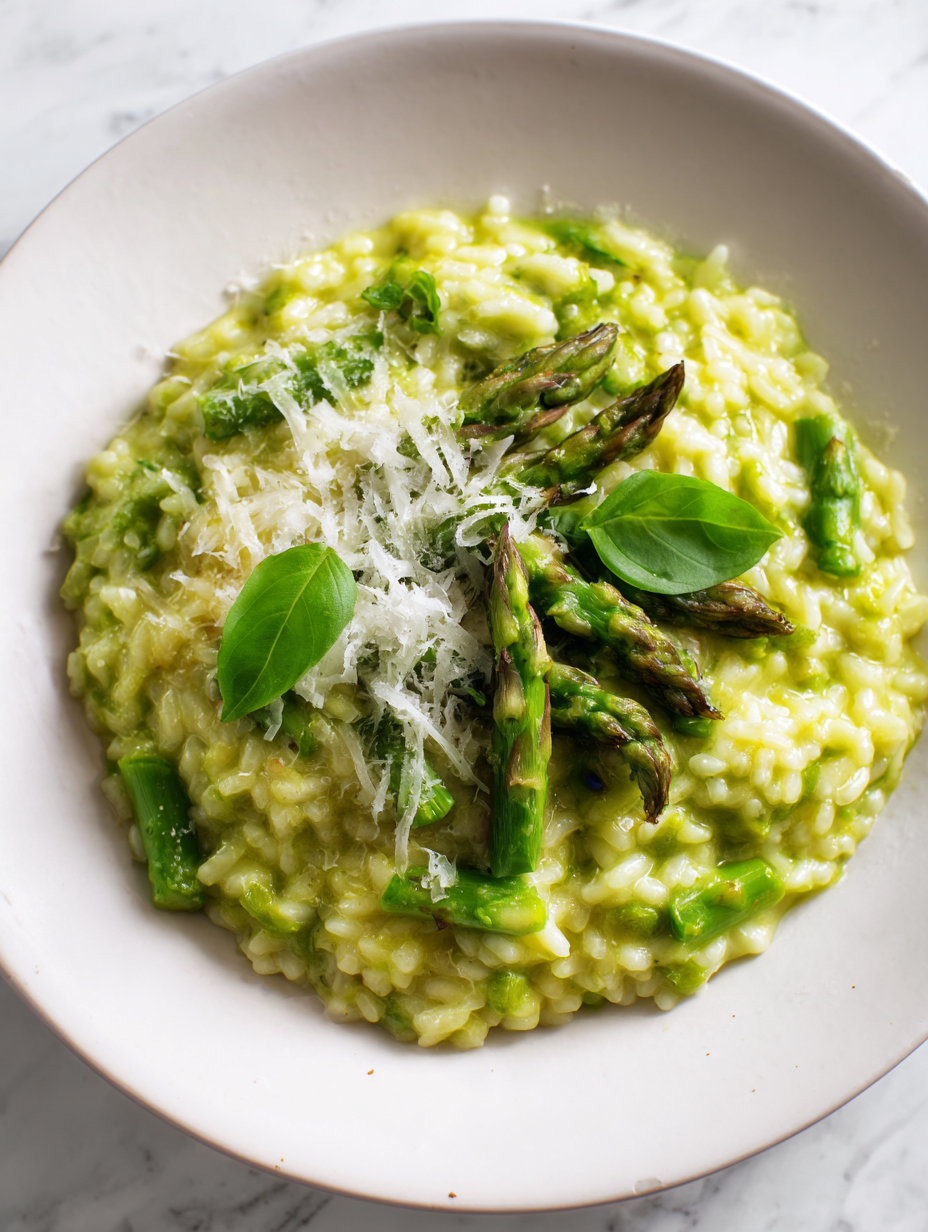
Creamy Asparagus Risotto with Parmesan
Ingredients
Equipment
Method
- Set your vegetable broth to simmer gently on the stove so it stays warm for later use.
- Prepare the asparagus by trimming off the woody ends, then chop the tender spears into 2-inch pieces. Grate the Parmesan cheese and keep it ready for later.
- Heat a large skillet over medium heat. Add the olive oil and butter, letting them melt and shimmer together, filling the kitchen with a toasty aroma.
- Stir in the finely chopped shallot and minced garlic, cooking until they become translucent and fragrant, about 2 minutes. You'll notice a gentle sizzle and a sweet aroma.
- Add the chopped asparagus to the skillet. Cook for 3-4 minutes, stirring occasionally, until the spears turn bright green and start to soften with a fragrant, fresh aroma.
- Pour in the Arborio rice, stirring constantly for about 2 minutes, until each grain is coated and begins to look translucent at the edges, giving off a nutty scent.
- Start adding the warm broth, about half a cup at a time, stirring continuously. Allow each addition to be mostly absorbed before adding the next, creating a gentle bubbling and a creamy sound as the rice releases its starch.
- Continue this process for about 18-20 minutes, stirring regularly, until the rice is tender but still slightly firm in the center, and the mixture is thick and velvety with a glossy sheen.
- When the rice is just right, stir in the grated Parmesan cheese and lemon zest, if using. Season with salt and pepper to taste, adjusting until balanced and flavorful.
- Remove the skillet from heat, cover with a lid, and let rest for 2 minutes. This step allows the flavors to meld and the risotto to settle into a smooth, velvety texture.
- Uncover, give the risotto a gentle stir, and serve immediately, garnished with extra Parmesan and a few fresh asparagus tips if desired. The dish should be creamy, bright green, and aromatic with a cheesy, subtle sweetness.
Pro tips for perfect risotto
- Bolded Mini-Head: Stir frequently → Keeps the rice creamy and prevents sticking, especially as the grains release their starch.
- Bolded Mini-Head: Add broth gradually → Pour in about ½ cup at a time, allowing rice to absorb fully for a velvety finish.
- Bolded Mini-Head: Toast the rice well → Cook for 2 minutes until edges turn translucent and smell nutty before adding liquids.
- Bolded Mini-Head: Maintain gentle simmer → Keep broth warm on low heat to ensure consistent cooking and prevent abrupt temperature changes.
- Bolded Mini-Head: Finish with cheese off heat → Stir Parmesan in just after removing from stove for optimal melt and flavor integration.
- Bolded Mini-Head: Use fresh asparagus tips → Add them towards the end for a bright, tender crunch and vibrant color.
Common risotto mistakes and how to fix them
- FORGOT to stir regularly → Stir constantly for even creaminess.
- DUMPED all broth at once → Add broth gradually for better texture.
- OVER-TORCHED the rice → Cook over medium, not high heat, to prevent burning.
- USED cold broth → Keep broth warm for smooth, even cooking.
Fast fixes for risotto hiccups
- When sauce shimmers with a sheen → Splash a little water or broth to loosen the risotto.
- If rice is too firm → Cover and cook on very low heat for a few more minutes.
- DUMPED all broth at once → Add broth gradually for a creamier, more controlled finish.
- Overcooked asparagus → Shock in ice water to halt cooking and preserve bright color.
- Splash of lemon juice shimmer → Brighten the dish with a quick squeeze just before serving.
Prep, store, and reheat tips
- Prep the asparagus: trim and chop ahead, keeping it chilled in the fridge; it stays fresh for up to 24 hours with vibrant color and crispness.
- Cook the rice partially: you can toast the rice and start the sauté, then cool and refrigerate for up to 1 day; finish cooking just before serving for best creaminess.
- Store leftovers: keep in an airtight container in the fridge for up to 2 days; the risotto will thicken and lose some of its velvety texture over time.
- Reheat gently: warm in a skillet over low heat, stirring constantly; add a splash of broth to loosen and restore some of the original creaminess, and watch for a slight change in aroma—less fresh, more starchy.
Top questions about creamy asparagus risotto
1. Can I use frozen asparagus?
Use fresh asparagus for the best flavor; frozen can work but may be softer. The fresh spears give a bright, sweet aroma that really lifts the dish.
2. Why do I need to stir so much?
Stirring constantly helps release the rice’s natural starch, making the risotto creamy. Skipping this can lead to uneven texture and sticking.
3. How important is adding broth a little at a time?
Adding broth gradually ensures the rice absorbs flavors slowly and develops that velvety consistency. Pouring it all in at once results in a mushy texture.
4. Can I use pre-grated Parmesan?
Freshly grated Parmesan melts better and delivers a sharper, more complex flavor. Pre-grated cheese can be dry and less flavorful, affecting creaminess.
5. How do I know when the asparagus is done?
Overcooking the asparagus turns it limp and dull in flavor. Tender but still vibrant spears are what you want—bite into them and they should give but not be mushy.
6. Can I use chicken broth instead?
Use a good quality vegetable broth or homemade for depth. The broth’s aroma and brightness are key to a flavorful risotto, especially with fresh asparagus.
7. Should I add lemon zest?
Adding lemon zest at the end brightens the dish, balancing the richness of Parmesan. Skip it if you prefer a traditional, mellow flavor.
8. What temperature should I cook the risotto at?
Cook the rice over medium heat, around 70°C-80°C (160°F-175°F). Too high and it burns; too low and it won’t cook evenly or develop creaminess.
9. How do I reheat leftover risotto?
Reheat gently over low heat, stirring often. Add a splash of broth to loosen the texture, which thickens as it cools in the fridge.
10. My risotto has dried out, what now?
If the risotto is too stiff, stir in a little warm broth or water to loosen it up. A quick stir and gentle heat will restore some of the original velvety texture.
This dish isn’t just about the ingredients; it’s about the quiet act of patience. The gentle simmer, the slow absorption—each step brings out a richness that feels earned. It’s a reminder that good food often asks for time, care, and a little bit of attention.
In the end, a bowl of creamy asparagus risotto with Parmesan is simple but deeply satisfying. It captures the fleeting beauty of spring, the comfort of a well-made meal, and the joy of getting it just right on a busy night. Sometimes, that’s all it takes to turn a regular dinner into something memorable.

Hi, I’m Isabella Cury, the creator behind Elevating Simple. Food has always been my passion, but it’s not just about creating meals—it’s about taking everyday ingredients and transforming them into something extraordinary.
My journey in the culinary world has been a blend of education, dedication, and a deep love for sharing food with others. Through this blog, I aim to inspire people to find joy in simple, flavorful cooking.


