
There’s something tactile about preparing asparagus that makes the whole cooking process feel like an act of connection. Running your fingertips along the stalks, feeling their firm, slightly bumpy texture, sets a rhythm that’s almost meditative before even hitting the stove. When the garlic butter hits the hot pan, the sizzle and aroma awaken every sense, making each step feel alive and real.
This dish isn’t just about eating asparagus; it’s about the joy of making it. The way the stalks soften just right—crisp-tender but still vibrant green—paired with that fragrant garlic butter, is a small, perfect ritual. It’s a moment to slow down, focus on the tactile and sensory, and enjoy the simple pleasure of good ingredients treated with care.
Focusing on the tactile joy of cooking asparagus, emphasizing the feel of its firm stalks against your fingertips and the sizzling sound as garlic butter hits the hot pan, making each step a sensory experience that connects you deeply to the process.
The story behind this recipe
I first stumbled upon this method when I needed a quick vegetable side that felt both comforting and fresh. Watching the asparagus turn vibrant green and hearing that satisfying sizzle of garlic butter in the pan made me realize how simple ingredients could create something memorable. It became a go-to when I wanted a dish that was easy but still felt like a treat, especially on busy weeknights when I craved that perfect balance of flavor and texture. Over the years, I’ve tweaked the garlic amount and timing, but that initial spark—seeing those stalks shimmer in butter—remains the heart of it.
Key ingredients at a glance
- Asparagus: I love that snap when you bend the stalks—firm, fresh, and slightly bumpy under your fingertips—try to pick the brightest, most vibrant green bunches for the best flavor.
- Garlic: The aroma of minced garlic hitting hot butter is intoxicating—use fresh cloves, and don’t skimp; the pungency and sweetness develop as it cooks, giving that rich backbone.
- Butter: I prefer unsalted, just enough to coat the asparagus without drowning it—watch for that sizzling, nutty smell as it melts; it’s the cue to toss in the garlic.
- Oil: A splash of neutral oil helps prevent burning—if you want a richer finish, go for clarified butter, which crisps the edges a little more and adds a smoky note.
- Lemon (optional): A squeeze at the end brightens everything—zesty, zippy, and cuts through the richness—don’t skip it if you like that fresh punch.
- Salt & Pepper: Finish with a good pinch of flaky sea salt and freshly cracked pepper—these simple seasonings really awaken the flavors, especially the asparagus’s natural sweetness.
Spotlight on key ingredients
Garlic butter:
- Asparagus: I love that snap when you bend the stalks—firm, fresh, and slightly bumpy under your fingertips—try to pick the brightest, most vibrant green bunches for the best flavor.
- Garlic: The aroma of minced garlic hitting hot butter is intoxicating—use fresh cloves, and don’t skimp; the pungency and sweetness develop as it cooks, giving that rich backbone.
- Butter: I prefer unsalted, just enough to coat the asparagus without drowning it—watch for that sizzling, nutty smell as it melts; it’s the cue to toss in the garlic.
Notes for ingredient swaps
- Dairy-Free: Swap butter for olive oil or coconut oil. You’ll miss the richness, but the flavor stays bright and clean.
- Vegan: Use a plant-based butter or olive oil instead of butter. The garlic flavor remains punchy, just a touch lighter.
- Lemon-Free: Omit lemon or substitute with a splash of apple cider vinegar for a subtle tang that won’t overpower.
- Garlic Substitutes: Use garlic powder in a pinch—just a pinch, since it’s more concentrated. Or try shallots for a milder, sweeter note.
- Asparagus Variants: Thin green beans or snap peas can work if asparagus isn’t available. Adjust cooking time for tenderness.
- Oil Choices: If you prefer a nuttier flavor, try sesame oil sparingly. It adds aroma but can overwhelm if used excessively.
- Salt & Pepper: Sea salt flakes give a nice crunch and burst of flavor; freshly cracked pepper adds a spicy pop that’s hard to replicate.
Equipment & Tools
- Large skillet: To cook the asparagus evenly at high heat.
- Tongs or spatula: To turn and toss the asparagus comfortably.
- Small bowl: To hold minced garlic for quick access.
- Knife and cutting board: To trim the asparagus and mince garlic.
Step-by-step guide to sautéed asparagus
- Gather your equipment: a large, wide skillet (preferably cast iron or stainless steel), tongs or a spatula, and a small bowl for garlic. Ready your ingredients: fresh asparagus, garlic cloves, unsalted butter, oil, salt, and pepper.
- Trim the asparagus: snap off the woody ends by gently bending each stalk until it breaks naturally, usually about 1-2 inches from the bottom. Rinse and pat dry; the stalks should feel firm and slightly bumpy.
- Preheat the skillet over medium-high heat (around 190°C/375°F). Add a tablespoon of oil and let it heat until shimmering—this prevents sticking and helps with even cooking.
- Add the asparagus in a single layer: let them sizzle and hiss immediately. Cook without moving for about 2 minutes, until they start to turn bright green and develop a slight char at the edges.
- Push the asparagus to one side of the pan. Lower the heat slightly, then add 2 tablespoons of unsalted butter and the minced garlic (about 2 cloves). Wait 30 seconds for the butter to melt and the garlic to become fragrant—avoid burning the garlic by stirring quickly.
- Toss the asparagus to coat evenly in the garlic butter: cook for another 2-3 minutes, shaking the pan occasionally. The stalks should be tender but still have a slight snap when tested. The garlic will turn golden and fragrant. If garlic begins to brown too quickly, lower the heat further.
- Check for doneness: the asparagus should be bright green, tender yet firm, with a glossy surface from the butter. If they jiggle slightly when shaken, they are cooked perfectly. If not, cook a little longer, but be careful not to over-soften.
- Remove from heat: transfer to a serving dish. Squeeze a little lemon juice over, if desired, and season with flaky sea salt and freshly cracked pepper. Rest for a minute before serving to allow flavors to settle and the butter to firm up slightly.
- Plate with care: arrange the asparagus so they look inviting, with some garlic pieces visible and a sheen of butter. Serve immediately for best texture and flavor.
Transfer to a plate, squeeze lemon if using, sprinkle with salt and pepper. Let sit briefly to allow flavors to meld before serving hot.
How to Know It’s Done
- Asparagus tips are vibrant green with slight char edges.
- Garlic is golden and fragrant, not burnt.
- Stalks are tender but still have a slight crunch when pierced.
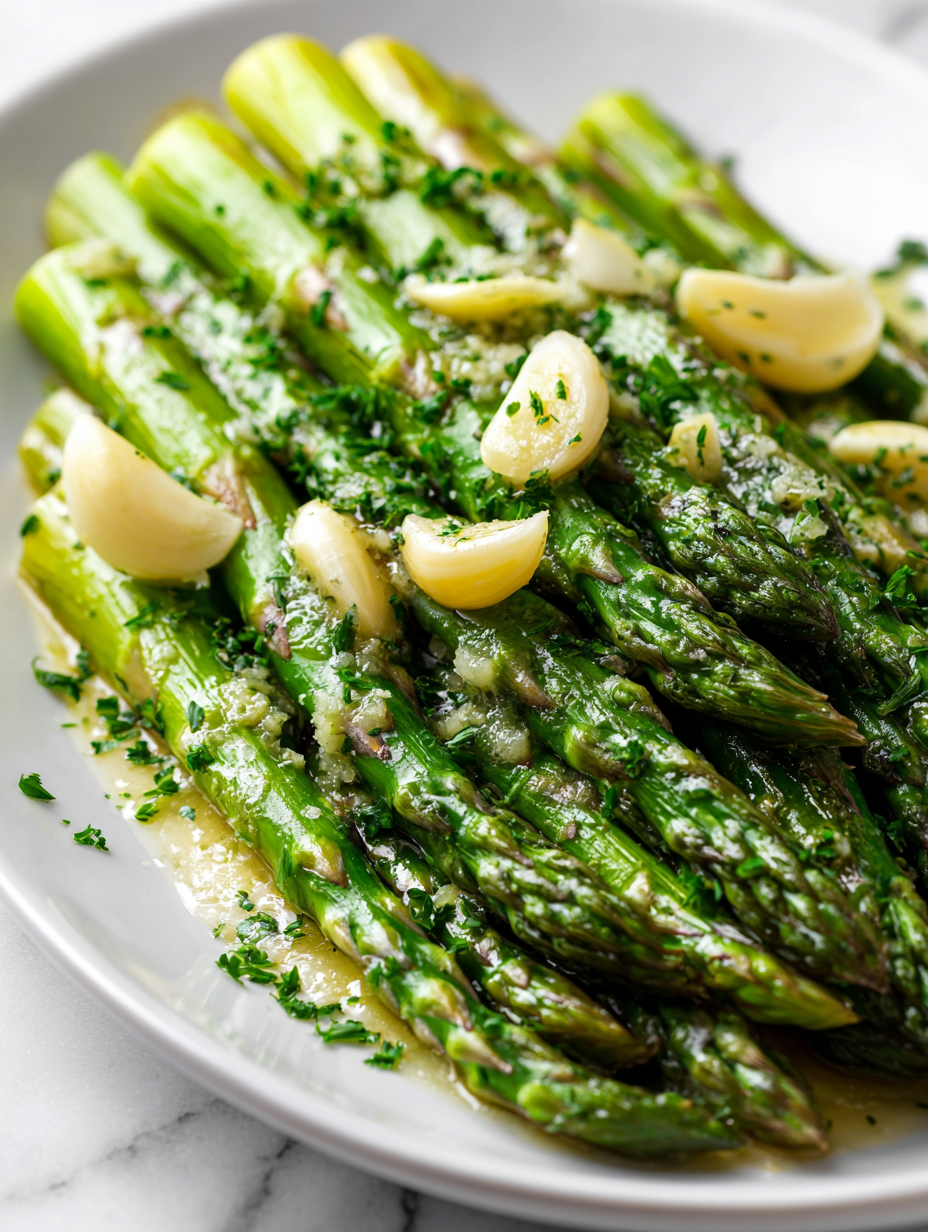
Sautéed Asparagus with Garlic Butter
Ingredients
Equipment
Method
- Trim the woody ends from the asparagus by gently bending each stalk until it snaps naturally, then rinse under cold water and pat dry. The stalks should feel firm with a slightly bumpy texture under your fingertips.
- Preheat a large skillet over medium-high heat until hot, then add a tablespoon of neutral oil and let it shimmer. Once shimmering, carefully place the asparagus in a single layer, hearing a satisfying sizzle as they hit the pan.
- Let the asparagus cook without moving for about 2 minutes, allowing the stalks to develop a slight char and turn a vibrant green at the edges. You should hear a gentle sizzling sound and see some browning forming.
- Meanwhile, mince the garlic cloves finely and place them in a small bowl for easy access. As the asparagus begins to soften, push them to one side of the pan.
- Add the unsalted butter to the empty side of the skillet and wait for it to melt with a gentle bubbling sound. Once melted, quickly stir in the minced garlic, cooking for about 30 seconds until fragrant and golden, but not browned.
- Toss the asparagus to coat evenly in the garlic butter, allowing them to cook for another 2-3 minutes until tender but still crisp, with a shiny glaze from the butter. Shake or turn the pan gently to ensure even cooking.
- Finish with a squeeze of fresh lemon juice if desired, then sprinkle with flaky sea salt and freshly cracked black pepper to taste. Remove from heat once the asparagus are bright green, tender, and fragrant.
- Transfer the asparagus to a serving plate, spooning over any remaining garlic butter from the pan. Serve immediately while still hot, enjoying the tender, crisp texture and fragrant garlic aroma.
Tips for perfect sautéed asparagus
- Bold garlic: Mince garlic finely and add it to hot butter quickly—this releases the aroma and prevents burning.
- Sizzle sound: Wait for that sharp crackle when asparagus hits the pan—it’s your cue for perfect caramelization.
- Color check: Look for bright green stalks with slightly charred edges—don’t overcook or they’ll lose their vibrant hue.
- Butter timing: Add butter after the asparagus starts to soften—this prevents burning and gives a glossy finish.
- Toss gently: Use tongs or spatula to toss, ensuring even coating and preventing broken stalks.
- Finish with lemon: A squeeze at the end brightens the dish—don’t skip this for that fresh zing.
- Taste test: The asparagus should be tender yet crisp, with garlic fragrant and butter silky—adjust cooking time accordingly.
Common mistakes and how to fix them
- FORGOT to watch heat: high heat can burn garlic—keep it at medium and stir constantly.
- DUMPED too much oil: too much oil makes asparagus soggy—use just enough to coat lightly.
- OVER-TORCHED garlic: burnt garlic turns bitter—remove from heat once fragrant and golden.
- MISSED resting time: let cooked asparagus sit briefly—this helps flavors settle and prevents sogginess.
Quick kitchen fixes
- When asparagus turns limp, splash in a splash of lemon juice to revive brightness.
- If garlic burns quickly, patch with a teaspoon of cold butter and stir immediately.
- Splash cold water if butter begins to splatter excessively—reduces heat and calms the sizzling.
- Shield overcooked stalks with a drizzle of good olive oil and a pinch of flaky salt.
- When in doubt, swap fresh asparagus for blanched green beans—similar crunch and quick prep.
Prep, store, and reheat tips
- Trim and wash the asparagus a day ahead—store in an airtight container in the fridge to keep them crisp and vibrant green.
- Mince garlic in advance and keep it in a small jar in the fridge—freshness slightly diminishes, but flavor stays punchy for a day.
- Refrigerate cooked asparagus in an airtight container for up to 2 days—expect some loss of crunch and a mellowing of fresh flavor.
- Reheat gently in a hot skillet for a minute or two—look for a shimmer of butter and a slight aroma of garlic as cues it’s ready.
- For the best sensory experience, reheat just until warmed through—avoid overdoing it to preserve the tender texture and garlic aroma.
Top questions about sautéed asparagus with garlic butter
1. How do I choose the best asparagus?
Look for firm, vibrant green stalks with tight tips. They should snap easily when bent, indicating freshness.
2. What kind of garlic is best for this dish?
Use fresh garlic cloves; they should be plump and fragrant. Mince finely to prevent burning and ensure even flavor.
3. How hot should the pan be?
A hot pan (around 190°C/375°F) is key. It gives that initial sizzle and helps develop a slight char without overcooking.
4. How do I tell when the asparagus is properly cooked?
Cook the asparagus in a single layer without moving them too much at first. Wait until they start to turn bright green and develop a slight char.
5. When should I add the garlic butter?
Add the garlic butter after the asparagus has started to soften and sizzle. It should melt quickly, releasing a fragrant aroma.
6. What is the visual cue for doneness?
The asparagus should be tender yet still have a slight crunch, with a glossy, vibrant appearance. It shouldn’t be limp or over-softened.
7. Should I add lemon? When?
A squeeze of fresh lemon juice brightens the dish and enhances the natural flavor of the asparagus and garlic.
8. Can I prepare this ahead of time?
Store trimmed, washed asparagus in an airtight container in the fridge for up to 24 hours. Reheat gently for best texture.
9. What if the garlic burns?
If garlic starts to burn, reduce heat immediately and add a small pat of cold butter to cool down the pan.
10. How do I fix overcooked asparagus?
If asparagus looks overcooked, splash a little lemon juice or drizzle with fresh olive oil to revive freshness and shine.
This dish is simple but reveals how the smallest details—like a quick squeeze of lemon or a quick rest—can elevate asparagus into a truly memorable side. It’s a reminder that real flavor often comes from the honest, unpolished moments in cooking.
Whenever I make sautéed asparagus this way, I enjoy that fleeting moment when the garlic scent fills the kitchen, and I know I’ve created something both nourishing and satisfying. It’s a dish that’s perfect for any season, especially when fresh asparagus is at its peak.

Hi, I’m Isabella Cury, the creator behind Elevating Simple. Food has always been my passion, but it’s not just about creating meals—it’s about taking everyday ingredients and transforming them into something extraordinary.
My journey in the culinary world has been a blend of education, dedication, and a deep love for sharing food with others. Through this blog, I aim to inspire people to find joy in simple, flavorful cooking.


