
This green pea risotto isn’t just a pretty plate; it’s a way to bottle the essence of spring. The vibrant color alone sparks a kind of quiet joy, reminding me of early mornings in the garden, peas just starting to swell. It’s about bringing that fresh, grassy sweetness straight into the kitchen, where the aroma of toasted rice mingles with the bright scent of peas.
I love how simple ingredients can turn into something so lively and comforting. There’s a certain magic in watching the bright green hue deepen as the rice absorbs the broth, each stir releasing that unmistakable vegetal aroma. It’s quick enough for a weeknight, but special enough to feel like a little celebration of the season’s first peas.
Focusing on the vibrant green color and fresh sweetness of peas, this risotto highlights how seasonal produce can transform a simple dish into a celebration of spring. It’s about capturing that fleeting moment when peas are just tender enough, bursting with flavor, and the kitchen fills with a fresh, grassy aroma.
The story behind this recipe
- This recipe comes from a summer spent in Italy, where I watched a humble farmer toss fresh peas into a simple pot of risotto. The way the bright green color stayed vibrant even after cooking, and the sweet, grassy aroma filled the air, stuck with me. It made me realize how seasonal ingredients can turn a basic dish into a celebration of freshness.
- I started experimenting with that idea back home, trying to preserve that lively green and sweet flavor in my own kitchen. Over time, I found that balancing the peas’ intensity with a touch of parmesan and a gentle simmer brought out something truly special—an unpretentious dish that still feels like a special moment.
- heading: The story behind this recipe
Ingredient breakdown: key components
- Green peas: I love how their bright, grassy aroma awakens the senses. Use fresh peas for that sweet, tender bite, but frozen works well too if you want convenience without sacrificing flavor.
- Parmesan: I always choose aged parmesan for its sharpness and umami punch. Grate it just before adding to keep that creamy, melty texture that ties everything together.
- Arborio rice: I stick with traditional Arborio for its creamy, starchy core. If you only have Carnaroli, it’s a fine swap—just watch the cook time a bit.
- Vegetable broth: I prefer homemade or high-quality store-bought broth because it’s the flavor foundation. Keep it simmering gently so it stays hot and ready for gradual absorption.
- Olive oil: I use a good fruity extra virgin to add a subtle richness and shine. Don’t skimp—this is what starts the flavor journey in every stir.
- Butter: I add a small knob at the end for richness and gloss. A little bit makes the dish feel luxurious without weighing it down.
- Lemon zest (optional): I love a hint of lemon to brighten the dish just before serving. It transforms the sweetness of peas into something more vibrant and fresh.
Spotlight on key ingredients
Green peas:
- Their vibrant, grassy aroma and sweet, tender bite make them the star. Fresh peas are crisp, frozen peas stay bright and sweet if handled quickly.
- Parmesan: Sharp, salty, and umami-rich, it melts into the risotto creating a glossy, flavorful sauce. Grate just before adding to preserve its aroma and texture.
Parmesan:
- I love how its nutty, salty punch elevates the simple rice. Use aged parmesan for maximum flavor that melts smoothly into hot risotto.
- Green peas: Their fresh, sweet aroma intensifies as they cook, adding a pop of color and brightness that’s unmistakable. They should stay tender but not mushy.
Notes for ingredient swaps
- Dairy-Free: Swap parmesan for nutritional yeast. It adds a cheesy umami but lacks the melty texture.
- Vegan: Use a plant-based butter and a splash of lemon juice instead of parmesan for brightness.
- Frozen Peas: Keep them frozen until added to prevent mushiness and preserve their bright color.
- Arborio Rice: Carnaroli is a good substitute—just watch for a slightly different cook time and creaminess.
- Broth: Use mushroom or chicken broth for a richer flavor profile, or water with a dash of miso for simplicity.
- Olive Oil: Switch to avocado oil for a milder, buttery note that still handles high heat well.
- Lemon Zest: Skip if you dislike citrus, or replace with a small splash of white wine for acidity and depth.
Equipment & Tools
- Wide pan: To cook rice evenly and allow stirring without spilling.
- Wooden spoon: For gentle stirring and scraping up starchy bits.
- Ladle: To transfer hot broth gradually for controlled absorption.
- Grater: To finely grate parmesan for melting smoothly.
- Saucepan: To keep broth hot and ready for addition.
Step-by-step guide to green pea risotto
- Equipment & Tools: Use a 20cm (8-inch) wide pan with a thick base for even heat, a wooden spoon for stirring, and a ladle for broth. Have a sharp grater ready for parmesan and a small bowl for peas.
- Warm the broth: Pour 1 liter (4 cups) of vegetable broth into a saucepan. Keep it at a gentle simmer over low heat (around 90°C/194°F).
- Sauté aromatics: In your main pan, heat 2 tbsp olive oil over medium (around 160°C/320°F). Add 1 finely chopped onion. Stir until translucent, about 3 minutes. The onion should smell sweet and slightly caramelized around the edges.
- Toast the rice: Add 200g Arborio rice to the pan. Stir constantly for 2 minutes until the edges look slightly translucent and you hear a faint crackle. The rice should turn a light, opaque white.
- Deglaze and start adding broth: Pour in 150ml of warm broth, stirring until mostly absorbed. Repeat this process, adding ladlefuls of broth gradually, waiting each time until the liquid is mostly absorbed. Stir constantly to release starch. After about 15 minutes, the rice should be creamy and tender but still have a slight bite.
- Add peas: When the rice is halfway cooked (around 10 minutes in), stir in 100g fresh or frozen peas. They should turn bright green, and their aroma will mingle with the rice’s creaminess.
- Finish the risotto: When the rice is creamy and al dente (about 18-20 minutes total), turn off the heat. Stir in 50g grated parmesan, 1 tbsp butter, and a pinch of freshly grated lemon zest if using. Adjust seasoning with salt and pepper.
- Rest and plate: Cover the pan loosely with a kitchen towel. Let it rest for 2 minutes to allow flavors to meld. Serve immediately with extra parmesan on top, if desired.
Let the risotto sit covered for 2 minutes off heat. Then, stir through parmesan, butter, and lemon zest. Plate immediately, garnished with extra cheese if desired.
How to Know It’s Done
- The rice is tender yet holds a slight bite, with a creamy, slightly runny consistency.
- The peas are bright, tender, and bursting with fresh aroma.
- The parmesan is melted smoothly, creating a glossy, cohesive sauce.
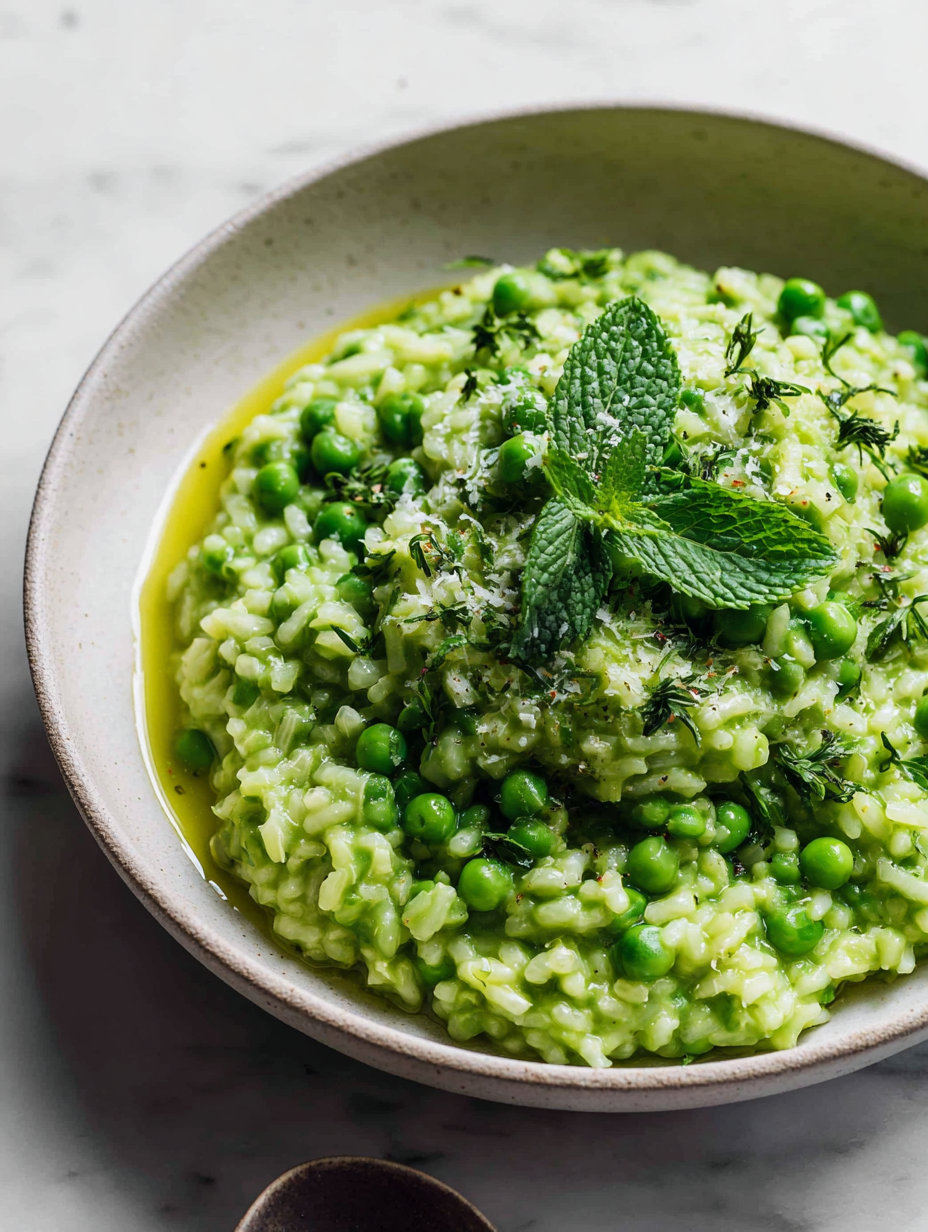
Spring Green Pea Risotto
Ingredients
Equipment
Method
- Pour the vegetable broth into a saucepan and heat gently over low heat, keeping it simmering.
- Heat a wide pan over medium and add the olive oil. Once shimmering, stir in the finely chopped onion, cooking until translucent and fragrant, about 3 minutes.
- Add the Arborio rice to the pan and stir constantly for about 2 minutes until the edges turn slightly translucent and the rice begins to crackle, releasing a nutty aroma.
- Pour in a ladleful of warm broth and stir gently. Wait until the liquid is mostly absorbed before adding another ladleful. Continue this process, stirring constantly, for about 15 minutes until the rice is creamy but still has a slight bite.
- When the rice is halfway cooked, stir in the green peas. Let them cook for about 5 minutes until bright green and tender, infusing the risotto with their sweet aroma.
- Continue adding broth until the rice reaches the desired creamy and al dente consistency, approximately 20 minutes total. Turn off the heat.
- Stir in the grated parmesan, butter, and lemon zest if using, until melted and glossy. Adjust seasoning with salt and pepper as needed.
- Cover the pan loosely and let the risotto rest for 2 minutes, allowing flavors to meld and the texture to become even creamier.
- Gently stir again before serving, then dish out the vibrant, velvety risotto with bright green peas peeking through. Enjoy immediately!
Pro tips for perfect risotto
- Bolded mini-head: Use a wide pan → For even cooking and easy stirring, opt for a 20cm (8-inch) pan.
- Bolded mini-head: Keep broth simmering → Maintain broth at around 90°C (194°F) for smooth, gradual absorption.
- Bolded mini-head: Stir constantly → Release maximum starch and prevent sticking by stirring the rice steadily from the start.
- Bolded mini-head: Add broth gradually → Ladle in hot broth slowly, waiting for each addition to absorb before more.
- Bolded mini-head: Taste for doneness → The rice should be creamy yet slightly al dente, with a gentle jiggle when moved.
- Bolded mini-head: Finish with cheese and butter → Off heat, stir in parmesan and butter for glossy richness and flavor depth.
- Bolded mini-head: Rest briefly before serving → Cover and let sit 2 minutes to meld flavors and improve texture.
Common mistakes and how to fix them
- FORGOT to stir: Stir constantly to release starch and prevent burning; use a wooden spoon.
- DUMPED broth too quickly: Add broth gradually, waiting for absorption before adding more.
- OVER-TORCHED rice: Keep heat moderate; rice should simmer gently and stay tender without browning.
- SKIPPED resting time: Let risotto rest 2 minutes off heat to meld flavors and improve texture.
Quick fixes and pantry swaps
- When sauce shimmers and peas crackle, it’s time to rescue with a splash of hot broth.
- Splash in a little lemon juice if the risotto feels heavy or bland after stirring.
- Patch overcooked peas by quickly stirring in fresh, frozen, or defrosted peas for vibrancy.
- Shield burnt bottom with a clean spoon, then gently stir and add a bit more broth to loosen.
- If you run out of parmesan, pantry swap with nutritional yeast for a cheesy umami boost.
Prep, store, and reheat tips
- Pre-chop the onion and grate the parmesan a day ahead. Keep separately in airtight containers in the fridge; flavor stays fresh and ready to use.
- You can prepare the vegetable broth in advance, store it in the fridge for up to 3 days, or freeze for up to 1 month. Reheat gently on the stove until steaming hot, smelling savory and rich.
- Cook the risotto until just al dente, then cool quickly and store in an airtight container in the fridge for up to 1 day. The rice may absorb some liquid, so expect a slightly firmer texture upon reheating.
- Reheat the risotto slowly over low heat, stirring frequently. Add a splash of hot broth or water to loosen it; it should shimmer and regain creaminess, with peas bright and tender.
- Avoid reheating more than once to preserve texture. Freshly warmed, it should smell earthy, with a creamy mouthfeel and vibrant green peas.
Top questions about green pea risotto
1. Can I use frozen peas instead of fresh?
Fresh peas give a brighter, sweeter flavor and firmer texture, but frozen peas are convenient and still tasty if added at the right time.
2. Should I thaw the peas before adding?
Yes, but cook frozen peas directly from the freezer without thawing to keep their vibrant color and crispness. Add them in the last few minutes of cooking.
3. Why do I need to stir so much?
Stir constantly to release the rice’s starch, which creates that creamy texture. It also prevents sticking and burning.
4. How slowly should I add the broth?
Add hot broth gradually, one ladle at a time, and wait until it’s mostly absorbed before adding more. This helps control the creaminess.
5. How do I know when the risotto is done?
Look for a rice that’s tender yet has a slight bite, with a glossy, creamy appearance. The peas should be bright and tender, not mushy.
6. When should I add cheese and butter?
Finish with parmesan and butter off the heat for a glossy, rich sauce. A quick stir helps the flavors meld beautifully.
7. Should I let it rest before serving?
Let the risotto rest off heat for about 2 minutes, covered. This allows flavors to settle and improves texture before serving.
8. What tools are best for making risotto?
Use a wide, heavy-bottomed pan for even cooking. A wooden spoon is best for gentle stirring without damaging the rice.
9. What if my risotto gets too thick?
If the risotto becomes too thick, stir in a splash of hot broth or water until it shimmers with a creamy consistency.
10. How can I fix bland tasting risotto?
If the dish tastes flat, add a squeeze of lemon zest or a splash of white wine to brighten the flavors.
This dish isn’t just about the vibrant color or fresh flavor; it’s about reconnecting with the simple joy of seasonal ingredients. The aroma of peas and parmesan, combined with that creamy, tender rice, feels like a small celebration on a plate.
Whenever I make this risotto, I remember how quick, straightforward, and surprisingly satisfying it is. It’s a reminder that even simple ingredients can offer a moment of real pleasure, especially in the fleeting season of spring.

Hi, I’m Isabella Cury, the creator behind Elevating Simple. Food has always been my passion, but it’s not just about creating meals—it’s about taking everyday ingredients and transforming them into something extraordinary.
My journey in the culinary world has been a blend of education, dedication, and a deep love for sharing food with others. Through this blog, I aim to inspire people to find joy in simple, flavorful cooking.


