
Spring’s quiet magic often hides in plain sight, like those fresh peas and tender spinach that arrive at markets with a fleeting, sweet glow. This dish is my way of pausing to celebrate that moment—simple ingredients, quick to cook, yet bursting with the grassy brightness that makes me smile every time I make it. It’s about transforming what’s seasonal into something you crave, even when the peak is just a memory.
Cooking this pasta feels like a gentle reminder to slow down, to savor the little bursts of flavor that come from fresh produce. I love how the peas pop with a sweet, almost creamy bite, and how the spinach wilts into a vibrant, leafy bed beneath the pasta. It’s honest food, no fuss, just a dish that celebrates spring’s fleeting bounty with every bite.
Focusing on the overlooked beauty of fresh, seasonal peas and spinach, this recipe emphasizes their bright, grassy flavors and how they can transform simple pasta into a vibrant, comforting dish that celebrates spring’s fleeting bounty.
Why this dish matters to me
- This recipe was born out of a lazy spring afternoon, when I stumbled upon a bag of fresh peas and spinach in my fridge that I almost forgot about. I wanted something quick, bright, and honest, that could showcase those fleeting, sweet peas and tender greens without fuss. The moment I tasted that first bite, I knew I had to write it down—simple ingredients, but with a punch of fresh flavor that feels like spring in every forkful.
- Cooking this pasta is like capturing a small, joyful secret. It’s a reminder that sometimes the best meals are born from humble leftovers and a bit of intuition—no complicated sauces, just the natural sweetness of peas and the lush bite of spinach shining through. It’s become my go-to when I want comfort without heaviness, and a dish that’s as good for a quick weeknight as it is for a casual dinner with friends.
- heading: The story behind this recipe
Key Ingredients and Tips
- Fresh peas: I love that sweet, almost creamy burst when you bite into them, especially when they’re just lightly cooked. Swap with frozen if fresh isn’t available, but aim for bright green and tender to keep that pop.
- Spinach: I prefer baby spinach for its tender texture and milder flavor that wilts beautifully. If you only have mature leaves, chop them finer and cook a bit longer to avoid bitterness.
- Pasta: I use a good-quality spaghetti or linguine, but rotini or penne work too. Cook until just al dente—there’s nothing worse than mushy pasta coated in sauce that’s lost its bite.
- Garlic: I like to finely mince it so it releases that fragrant, slightly nutty aroma without burning. If you burn it, the dish turns bitter—so keep the heat moderate.
- Olive oil: Use a good extra-virgin oil to add a fruity, peppery note. If you only have light oil, the flavor will be subtler but still good—just add a pinch of chili flakes for warmth.
- Lemon zest: I find a bit of lemon brightens everything—aim for fine zest, no bitter white pith. Skip if citrus doesn’t suit your palate, but it really lifts the greens.
- Salt & pepper: Season generously but thoughtfully. I prefer flaky sea salt and freshly cracked black pepper to finish, adding layers of flavor and a slight crunch.
Spotlight on key ingredients
Peas and Spinach:
- Fresh peas: I love that sweet, almost creamy burst when you bite into them, especially when they’re just lightly cooked. Swap with frozen if fresh isn’t available, but aim for bright green and tender to keep that pop.
- Spinach: I prefer baby spinach for its tender texture and milder flavor that wilts beautifully. If you only have mature leaves, chop them finer and cook a bit longer to avoid bitterness.
Notes for ingredient swaps
- Dairy-Free: Skip cheese or use nutritional yeast for cheesy notes. It won’t be as creamy but adds a nutty, umami punch.
- Vegan: Omit Parmesan, add a splash of soy sauce or miso for depth. Keep the dish bright with extra lemon zest.
- Frozen Peas: Use frozen peas in a pinch—just rinse and thaw quickly under warm water. Fresh peas have a sweeter bite, but frozen work well if cooked briefly.
- Baby Spinach: Substitute with arugula or kale—kale needs longer cooking, arugula adds a peppery kick. Adjust cooking time accordingly.
- Olive Oil: Use avocado oil for a milder, buttery flavor. It’s good for high heat and adds a subtle richness.
- Lemon Zest: Lime zest can replace lemon for a different citrus note, slightly more aromatic and fragrant.
- Pasta: Whole wheat or gluten-free pasta can be swapped in—be aware they may cook slightly differently and have a denser texture.
Equipment & Tools
- Large pot: Boil pasta and peas efficiently
- Wide skillet or frying pan: Cook garlic, greens, and toss pasta
- Colander: Drain pasta and peas, reserving starchy water
- Chef’s knife: Finely mince garlic and zest lemon
- Wooden spoon or tongs: Toss and combine ingredients evenly
Step-by-step guide to pea and spinach pasta
- Equip your large pot with plenty of water—salty like the sea, about 1 tablespoon salt per liter. Bring to a rolling boil at 100°C (212°F).
- While waiting, finely mince 3 garlic cloves and set aside. In a wide skillet, heat 2 tablespoons of good olive oil over medium heat (about 160°C/320°F).
- Add garlic to the hot oil. Sizzle until fragrant and golden, about 30 seconds. Watch closely to avoid burnt bitterness.
- Drop in 200g (7 oz) of spaghetti or your preferred pasta. Stir gently to prevent sticking. Cook until just al dente (check at 8 minutes, should be tender but firm).
- While pasta cooks, prepare your greens. Rinse 100g (3.5 oz) fresh peas and 100g (3.5 oz) baby spinach. Set aside.
- When pasta is nearly ready, add peas to the boiling water for 1 minute, then scoop both pasta and peas into a colander. Save a cup of starchy water.
- Add drained pasta and peas to the skillet with garlic and oil. Toss gently over medium heat (about 150°C/300°F).
- Stir in spinach and cook until wilted, about 1-2 minutes. If mixture seems dry, splash in a little reserved pasta water to loosen.
- Finish with grated lemon zest (a teaspoon) and season with flaky sea salt and freshly cracked pepper. Toss to combine.
- Transfer to a warm plate. Rest for 1 minute to let flavors meld, then serve immediately with a drizzle of olive oil or extra lemon if desired.
Serve immediately on warm plates. Drizzle with extra olive oil or lemon if desired. Rest for 1 minute but don’t wait too long—freshness fades quick.
How to Know It’s Done
- Pasta is tender but not mushy, with a slight bite at the center.
- Peas are bright green and pop when bitten, adding sweetness.
- Spinach is wilted, vibrant, and tender, not slimy or bitter.
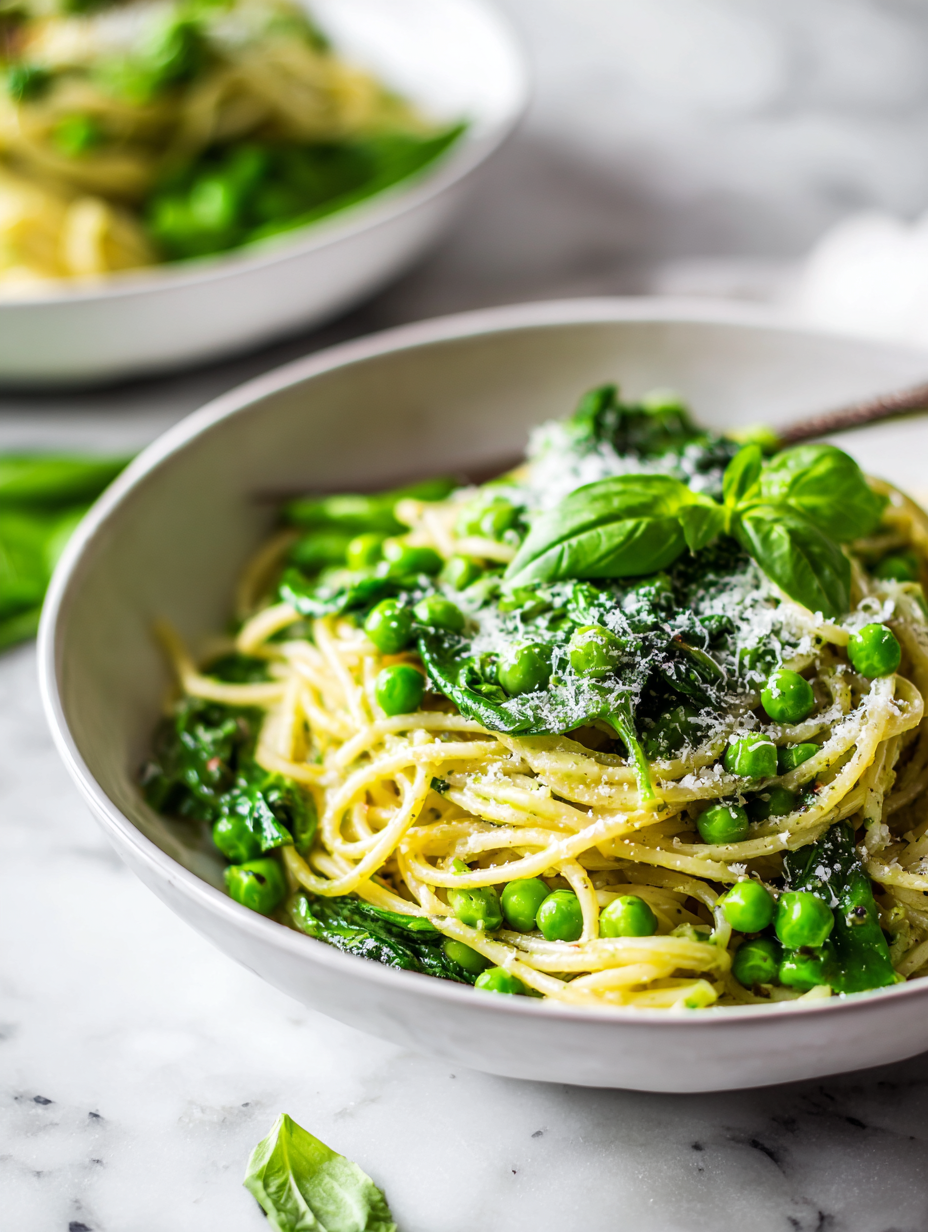
Spring Pea and Spinach Pasta
Ingredients
Equipment
Method
- Bring a large pot of salted water to a rolling boil, tasting like the sea.
- Add the spaghetti to the boiling water and cook until just al dente, about 8 minutes, stirring occasionally for even cooking. Meanwhile, rinse the peas and set aside.
- While the pasta cooks, heat olive oil in a wide skillet over medium heat until fragrant, about 30 seconds, and the oil starts to shimmer.
- Add the minced garlic to the hot oil and sauté until fragrant and lightly golden, about 30 seconds; you should smell a nutty aroma.
- Use a colander to drain the pasta and peas, reserving about a cup of starchy pasta water. Add the drained pasta and peas directly into the skillet with garlic and oil.
- Toss gently over medium heat, allowing the peas to pop with sweetness and the pasta to absorb the fragrant garlic oil, about 1-2 minutes.
- Add the baby spinach and cook for another 1-2 minutes, stirring until wilted and vibrant green.
- Sprinkle the lemon zest over the mixture, then splash in a little of the reserved pasta water if the dish seems dry, stirring gently to loosen everything up.
- Season generously with sea salt and freshly cracked black pepper, tasting and adjusting as needed. Toss again to combine all flavors evenly.
- Transfer the pasta to warmed plates, drizzling with a little extra olive oil or lemon if desired, and serve immediately while vibrant and hot.
Pro tips for perfect pea and spinach pasta
- Bold garlic: Finely mince it to release maximum aroma without burning, which can turn bitter.
- Stagger pasta addition: Drop peas into boiling water 1 minute before pasta finishes for perfect texture.
- Use pasta water: Reserve a splash of starchy water to loosen the sauce and help ingredients cling.
- Color check: The peas should be bright green and slightly tender, not dull or mushy.
- Timing greens: Add spinach just as pasta is done—wilts quickly and retains vibrant color.
- Lemon zest: Grate finely and add at the end for a fresh, bright flavor that elevates greens.
- Avoid overcooking: Keep an eye on pasta and peas to prevent mushiness and preserve their pop.
Common mistakes and how to fix them
- FORGOT to check pasta doneness → Test bite for al dente texture, not mushy or undercooked.
- DUMPED too much water when draining → Save starchy water for sauce, helps with consistency.
- OVER-TORCHED garlic → Sauté on moderate heat until fragrant, avoid burnt bitterness.
- MISSED seasoning at the end → Taste and adjust salt, pepper, and lemon zest for balance.
Quick fixes and pantry swaps
- When sauce is too thick, splash in warm water and stir gently to loosen.
- If peas look dull, briefly blanch them again for a brighter pop and sweeter flavor.
- Splash a bit more olive oil if the pasta appears dry after tossing.
- Patch overcooked greens by quickly sautéing with garlic and lemon zest for freshness.
- Shield burnt garlic by removing pan from heat immediately and starting anew with fresh garlic.
Prep, store, and reheat tips
- Prep the peas and spinach by rinsing and chopping; store in airtight containers in the fridge for up to 24 hours. Their freshness keeps the greens vibrant and peas sweet.
- Cook the pasta ahead of time until al dente, then toss with a little olive oil to prevent sticking. Store in a sealed container in the fridge for up to 1 day; reheat gently.
- Save some starchy pasta water before draining; keep it in a jar at room temperature. It thickens sauces and helps rehydrate leftovers without losing flavor.
- Reheating: Warm pasta in a skillet over low heat with a splash of reserved water or a drizzle of olive oil. Toss gently until heated through, and the greens are still bright and tender. Avoid overheating to keep texture intact.
- For longer storage, freeze cooked pasta in an airtight container for up to 2 months. Thaw in the fridge overnight and reheat with a splash of water for best texture.
Top questions about pea and spinach pasta
1. Can I use frozen peas instead of fresh?
Fresh peas add a sweet, slightly grassy burst that frozen peas can’t always match, but frozen work in a pinch.
2. When should I add the spinach?
Spinach wilts quickly; add it right at the end of cooking to keep it vibrant and tender.
3. How do I know when the pasta is done?
Cooking pasta al dente means it’s tender but still has a slight bite—around 8 minutes for most types.
4. Can I skip the olive oil?
Use good quality olive oil for flavor, but if you only have light oil, add extra lemon zest for brightness.
5. Why save pasta water?
Reserve a cup of starchy pasta water before draining—it’s perfect for loosening the sauce if it gets too thick.
6. Should I add lemon zest?
Lemon zest brightens the greens and enhances their fresh flavor—use a fine grater and don’t skip it.
7. How do I prevent burning garlic?
Avoid burning garlic by cooking it over moderate heat until fragrant, about 30 seconds, then add other ingredients.
8. My pasta is sticking—what should I do?
If the pasta sticks together after cooking, toss it with a little olive oil or reserved pasta water before serving.
9. Can I use a different type of pasta?
You can substitute whole wheat or gluten-free pasta, but keep in mind they might need slightly different cooking times.
10. How should I reheat the pasta?
Reheat leftovers gently in a skillet with a splash of water or oil, stirring until warmed and greens stay vibrant.
This dish is a reminder that even the simplest ingredients can shine when you pay attention to their natural qualities. It’s quick, honest, and a little bit bright—perfect for those hectic days or when you need a taste of spring. No fuss, just good, fresh pasta that feels like a small celebration in every bite.
Sharing this recipe feels like passing on a little secret—something that lifts a dull evening or brightens a lazy weekend. It’s a humble dish, but one that’s rooted in the genuine pleasure of seasonal flavors and straightforward cooking. That’s what keeps me coming back to it, season after season.

Hi, I’m Isabella Cury, the creator behind Elevating Simple. Food has always been my passion, but it’s not just about creating meals—it’s about taking everyday ingredients and transforming them into something extraordinary.
My journey in the culinary world has been a blend of education, dedication, and a deep love for sharing food with others. Through this blog, I aim to inspire people to find joy in simple, flavorful cooking.


