
Potatoes often get lost in the shuffle, relegated to sides or thickeners, but here they step into the spotlight. This curry is all about transforming that humble tuber into a creamy, tender hero, mingling with sweet peas for a pop of freshness. It’s simple, honest cooking that relies on everyday ingredients, yet feels just a little brighter than your usual stew.
I’ve made this dish on lazy weekends when I want something comforting but not heavy, and it’s always a hit. The aroma of cumin and turmeric bubbling together, the slight sweetness of peas contrasting with the earthy potatoes — it’s that perfect mix of familiar and surprising. It’s a reminder that even the simplest ingredients can be turned into something worth savoring.
Focusing on the humble, overlooked potato as the star ingredient in a vibrant, comforting curry that redefines everyday cooking.
The story behind this recipe
- This recipe comes from a day when I was trying to clear out my fridge and found a bag of frozen peas and a lone potato staring back at me. It clicked—why not turn these humble ingredients into something nourishing and flavorful? Cooking doesn’t need to be fancy to feel satisfying, just honest and straightforward.
- I remember the first time I made this for friends; the smell of cumin and garlic filled the kitchen, drawing everyone in. It’s one of those dishes that’s easy to throw together but tastes like you fussed for hours. Every spoonful feels like a small victory, reminding me that simplicity often carries the most warmth.
- heading:
Ingredient breakdown
- Potatoes: I like using starchy Russets; they break down slightly and make the curry velvety. If you prefer a chunkier texture, try Yukon Golds—they hold shape better.
- Peas: Fresh or frozen, they add that bright, sweet pop. Frozen peas are convenient and keep their color and flavor well when cooked just right—don’t overdo it or they turn mushy and dull the dish.
- Cumin seeds: I toast them until fragrant and nutty, which deepens the flavor. If you’re short on time, ground cumin works, but the seeds give a more vibrant aroma.
- Tomatoes: I use canned diced for ease and consistency, but fresh, ripe tomatoes can brighten the curry with a juicy tang—add them early for a richer base.
- Garlic & onion: The foundation of flavor. I sauté until golden and fragrant—if you burn the garlic, it turns bitter, so watch carefully and add a splash of water if needed.
- Spices (turmeric, coriander): I measure carefully—they’re the backbone, but a little too much can overpower. Toasting them with the onion unlocks their full aroma and flavor.
- Cooking oil: I prefer neutral oils like sunflower or canola for a clean taste, but a splash of ghee can add richness and a slightly nutty aroma—use what makes your kitchen smell inviting.
Spotlight on key ingredients
Potatoes:
- I prefer starchy Russets; they break down slightly and make the curry velvety. If you prefer a chunkier texture, try Yukon Golds—they hold shape better.
- Peas: Frozen or fresh, they add that bright, sweet pop. Frozen peas keep their color and flavor well when cooked just right—don’t overdo it or they turn mushy and dull the dish.
Peas:
- Cumin seeds: I toast them until fragrant and nutty, which deepens the flavor. If you’re short on time, ground cumin works, but the seeds give a more vibrant aroma.
- Tomatoes: I use canned diced for ease and consistency, but fresh, ripe tomatoes can brighten the curry with a juicy tang—add them early for a richer base.
Notes for ingredient swaps
- Potatoes: I prefer starchy Russets for creaminess, but Yukon Golds hold shape and add a buttery note if you like chunkier bites.
- Peas: Frozen peas are my go-to—they keep their bright color and sweet flavor even after cooking, but fresh peas give a slightly firmer bite and more intense sweetness.
- Cumin seeds: Toasted whole seeds bring a fragrant, nutty aroma, but ground cumin works in a pinch—just add it earlier to prevent bitterness.
- Tomatoes: Canned diced tomatoes give consistency, but fresh, ripe tomatoes add a juicy brightness—add them early for a more vibrant, tangy base.
- Garlic & onion: The base of flavor, sauté until golden—if you burn the garlic, it turns bitter, so add a splash of water if needed to prevent that.
- Spices: Toasting turmeric and coriander deepens their aroma, but pre-ground spices save time—just be mindful not to overdo it to avoid overpowering the dish.
- Cooking oil: Neutral oils like sunflower or canola keep the flavor clean, but a splash of ghee adds richness and a nutty aroma—use what makes your kitchen smell inviting.
Equipment & Tools
- Large heavy-bottomed pan: For even heat distribution and space to cook everything together.
- Wooden spoon: To stir ingredients without damaging the pan surface.
- Sharp knife: For peeling and dicing potatoes, garlic, and onion.
- Cutting board: To provide a stable surface for chopping.
Step-by-step guide to pea and potato curry
- Gather all equipment: a large heavy-bottomed pan, a wooden spoon, a sharp knife, and a cutting board. The pan should be big enough to hold everything comfortably.
- Peel and dice 2 medium potatoes into 1-inch cubes. Keep them uniform for even cooking.
- Heat 2 tablespoons of oil over medium heat (about 160°C / 320°F). When shimmering, add 1 teaspoon cumin seeds. Wait until they crackle and smell nutty, about 30 seconds.
- Add 1 diced onion to the pan. Sauté until golden and translucent, about 5-7 minutes. Stir frequently to prevent burning.
- Toss in 3 minced garlic cloves and 1 teaspoon grated ginger. Cook until fragrant, about 1 minute. Be careful not to burn the garlic—if it darkens too fast, lower the heat.
- Stir in 1 teaspoon turmeric, 1 teaspoon coriander, and a pinch of chili powder. Toast the spices for 30 seconds until aromatic, stirring constantly.
- Add the diced potatoes to the pan. Mix well so they’re coated with spices. Cook uncovered for about 5 minutes, stirring occasionally, until they start to turn golden.
- Pour in 400g (14 oz) canned diced tomatoes. Stir and bring to a simmer. Cover loosely and cook for 10 minutes, stirring every few minutes. Potatoes should be tender and sauce slightly thickened.
- Stir in 150g (5 oz) frozen peas. Cook uncovered for another 3-5 minutes until peas are bright green and heated through. Taste and adjust salt if needed.
- Check the curry’s consistency—if it’s too thick, add a splash of water. If too runny, let it simmer uncovered for a few more minutes. The curry should be velvety and fragrant with spices.
Let the curry sit off heat for 2-3 minutes. Serve with a sprinkle of fresh herbs if desired and a side of rice or bread. The flavors deepen slightly as it rests.
How to Know It’s Done
- Potatoes are tender when pierced with a fork, with a slight crumble but not mushy.
- Tomato sauce has deepened in color and thickened slightly, coating the potatoes and peas evenly.
- A fragrant aroma of toasted spices and simmered garlic fills the kitchen, with a hint of sweetness from peas.
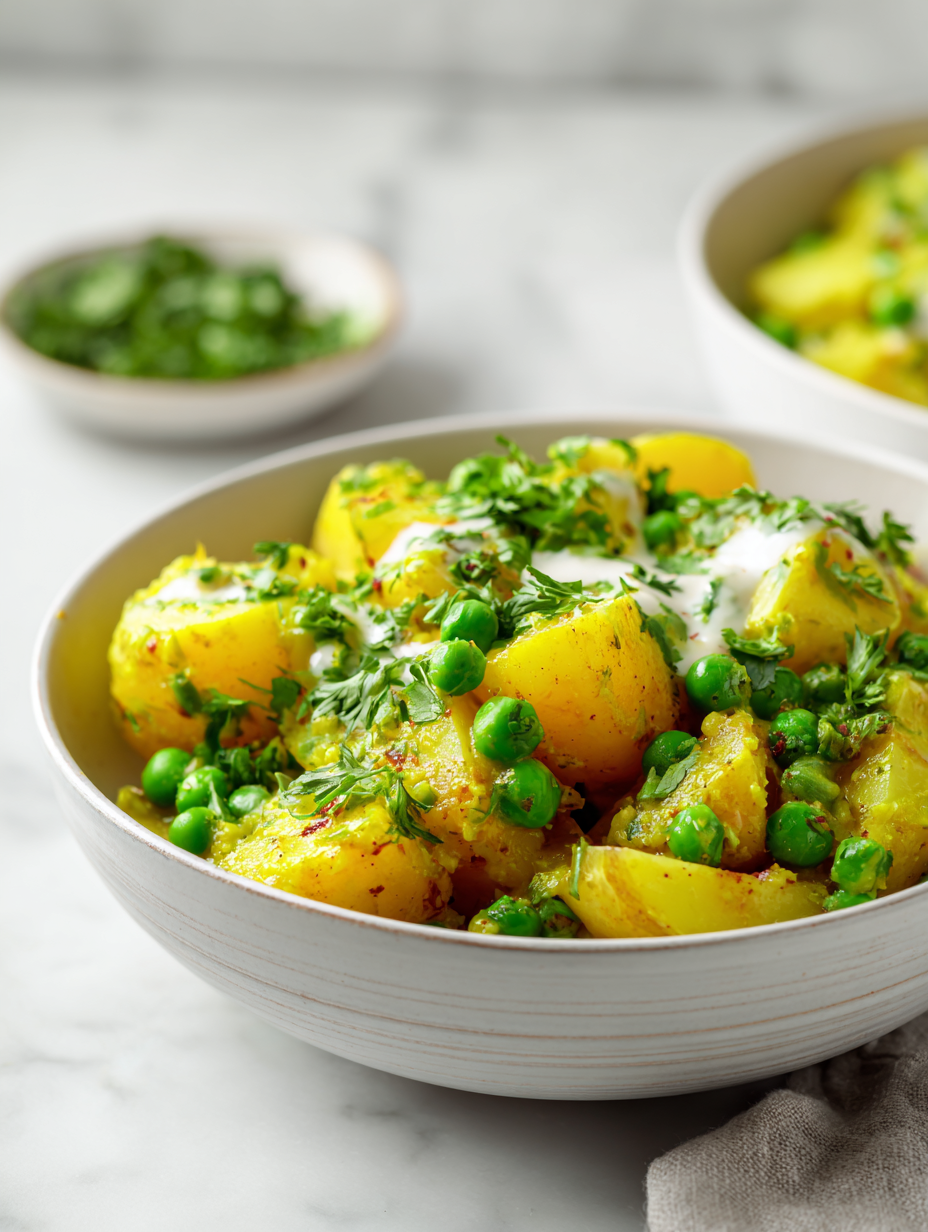
Potato and Pea Curry
Ingredients
Equipment
Method
- Peel and dice the potatoes into 1-inch chunks, ensuring they’re uniform for even cooking.
- Heat the cooking oil in a large heavy-bottomed pan over medium heat until shimmering. Add the cumin seeds and toast until fragrant and slightly darker, about 30 seconds, listening for a crackle.
- Add the chopped onion to the pan and sauté until golden and translucent, about 5-7 minutes, stirring frequently to prevent sticking or burning.
- Stir in the minced garlic and grated ginger, cooking for about 1 minute until fragrant—watch for a bubbly, aromatic scent that signals readiness.
- Mix in the ground turmeric and coriander, cooking for 30 seconds while stirring to toast the spices and deepen their aroma.
- Add the diced potatoes to the pan, stirring well to coat them with the spices. Cook uncovered for about 5 minutes until they start to turn golden around the edges, making a gentle sizzling sound.
- Pour in the canned diced tomatoes, stirring to combine. Bring the mixture to a simmer, then cover loosely with a lid and cook for 10 minutes, stirring occasionally, until the potatoes are tender and the sauce thickens slightly.
- Stir in the frozen peas and cook uncovered for another 3-5 minutes until they are bright green and heated through, tasting and adjusting salt if needed.
- Check the consistency—if too thick, stir in a splash of water and simmer briefly; if too runny, uncover and simmer until it reaches a velvety, coated texture.
- Remove the pan from heat and let the curry sit for a couple of minutes to allow flavors to meld. Serve hot, garnished with fresh herbs if desired, alongside rice or bread.
Quick tips for perfect curry
- Toasting spices: Warm cumin seeds until fragrant and slightly darker, releasing a nutty aroma that deepens the curry’s flavor.
- Potato prep: Dice potatoes into uniform chunks to ensure even cooking and a creamy texture throughout the dish.
- Pea timing: Add frozen peas at the end and cook just until bright green and heated through to keep their sweetness and texture.
- Simmer gently: Keep the heat moderate during simmering to avoid breaking down the potatoes too much or burning the spices.
- Adjusting thickness: If the curry is too thick, stir in a splash of water and simmer briefly; if too runny, uncover and cook until it thickens to your liking.
- Rest before serving: Let the curry sit off heat for a couple of minutes so flavors meld and the sauce thickens slightly, enhancing the overall taste.
Common mistakes and how to fix them
- FORGOT to adjust heat after adding potatoes → do so to prevent burning.
- DUMPED all spices at once → toast spices gradually for better flavor.
- OVER-TORCHED the garlic → cook on lower heat to avoid bitterness.
- MISSED the resting step → let curry sit for better flavor melding.
Quick fixes and pantry swaps
- If sauce simmers dry, splash in water and stir gently.
- When peas turn dull, add fresh ones for vibrant color and sweetness.
- Splash a little lemon juice to brighten over bland flavors.
- Patch burnt spices by removing the pan from heat immediately.
- Shield overcooked potatoes with a quick five-second rescue: add a splash of broth.
Prep, store, and reheat tips
- Peas: You can blanch fresh peas or thaw frozen ones ahead. Store in an airtight container in the fridge for up to 2 days; the bright sweetness sticks around, but expect a slight loss in vibrancy after reheating.
- Potatoes: Dice the potatoes in advance and keep submerged in water in the fridge to prevent browning. Use within 24 hours for the best texture—longer storage can make them soggy or waterlogged.
- Cooking ahead: The curry can be made a day ahead. Cool completely, then store in a sealed container in the fridge for up to 24 hours. Flavors deepen overnight, but the sauce may thicken—stir in a splash of water or broth when reheating.
- Reheating: Gently warm on the stovetop over low heat, stirring often. The aroma of spices and the creamy texture will come back, but keep an eye to prevent sticking or burning. Add a little water if it thickens too much.
Top questions about pea and potato curry
1. Can I use fresh peas instead of frozen?
Use frozen peas directly from the freezer; no need to thaw. They retain their bright color and sweetness if added at the right time, just before the final simmer.
2. How long do I cook the peas?
Peas can become mushy if overcooked. Add them at the end, simmer for just 3-5 minutes, until bright green and heated through.
3. What type of potatoes work best?
Starchy potatoes like Russets give a creamy texture, but Yukon Golds hold shape better and add a buttery richness. Choose based on your preference.
4. How can I make it spicier or milder?
Adjust the spice levels by adding more chili if you like heat, or less if you prefer milder flavors. Taste as you go during cooking.
5. What if the curry is too thick or thin?
If the curry is too thick, stir in a little water or broth and simmer briefly. Too runny? Uncover and cook on low until it thickens.
6. Can I use different oils or fats?
Use neutral oils like canola or sunflower for a clean taste. Ghee adds richness and a nutty aroma, but it’s optional depending on your preference.
7. How do I enhance the flavor before serving?
For a richer flavor, add a splash of lemon juice or a handful of chopped fresh herbs just before serving. It brightens the dish instantly.
8. Can I prep ingredients early?
Prepare the diced potatoes and chopped onions a day ahead. Store separately in airtight containers in the fridge for up to 24 hours.
9. How should I reheat leftovers?
Reheat the curry gently on the stove over low heat, stirring often. Add a splash of water if it thickens too much during reheating.
10. What do I do if spices burn?
If the spices burn and turn bitter, remove the pan from heat immediately, and start fresh with new spices. Toast spices carefully to avoid this.
This dish feels like a quiet victory—simple ingredients, honest flavors, and a warm bowl of comfort. It’s perfect for those nights when you need nourishing, unpretentious food that still makes you feel cared for.
Sometimes, it’s the humble ingredients that remind us why we cook in the first place—nothing fancy, just good, honest food that hits the spot and keeps things straightforward. That’s what makes this pea and potato curry a go-to for me, again and again.

Hi, I’m Isabella Cury, the creator behind Elevating Simple. Food has always been my passion, but it’s not just about creating meals—it’s about taking everyday ingredients and transforming them into something extraordinary.
My journey in the culinary world has been a blend of education, dedication, and a deep love for sharing food with others. Through this blog, I aim to inspire people to find joy in simple, flavorful cooking.


