
Lemon pea pasta is one of those dishes that catches you off guard with how bright it feels, especially on a sluggish spring day. I love how the simple act of squeezing fresh lemon over tender peas and al dente pasta transforms humble ingredients into something unexpectedly invigorating. It’s like a little burst of sunshine in every bite, without any fuss or fancy techniques.
This recipe is my go-to when I want something quick but full of personality. The sweetness of peas pairs perfectly with the citrus zing, making it feel both nostalgic and surprisingly fresh. It’s the kind of dish that’s perfect for a weeknight dinner, yet feels special enough to serve when friends pop over unannounced.
Focusing on the unexpected freshness of lemon paired with sweet peas, this recipe is about turning simple ingredients into a bright, springtime comfort dish that feels both nostalgic and surprisingly invigorating.
The story behind this recipe
- One spring, I was caught in a downpour after a quick shop run, clutching a bag of bright green peas and a lemon that smelled like summer. Sitting on my porch, I realized how these simple ingredients could become a fresh, vibrant meal that somehow felt like a celebration of the season, even on a drizzly day.
- That moment made me think about how sometimes, the best dishes come from a mix of chaos and chance—like squeezing lemon juice into steaming pasta and discovering that perfect balance of tartness and sweetness. It’s a reminder that even the simplest ingredients can create something unexpectedly joyful, if you’re willing to play a little.
- story_type
Ingredient breakdown
- Frozen peas: I love how they burst with sweetness when cooked, giving the dish a fresh, almost garden-like aroma. You can swap in fresh peas if you have them, but frozen keeps it easy and bright.
- Lemon: The zest and juice are the punch of brightness here. I always use freshly grated zest for that fragrant, citrusy punch—skip the bottled stuff, it’s dull. Adjust the lemon depending on how zingy you want it.
- Pasta: I prefer al dente, with a slight bite, so it holds up against the peas and sauce. Use whatever shape you like, but I find long, thin pasta like linguine or spaghetti works best.
- Olive oil: A good splash of extra virgin adds richness and helps the lemon and peas cling to the pasta. If you want a lighter version, use less oil or a drizzle of good quality neutral oil.
- Parmesan: It melts into the sauce, adding depth and saltiness. I often add a little more than called for because I love that cheesy gooeyness—try Pecorino for a sharper tang if you like.
- Garlic: I like it minced finely so it releases its aroma without overpowering. Sauté until fragrant but not browned—browned garlic can turn bitter fast.
- Fresh herbs: I usually toss in some chopped mint or basil right at the end for a herbal pop that complements the lemon. Feel free to experiment with parsley or chives for different freshness.
Spotlight on key ingredients
Lemon:
- Frozen peas: I love how they burst with sweetness when cooked, giving the dish a fresh, almost garden-like aroma. You can swap in fresh peas if you have them, but frozen keeps it easy and bright.
- The zest and juice are the punch of brightness here. I always use freshly grated zest for that fragrant, citrusy punch—skip the bottled stuff, it’s dull. Adjust the lemon depending on how zingy you want it.
Pasta & Olive Oil:
- Pasta: I prefer al dente, with a slight bite, so it holds up against the peas and sauce. Use whatever shape you like, but I find long, thin pasta like linguine or spaghetti works best.
- Olive oil: A good splash of extra virgin adds richness and helps the lemon and peas cling to the pasta. If you want a lighter version, use less oil or a drizzle of good quality neutral oil.
Notes for ingredient swaps
- Frozen peas: I love how they burst with sweetness when cooked, giving the dish a fresh, almost garden-like aroma. You can swap in fresh peas if you have them, but frozen keeps it easy and bright.
- Lemon: The zest and juice are the punch of brightness here. I always use freshly grated zest for that fragrant, citrusy punch—skip the bottled stuff, it’s dull. Adjust the lemon depending on how zingy you want it.
- Pasta: I prefer al dente, with a slight bite, so it holds up against the peas and sauce. Use whatever shape you like, but I find long, thin pasta like linguine or spaghetti works best.
- Olive oil: A good splash of extra virgin adds richness and helps the lemon and peas cling to the pasta. If you want a lighter version, use less oil or a drizzle of good quality neutral oil.
- Parmesan: It melts into the sauce, adding depth and saltiness. I often add a little more than called for because I love that cheesy gooeyness—try Pecorino for a sharper tang if you like.
- Garlic: I like it minced finely so it releases its aroma without overpowering. Sauté until fragrant but not browned—browned garlic can turn bitter fast.
- Fresh herbs: I usually toss in some chopped mint or basil right at the end for a herbal pop that complements the lemon. Feel free to experiment with parsley or chives for different freshness.
Equipment & Tools
- Large deep skillet: For cooking pasta and tossing ingredients together.
- Pot: To boil the pasta.
- Fine grater: For zesting the lemon.
- Tongs or slotted spoon: To lift and toss pasta and peas.
Step-by-step guide to lemon pea pasta
- Equipment & Tools: Gather a large, deep skillet for pasta, a pot for boiling, a fine grater for zest, and tongs or a slotted spoon for mixing.
- Fill the pot with water, add a generous pinch of salt, and bring to a rolling boil at 100°C (212°F).
- Add your pasta and cook until just al dente, about 8-10 minutes depending on the shape. Stir occasionally to prevent sticking.
- While pasta cooks, heat a tablespoon of olive oil in the skillet over medium heat (around 160°C/320°F).
- Add minced garlic, sauté until fragrant—about 30 seconds to 1 minute. Watch for a golden hue and aromatic smell.
- Drain the peas, then add them directly to the skillet. Cook until bright green and just tender, about 2 minutes. They should crackle softly.
- Once pasta is al dente, reserve a cup of pasta water, then drain the rest. Toss the hot pasta into the skillet with peas and garlic.
- Add lemon zest, juice, and a splash of reserved pasta water to loosen the sauce. Toss well to coat evenly.
- Finish with a generous handful of grated Parmesan, chopped herbs, and a drizzle of olive oil. Toss again to combine.
- Taste and adjust lemon, salt, or herbs as needed. The sauce should be bright, slightly creamy, and well coated.
- Rest the pasta for 1-2 minutes off heat. Serve immediately with extra cheese and herbs on top for a fresh finish.
Serve immediately, garnished with extra herbs and cheese. Toss gently before plating to ensure even coating. Rest briefly off heat if needed before serving to let flavors meld slightly.
How to Know It’s Done
- Pasta is al dente, with a slight firmness when bitten.
- Peas are tender, bright, and have a slight crackle when stirred.
- Lemon juice and zest are fragrant, bright, and evenly distributed.
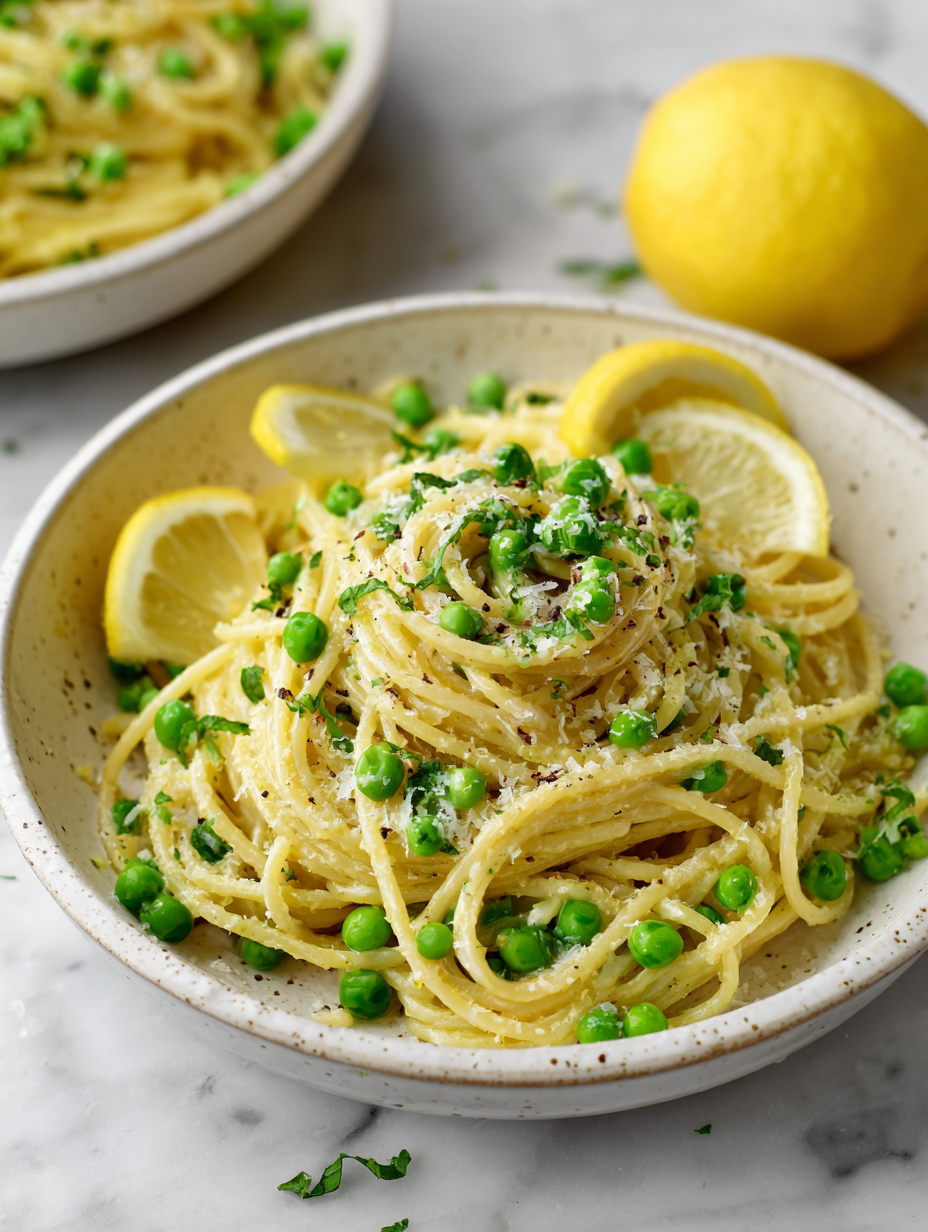
Lemon Pea Pasta
Ingredients
Equipment
Method
- Bring a large pot of salted water to a rolling boil, then add the pasta. Cook until just al dente, about 8-10 minutes, stirring occasionally. Drain, reserving about a cup of pasta water.
- While pasta cooks, finely grate the lemon zest and juice half of the lemon into a small bowl. Set aside.
- Heat the olive oil in a large skillet over medium heat until shimmering and fragrant. Add the minced garlic and sauté for about 30 seconds until it becomes aromatic and just begins to turn golden.
- Add the frozen peas directly to the skillet. Cook for about 2 minutes, stirring gently, until the peas are bright green and tender, with a slight crackle.
- Transfer the drained pasta to the skillet with the peas. Toss gently to combine, letting the pasta absorb some of the garlic and olive oil.
- Pour in the lemon juice and zest, then add a splash of the reserved pasta water to loosen the sauce. Toss everything together until evenly coated and glossy.
- Sprinkle the grated Parmesan over the pasta and toss again to melt the cheese into the sauce, creating a rich, flavorful coating.
- Finish by stirring in the chopped fresh herbs and seasoning with salt and freshly ground black pepper to taste. Toss everything once more to distribute evenly.
- Check the seasoning and acidity, adding more lemon juice or herbs if desired. Serve immediately with extra cheese and herbs on top for a bright, inviting presentation.
Tips for Perfect Lemon Pea Pasta
- Bolded Mini-Head: Use fresh lemon zest to release a burst of citrus aroma that wakes up the dish.
- Bolded Mini-Head: Sauté garlic gently until fragrant—browned garlic turns bitter, so keep an eye on it.
- Bolded Mini-Head: Cook peas just until bright green and tender—overcooking dulls their lively sweetness.
- Bolded Mini-Head: Reserve pasta water before draining—it’s your secret to loosening up the sauce perfectly.
- Bolded Mini-Head: Toss pasta in the skillet off heat to avoid overcooking and to better absorb flavors.
- Bolded Mini-Head: Add herbs at the end for a fresh herbal punch that brightens the lemon and pea combo.
Common mistakes and how to fix them
- FORGOT to adjust lemon amount → taste before serving, lemon brightness varies.
- DUMPED pasta water too quickly → reserve some to loosen sauce if needed.
- OVER-TORCHED peas → cook just until bright green and tender, avoid soft mush.
- FAILED to check salt levels → season pasta water generously for flavor.
Quick Fixes and Pantry Swaps
- If sauce is too thick, splash in a bit of hot pasta water and toss gently.
- When lemon is too mild, add a quick squeeze of zest for extra zing.
- Splash some olive oil on leftovers to revive gloss and flavor.
- Patch over undercooked peas by stirring in a few more minutes of heat until tender.
- Shield your garlic from burning by reducing heat once fragrant, then add peas.
Prep, store, and reheat tips
- Prep the lemon zest and juice ahead of time; store in a small jar in the fridge for up to 2 days, keeping the bright, citrus aroma intact.
- Cook the pasta until just al dente, then drain and toss with a little olive oil to prevent sticking—store in an airtight container for up to 24 hours.
- Blanch the peas briefly if using fresh, then cool quickly in ice water; store in a sealed container for up to 1 day to maintain their sweet crunch.
- Reheat leftovers gently in a skillet over low heat, adding a splash of reserved pasta water or olive oil to revive the sauce’s brightness and gloss.
- The flavors mellow slightly overnight, so consider brightening with an extra squeeze of lemon or a sprinkle of fresh herbs when reheating.
Top questions about lemon pea pasta
1. How much lemon should I use?
Fresh lemon juice adds a bright, tangy flavor that wakes up the sweetness of the peas. Use about half a lemon for a subtle zing, or a full lemon for more punch.
2. Can I use fresh peas instead of frozen?
Frozen peas are convenient and keep their sweet, garden-like flavor. Fresh peas work beautifully too—just blanch them briefly before adding.
3. How do I know when the pasta is ready?
Cook the pasta until just al dente, with a slight firmness. Overcooking makes it mushy, which ruins the texture of the dish.
4. Can I skip or substitute the olive oil?
Use a good quality extra virgin olive oil for richness and flavor. It helps the lemon and peas cling to the pasta and adds a silky finish.
5. Which herbs work best with this dish?
Add herbs like basil or mint at the end for a fresh herbal note. They brighten the dish and complement the lemon and peas well.
6. Why should I save pasta water?
Reserve some pasta water before draining. It’s your secret to loosening the sauce and helping it cling to the pasta better.
7. How long should I cook the garlic?
Be careful not to brown the garlic too much; it turns bitter. Sauté just until fragrant and golden, about 30 seconds.
8. What are visual clues that the dish is done?
The dish is ready when the peas are tender, the lemon aroma is fragrant, and the pasta is coated in a shiny, bright sauce.
9. Can I make this ahead?
You can prepare the lemon zest, juice, and cooked pasta ahead. Reheat gently, adding a splash of water or oil to refresh the flavors.
10. How do I fix a dull-tasting dish?
If the sauce seems dull, add a fresh squeeze of lemon or a handful of herbs at the end to brighten it up.
This lemon pea pasta is a reminder that simple ingredients can create something surprisingly lively and fresh. It’s the kind of dish I turn to when I want a quick, satisfying meal that doesn’t compromise on brightness or personality.
In a world of complex recipes, this one keeps it honest and straightforward—bright, sweet, and just a little zesty. It’s a dish I’ll keep making, especially when I need a burst of sunshine in my bowl, no fuss required.

Hi, I’m Isabella Cury, the creator behind Elevating Simple. Food has always been my passion, but it’s not just about creating meals—it’s about taking everyday ingredients and transforming them into something extraordinary.
My journey in the culinary world has been a blend of education, dedication, and a deep love for sharing food with others. Through this blog, I aim to inspire people to find joy in simple, flavorful cooking.


