
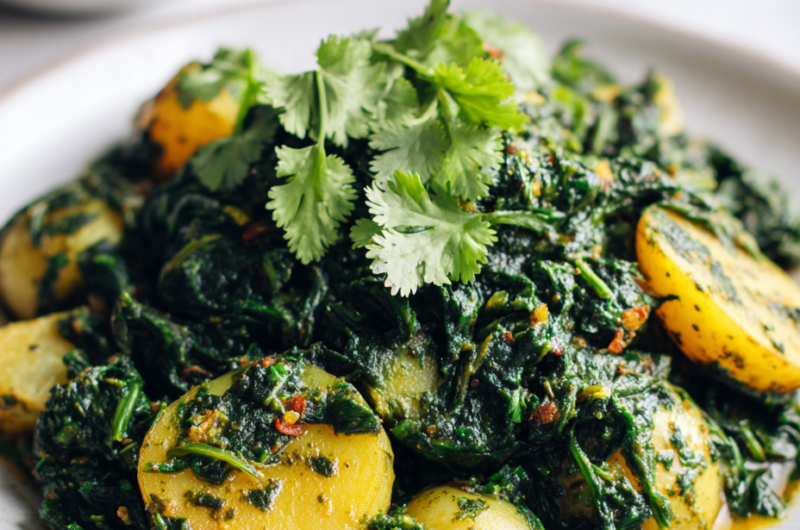
This spinach potato curry is my way of embracing the greens that often get pushed aside. The slight bitterness of spinach, when cooked just right, adds a surprising depth to the creamy potatoes and fragrant spices. It’s a dish that turns humble ingredients into something vibrant and satisfying, perfect for those nights when you want something wholesome without fuss.
I love how this dish can be a quick weekday fix or a cozy weekend meal. The earthy bitterness of spinach balances beautifully with the warmth of cumin, turmeric, and a hint of chili. It’s a reminder that even simple, leftover greens can shine, especially when paired with the comforting familiarity of potatoes simmered until tender.
Focusing on how the earthy bitterness of spinach pairs unexpectedly with the comforting warmth of potato curry, creating a dish that feels both grounding and vibrant, perfect for making use of leftover greens or a quick weekday meal.
The story behind this recipe
- This recipe came together on a rainy afternoon when I was rummaging through my fridge, looking for something quick but flavorful. I remembered how my grandmother used to toss spinach into almost everything, especially potatoes, to give a dish a little earthiness and a boost of greens. It’s one of those dishes that feels like a warm hug after a long day, simple yet deeply satisfying.
- I’ve made this curry countless times, tweaking spices and ingredients based on what I have. Sometimes I add a splash of coconut milk for creaminess, other times I toss in a handful of cilantro at the end for freshness. It’s a flexible, forgiving dish that reminds me how humble ingredients can come together into something comforting and real.
- heading: ‘The story behind this recipe’
Ingredient breakdown
- Spinach: I use fresh, bright green leaves that still have a slight curl. They soften beautifully, releasing a slightly earthy aroma. If your spinach is wilted or slimy, skip it or give it a quick chop and sauté until tender.
- Potatoes: Starchy potatoes like Russets work best—they become velvety when cooked. I peel and dice them into uniform chunks so they cook evenly, about 15-20 minutes in boiling water. For a creamier texture, mash a few at the end.
- Cumin seeds: I toast these briefly in oil until fragrant, which boosts their nutty aroma and adds depth. If you prefer a milder flavor, use ground cumin instead, but toast it lightly to avoid bitterness.
- Tomatoes: Ripe, vine-ripened tomatoes give this dish a bright, slightly tangy backbone. I chop them finely so they break down quickly, creating a rich base. If using canned diced tomatoes, drain a little to prevent excess liquid.
- Onion & garlic: The onion should be golden and slightly translucent, filling the kitchen with a sweet, caramelized scent. I mince garlic finely so it disperses evenly. If you overcook the garlic, it turns bitter, so add it last to the onion.
- Spices (turmeric, chili, garam masala): I keep these on hand, and I toast the turmeric briefly with cumin for a smoky note. If your spices are old, they lose potency—consider grinding fresh or warming them gently in oil first.
- Oil: I prefer a neutral oil like vegetable or canola that heats evenly. It’s essential for blooming spices and creating a glossy finish. If you want less richness, cut down on the oil or use a splash of water for sautéing.
Spotlight on key ingredients
Spinach:
- I use fresh, bright green leaves that still have a slight curl. They soften beautifully, releasing a slightly earthy aroma. If your spinach is wilted or slimy, skip it or give it a quick chop and sauté until tender.
- Potatoes: Starchy potatoes like Russets work best—they become velvety when cooked. I peel and dice them into uniform chunks so they cook evenly, about 15-20 minutes in boiling water. For a creamier texture, mash a few at the end.
Potatoes:
- I prefer starchy varieties like Russets; they break down into a creamy mash when simmered. Dicing them uniformly helps cook evenly, and they absorb flavors beautifully, giving the curry a silky texture.
- During cooking, they turn from firm to tender, with a velvety interior that holds the sauce well. Keep an eye on them to avoid over-mashing, which can lead to gluey bits if overcooked.
Notes for ingredient swaps
- Dairy-Free: Coconut milk adds creaminess and a hint of sweetness, but if you prefer a richer texture, use full-fat coconut cream. For a lighter option, skip the coconut completely and add a splash of water or broth.
- Potatoes: Sweet potatoes can be a vibrant alternative, bringing a natural sweetness and a softer texture. Just peel and dice, then cook as you would regular potatoes.
- Fresh Spinach: Swiss chard or kale work well if you don’t have spinach. Keep in mind, they may need a slightly longer cook time and a vigorous chop for better wilt.
- Tomatoes: Roasted red peppers blended into the sauce can add a smoky sweetness if fresh tomatoes aren’t in season. Canned diced tomatoes work perfectly, just drain excess liquid.
- Spices: If you don’t have garam masala, a pinch of curry powder mixed with a dash of cinnamon can mimic the warm spice profile. Toast spices briefly to maximize flavor.
- Oil: Use ghee for a richer, nuttier flavor if available. For a more neutral taste, vegetable or canola oil works fine, especially during sautéing.
- Herbs: Fresh cilantro is ideal for finishing, but parsley or mint can add a different, fresh note if cilantro isn’t your thing.
Equipment & Tools
- Large heavy-bottomed pan: Ensures even heat for sautéing and simmering.
- Knife: Chops potatoes, tomatoes, and aromatics.
- Wooden spoon: Stirs ingredients without scratching the pan.
- Small bowl: Holds pre-measured spices for quick addition.
- Lid: Controls simmering and retains moisture.
Step-by-step guide to spinach potato curry
- Equipment & Tools: Prepare a large heavy-bottomed pan for even heat distribution; a sharp knife for chopping; a wooden spoon for stirring; a small bowl for spices; a lid for simmering.
- Start by peeling and dicing 2 large potatoes into 1-inch chunks. Boil in salted water for 15 minutes, until tender but not mushy. Drain and set aside.
- While potatoes cook, heat 2 tbsp oil over medium heat (about 160°C/320°F). Add 1 tsp cumin seeds. Toast until fragrant and slightly darkened, about 30 seconds.
- Add 1 finely chopped onion. Sauté for 5-7 minutes until golden, stirring occasionally. The onion should smell sweet and caramelized around the edges.
- Toss in 2 minced garlic cloves and 1 tsp grated fresh ginger. Cook for 30 seconds until aromatic. Be careful not to burn the garlic; if it turns bitter, add a splash of water to cool the pan.
- Stir in 1 tsp turmeric, 1 tsp chili powder, and 1 tsp garam masala. Toast for 20 seconds until spices release a fragrant, smoky aroma. If spices burn, lower the heat or add a splash of water.
- Add 2 chopped tomatoes. Cook for 8-10 minutes, stirring occasionally, until they break down into a thick, fragrant sauce. If the mixture gets too dry, add a splash of water.
- Incorporate the cooked potatoes and 3 cups of washed, chopped spinach. Stir well, allowing the spinach to wilt and release its earthy aroma. Cover and simmer on low heat for 10 minutes, stirring halfway.
- Check the curry’s consistency. If too thick, add a splash of water; if too watery, simmer uncovered until it thickens. Taste and adjust salt as needed.
- Resting & Finishing: Turn off heat. Let sit for 5 minutes to allow flavors to meld. Serve warm, garnished with fresh cilantro if desired. Pair with rice or flatbread.
- Checkpoints & How to Know It’s Done: The potatoes should be velvety and tender; the spinach wilted and bright green; the oil should shimmer on the surface, indicating a well-cooked spice base.
Once off heat, let the curry rest for about 5 minutes. This helps flavors settle. Serve warm, garnished with fresh herbs if desired. Pair with rice or bread for a complete meal.
How to Know It’s Done
- Potatoes are tender and easily mashed with a fork.
- Spinach is wilted, vibrant, with no raw bitterness.
- Spice mixture is fragrant, oil shimmers on top.
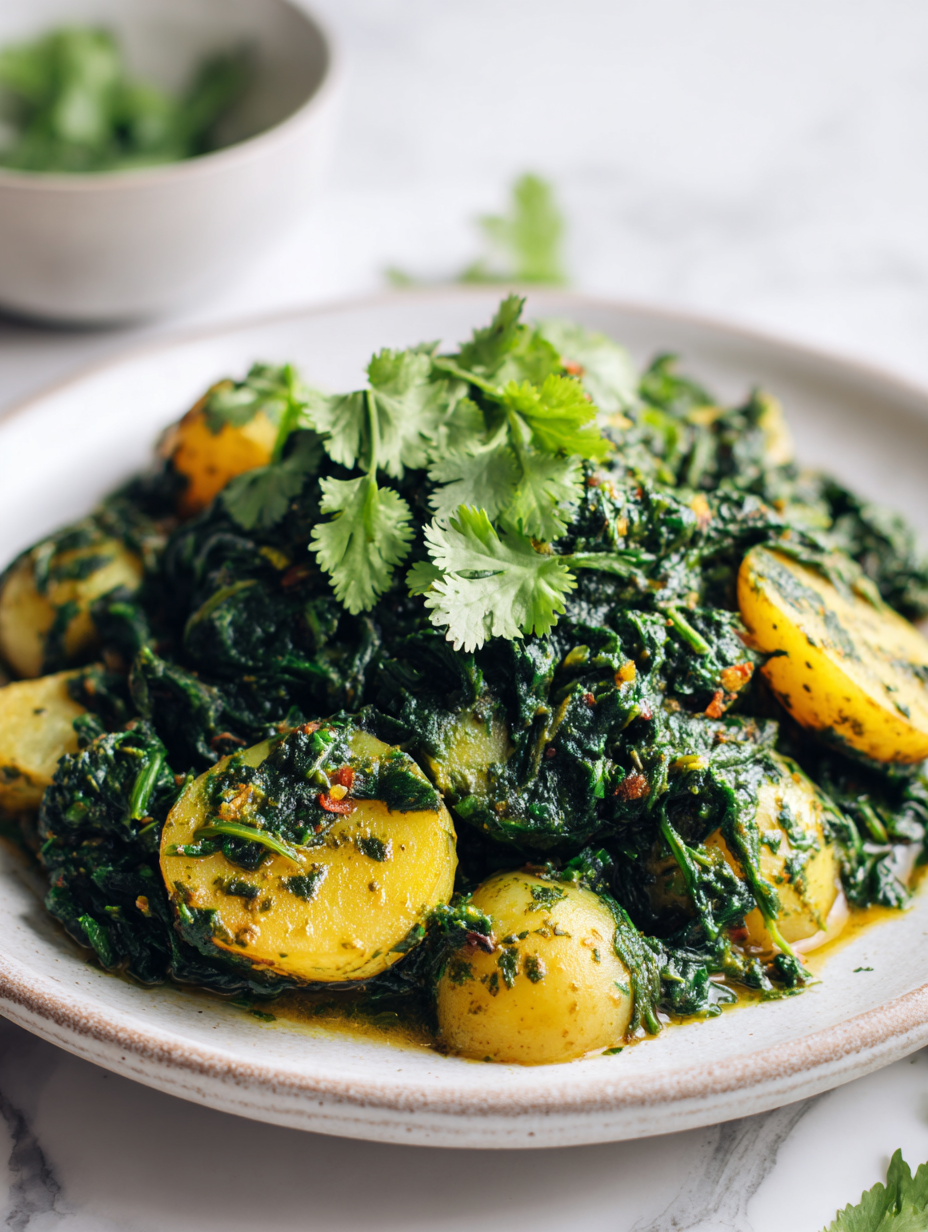
Spinach Potato Curry
Ingredients
Equipment
Method
- Peel and dice the potatoes into 1-inch chunks, then place them in boiling salted water and cook for about 15 minutes until tender. Drain and set aside.
- Heat oil in a large heavy-bottomed pan over medium heat. Add cumin seeds and toast for about 30 seconds until fragrant and slightly darkened.
- Add the chopped onion to the pan and sauté for 5-7 minutes, stirring occasionally, until golden and sweet-smelling.
- Stir in the minced garlic and grated ginger, cooking for another 30 seconds until aromatic, being careful not to burn the garlic.
- Add turmeric, chili powder, and garam masala to the pan. Toast the spices for about 20 seconds until fragrant, stirring constantly.
- Mix in the chopped tomatoes and cook for 8-10 minutes, stirring occasionally, until the mixture thickens and the oil begins to shimmer on the surface.
- Add the cooked potatoes and chopped spinach to the pan. Stir well to combine, allowing the spinach to wilt and turn bright green.
- Cover the pan and simmer on low heat for about 10 minutes, gently stirring halfway through, until the flavors meld and the spinach is tender.
- Uncover and cook for a few more minutes if needed to thicken the sauce. Taste and adjust salt as desired.
- Remove from heat, let the curry sit for 5 minutes to allow flavors to deepen, then serve hot with rice or flatbread, garnished with fresh herbs if desired.
Tips & Tricks for Perfect Curry
- Bolded mini-head: Toast spices until fragrant, about 20 seconds, to unlock their full aroma.
- Bolded mini-head: Sauté spinach just until wilted and vibrant green, avoiding overcooking to keep its bright flavor.
- Bolded mini-head: Use a heavy-bottomed pan to prevent hot spots and ensure even spice blooming.
- Bolded mini-head: Dice potatoes uniformly for even cooking; test tenderness with a fork after 15 minutes boiling.
- Bolded mini-head: Add a splash of water when garlic turns bitter, to cool the pan and mellow the flavor.
- Bolded mini-head: Let the curry rest for 5 minutes after simmering, allowing flavors to meld and deepen.
- Bolded mini-head: When sautéing onions, cook until golden and sweet-smelling, about 5-7 minutes, for rich depth.
Common mistakes and how to fix them
- FORGOT to stir spices early → Toast spices longer for deeper aroma.
- DUMPED potatoes too early → Cook until just tender, avoid mushiness.
- OVER-TORCHED spinach → Add spinach off heat if it burns, to prevent bitterness.
- MISSED resting time → Let curry sit 5 minutes before serving to meld flavors.
Quick Fixes and Pantry Swaps
- When spinach looks wilted, splash with lemon juice to revive its vibrancy.
- DUMPED potatoes too early? Cover and simmer a few more minutes until tender.
- Over-torched spice mix? Splash in a bit of water and stir quickly to cool the pan.
- When curry is too thick, splash with hot water and stir gently to loosen the sauce.
- Splash a dash of vinegar if the curry tastes flat, brightening up the flavors.
Prep, store, and reheat tips
- Prepare all ingredients in advance—peel and dice potatoes, wash and chop spinach—so everything is ready to cook, saving time and reducing chaos during busy evenings.
- Store leftover curry in an airtight container in the fridge for up to 2 days; the flavors deepen and intensify, making reheating a flavorful quick fix.
- Reheat gently on the stove over low heat, stirring occasionally, until steaming and fragrant—expect the spinach to soften further and aroma to intensify.
- For longer storage, freeze in portions for up to 1 month; the texture may soften slightly, but the flavor remains robust after reheating.
- Allow the curry to come to room temperature before reheating; this helps prevent overcooking and keeps the sauce smooth and vibrant, with a fresh aroma.
Top questions about spinach potato curry
1. Can I use frozen spinach?
Use fresh, bright green spinach leaves for the best flavor and texture. Wilted or slimy spinach won’t work well.
2. Can I make this ahead?
Yes, just thaw and squeeze out excess water before adding to the curry to avoid excess moisture.
3. How long does it keep?
Absolutely, cook the curry fully, then store in an airtight container in the fridge for up to 2 days. Reheat gently.
4. How do I reheat leftovers?
Add a splash of water or broth when reheating to loosen the sauce. Let it simmer until hot and fragrant.
5. Can I adjust the spice level?
For a richer flavor, add a teaspoon of ghee or a splash of coconut milk just before serving.
6. How spicy is this dish?
Yes, increase or decrease chili powder or fresh chilies according to your heat preference. Taste and adjust at the end.
7. What kind of potatoes work best?
Use waxy potatoes like Yukon Gold if you prefer a firmer texture that holds shape better, but they won’t be as creamy.
8. Can I use other greens?
You can substitute kale or Swiss chard for spinach. They may need a slightly longer cooking time and a rough chop.
9. What if the curry thickens too much?
If the curry gets too thick, stir in a little hot water or broth to loosen it up without losing flavor.
10. Can I skip toasting the spices?
Use ground cumin instead of seeds if you’re in a rush. Toast lightly to bring out flavor, but avoid burning.
Cooking this spinach potato curry feels like reconnecting with simple, honest flavors that ground me. The aroma of cumin and garlic filling the kitchen reminds me of home, even on hectic days. It’s a dish that’s unpretentious but deeply satisfying, making the everyday feel a little more special.
Plus, it’s a reminder that a humble green can shine brightly when paired with the comfort of potatoes and a good spice mix. No matter how many times I make it, it always feels like a small, honest victory. That’s what keeps me coming back to this dish, season after season.

Hi, I’m Isabella Cury, the creator behind Elevating Simple. Food has always been my passion, but it’s not just about creating meals—it’s about taking everyday ingredients and transforming them into something extraordinary.
My journey in the culinary world has been a blend of education, dedication, and a deep love for sharing food with others. Through this blog, I aim to inspire people to find joy in simple, flavorful cooking.


