
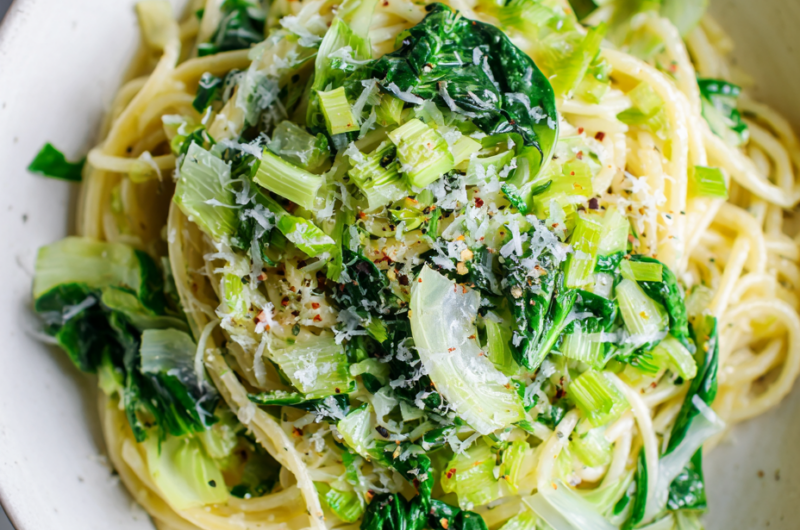
This leek and spinach pasta is my go-to when I want something comforting but still simple enough to throw together after a long day. It’s all about highlighting those overlooked ingredients—leeks’ sweet, mellow onion notes and the fresh, earthy bite of spinach—without fuss or fancy tricks. There’s a quiet beauty in making a meal that feels both humble and special, especially when you’re craving familiar flavors that settle deep into the bones.
What I love most is how this dish transforms everyday ingredients into something satisfying and bright. It’s not complicated; it’s about the little details—sautéing the leeks until they’re soft and translucent, tossing in fresh spinach just until it wilts, and coating everything in a good splash of olive oil. It’s a reminder that sometimes, the simplest things turn out to be the most memorable, especially if you let the ingredients speak for themselves.
Focusing on the overlooked beauty of simple ingredients, this recipe elevates humble leeks and spinach into a comforting, everyday pasta that feels special without fuss.
The story behind this recipe
This recipe came from a lazy Sunday afternoon craving something cozy but quick. I was rummaging through the fridge, eyeing those forlorn leeks and a handful of spinach that needed using up. The idea of turning them into a pasta dish felt like a small victory, a way to transform humble ingredients into something nourishing without fuss. It’s become a little ritual—those simple, honest flavors that remind me why I love cooking at home.
Ingredient breakdown: key components
- Leeks: I find slicing leeks lengthwise, then rinsing thoroughly, helps remove any grit—makes them sweet and tender, not gritty. You want that soft, translucent look when sautéed.
- Spinach: Fresh spinach wilts quickly, so adding it in batches until just wilted preserves its vibrant color and earthy freshness—don’t overcook it to avoid a mushy texture.
- Pasta: I prefer a short, ridged shape like rigatoni or penne—holds the sauce better and adds a nice chew. Cook until just al dente, still with a slight bite.
- Olive oil: Use a good quality extra virgin—its fruity, peppery notes really shine through, especially when you sauté the leeks. A splash at the end brightens everything.
- Garlic: I love crushing garlic and adding it early with the leeks—lets the aroma bloom and infuses the oil, but keep an eye so it doesn’t burn and turn bitter.
- Lemon zest: A little zest at the end lifts the dish, adding a bright, zingy contrast to the mellow greens—don’t skip it for that fresh burst.
- Salt & pepper: Season gradually and taste as you go—leeks and spinach need a good pinch of salt to bring out their sweetness and earthiness.
Spotlight on key ingredients
Leek:
- Leeks: I find slicing leeks lengthwise, then rinsing thoroughly, helps remove any grit—makes them sweet and tender, not gritty. You want that soft, translucent look when sautéed.
- Spinach: Fresh spinach wilts quickly, so adding it in batches until just wilted preserves its vibrant color and earthy freshness—don’t overcook it to avoid a mushy texture.
Spinach:
- I love adding fresh spinach right at the end—its bright, slightly bitter flavor contrasts beautifully with the mellow leeks, and it retains a delicate, silky texture if not overcooked.
- During cooking, it wilts down rapidly—watch for that vibrant green color and tender feel, not a slimy or overcooked mess.
Notes for ingredient swaps
- Dairy-Free: Swap butter for a splash of olive oil or coconut oil—keeps it light but still rich in flavor.
- Gluten-Free: Use your favorite gluten-free pasta—just watch the cooking time, it can vary quite a bit.
- Vegan: Replace Parmesan with nutritional yeast—adds a cheesy, nutty note without dairy.
- Extra Greens: Add kale or Swiss chard instead of spinach—these hold up a bit more during cooking and add a slightly different earthy taste.
- Lemon Zest: Use lime zest for a more tropical, slightly more floral brightness—keeps the dish fresh.
- Herb Boost: Toss in chopped fresh parsley or dill at the end—brightens the dish with a burst of herbal freshness.
- Pasta Type: Switch to whole wheat or chickpea pasta—adds fiber and protein, but may change the texture slightly.
Equipment & Tools
- Large skillet or sauté pan: To cook leeks and spinach evenly.
- Large pot: To boil the pasta.
- Slotted spoon or tongs: To drain pasta efficiently.
- Microplane or zester: To add fresh lemon zest.
Step-by-step guide to making the dish
- Gather a large skillet or sauté pan, around 25cm (10 inches), and heat it over medium heat until warm, about 2 minutes.
- Add 2 tablespoons of olive oil, letting it shimmer but not smoke. Toss in 2 sliced leeks (white and light green parts), cook for 5-7 minutes, stirring occasionally, until soft and translucent. They should smell sweet and mellow.
- While leeks cook, bring a large pot of salted water to a rolling boil. Cook 200g (7 oz) of pasta (penne or rigatoni), following package instructions for al dente, about 10 minutes. Drain, reserving a cup of pasta water.
- Push the leeks to one side of the pan, then add 2 minced garlic cloves to the cleared space. Sauté for 30 seconds until fragrant—be careful not to burn. If garlic turns bitter, add a splash of water to deglaze and cool the pan.
- Stir in 3 cups of fresh spinach, a handful at a time, until just wilted—about 2-3 minutes. The spinach should look vibrant and slightly shiny, not overcooked into mush.
- Add the cooked pasta to the pan with the greens. Toss well to coat everything in the oils and leeks, adding reserved pasta water a tablespoon at a time if needed for looseness. Cook together for 2 minutes so flavors meld.
- Finish with a zest of one lemon, a pinch of salt, and freshly ground black pepper. Taste and adjust seasoning accordingly. The aroma should be bright and inviting, with a slight tang from the zest.
Serve immediately in warm bowls, garnished with extra lemon zest if desired. Toss gently to distribute flavors. No resting needed, just enjoy while hot and fragrant.
How to Know It’s Done
- Leeks are soft, translucent, and sweet-smelling.
- Pasta is just al dente with a slight bite.
- Spinach is wilted but vibrant and not mushy.
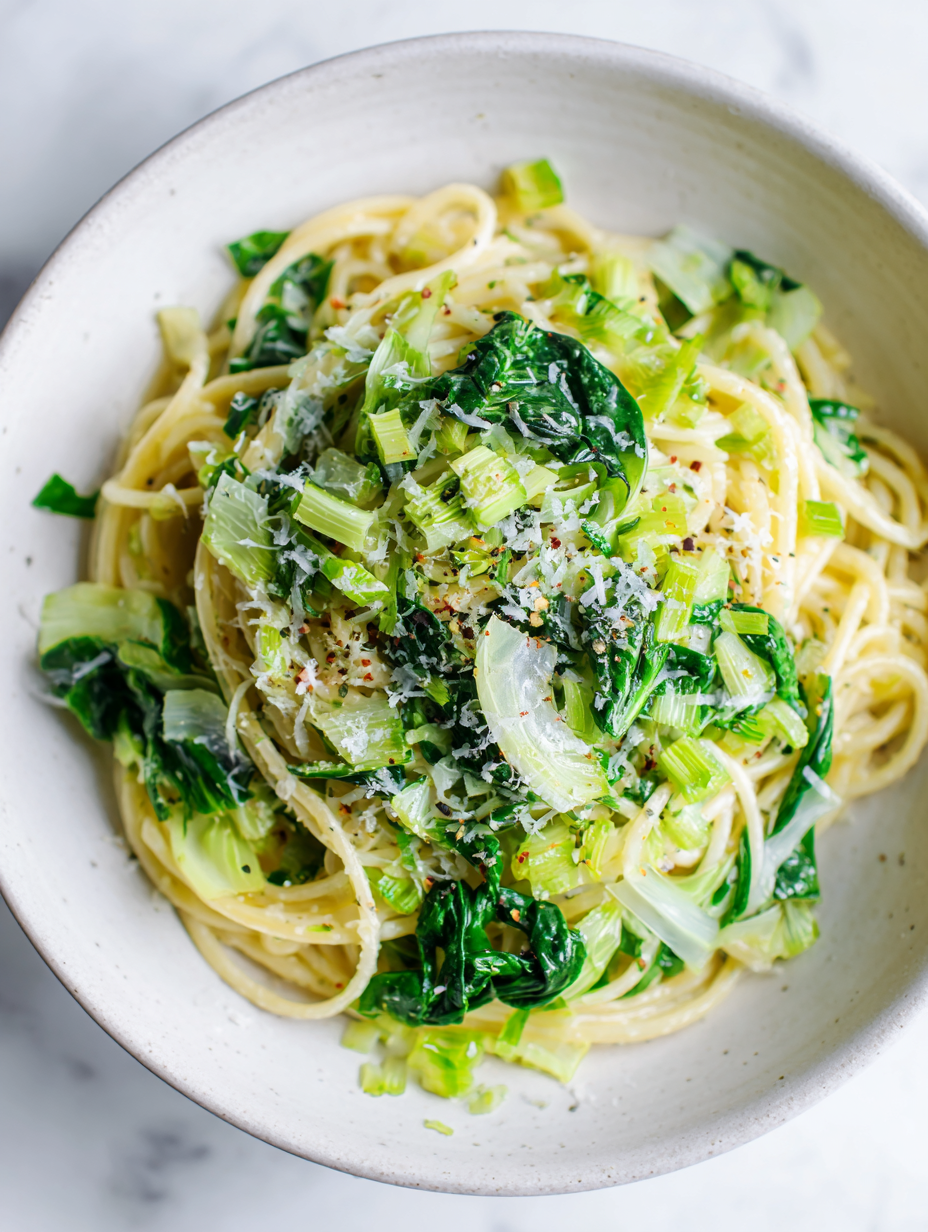
Leek and Spinach Pasta
Ingredients
Equipment
Method
- Heat a large skillet over medium heat and add the olive oil, allowing it to shimmer as it warms.
- Add the sliced leeks to the skillet and cook, stirring occasionally, for about 5-7 minutes. They should become soft, translucent, and slightly golden around the edges, releasing a sweet aroma.
- Push the leeks to one side of the pan and add the minced garlic to the cleared space. Sauté for about 30 seconds until fragrant, stirring constantly to prevent burning, until it turns a light golden color.
- Meanwhile, bring a large pot of salted water to a rolling boil. Add the pasta and cook until just al dente, following package instructions, about 8-10 minutes. Drain, reserving a cup of pasta water.
- Add the fresh spinach to the skillet with the leeks and garlic, in batches if needed, and cook for about 2-3 minutes until just wilted and vibrant green. The greens should be tender but still bright.
- Pour the cooked pasta into the skillet with the greens, tossing everything together to coat in the flavorful oil and vegetables. If the mixture seems dry, add a splash of the reserved pasta water and stir until the sauce becomes glossy and slightly loosened.
- Finish by adding the lemon zest over the pasta, then season with salt and freshly ground black pepper to taste. Toss gently to combine, and taste for balance—add more salt or pepper if needed.
- Serve immediately in warm bowls, garnished with extra lemon zest if desired. The dish should be fragrant, with tender greens, al dente pasta, and a bright, fresh flavor.
Pro tips for perfect leek and spinach pasta
- Use a wide, shallow pan to give the leeks room to soften evenly.
- Sauté leeks until translucent and slightly golden—this brings out their sweetness.
- Add garlic after the leeks have softened—burning garlic can make it bitter.
- Toss in spinach in batches—this preserves color and prevents sogginess.
- Use reserved pasta water to loosen the sauce—starchy water adds body and shine.
- Finish with lemon zest off heat—brightens the dish and keeps its fresh aroma.
- Taste and adjust seasoning at the end—leeks and spinach need salt to bring out their natural sweetness.
Common mistakes and how to fix them
- FORGOT to taste and adjust seasoning before serving—can result in blandness.
- DUMPED all pasta in boiling water at once—best to cook in batches for even doneness.
- OVER-TORCHED garlic—burns quickly, add later or lower heat to prevent bitterness.
- MISSED draining excess liquid—leaves dish watery, drain pasta thoroughly and let excess steam escape.
Quick fixes and pantry swaps
- When sauce is too thin, splash in a bit more pasta water and simmer until slightly thickened.
- If pasta sticks together, rinse briefly with warm water and toss with a teaspoon of olive oil.
- Splash lemon juice if greens are bitter—brightens the dish and balances flavors instantly.
- Patch over burnt garlic by quickly removing it and adding fresh garlic—avoid bitter notes.
- Shield delicate greens from overcooking by adding them last minute and removing from heat immediately.
Prep, store, and reheat tips
- Prep the leeks and spinach: slice the leeks and wash the spinach thoroughly; store separately in airtight containers for up to 2 days in the fridge.
- Cook the pasta ahead: boil until al dente, then drain, toss with a little olive oil to prevent sticking, and refrigerate for up to 24 hours.
- Reheat the pasta: warm gently in a skillet over low heat with a splash of water or olive oil, stirring until heated through and slightly shimmering.
- Flavor changes: expect a slightly softer texture and milder aroma after storage, but freshness can be revived with a quick reheat and a squeeze of lemon.
- Store the sautéed leeks and spinach separately or together in an airtight container for up to 1 day; reheat until fragrant and tender, about 2-3 minutes in a hot pan.
Top questions about leek and spinach pasta
1. How do I clean leeks properly?
Leeks can be gritty if not cleaned properly. Slice them lengthwise, rinse thoroughly under cold water, then slice again. This removes any hidden dirt and ensures they cook tender and sweet.
2. When should I add spinach during cooking?
Use fresh spinach for the best flavor and texture. Add it just until wilted, about 2-3 minutes, to keep its vibrant color and avoid mushiness.
3. How do I tell if the pasta is cooked perfectly?
Cook the pasta until just al dente, about 8-10 minutes, so it retains some bite. Overcooked pasta turns mushy and loses its texture.
4. When should I add lemon zest?
Stir in lemon zest at the end of cooking. It adds a bright, zingy contrast that lifts the mellow greens and makes the dish feel fresh.
5. Why save pasta water, and how do I use it?
Reserve a cup of pasta water before draining. It’s starchy and helps loosen the sauce, making everything cling beautifully.
6. What’s the best pan for sautéing leeks?
Use a wide, shallow pan for sautéing leeks. It allows even cooking and helps develop their natural sweetness without steaming.
7. How do I fix a watery pasta sauce?
If the sauce seems watery, simmer it a few more minutes to thicken or add a tiny bit of grated cheese for richness and body.
8. When should I add garlic during sautéing?
Add garlic after the leeks are softened. If added too early or cooked too long, garlic burns and turns bitter.
9. What’s a good vegan substitute for Parmesan?
For a vegan version, replace Parmesan with nutritional yeast. It provides a cheesy flavor with a slightly nutty, savory note.
10. How long can I store leftovers, and how do I reheat?
Leftovers can be refrigerated in an airtight container for up to 2 days. Reheat gently in a skillet, adding a splash of water to revive moisture and aroma.
This dish feels like a little act of defiance against the rush of everyday life. It’s simple, honest, and honest-to-God satisfying—those tender leeks and wilted spinach coated in olive oil, the bright lift of lemon zest. If I’m honest, it’s the kind of meal I crave when I want comfort that doesn’t weigh me down.
In the end, it’s just good ingredients, cooked without fuss, that remind me why I love eating at home. No fuss, no frills—just a plate of greens and pasta, and a moment to breathe in the kitchen. It’s humble, yes, but sometimes that’s exactly what you need.

Hi, I’m Isabella Cury, the creator behind Elevating Simple. Food has always been my passion, but it’s not just about creating meals—it’s about taking everyday ingredients and transforming them into something extraordinary.
My journey in the culinary world has been a blend of education, dedication, and a deep love for sharing food with others. Through this blog, I aim to inspire people to find joy in simple, flavorful cooking.