
This crockpot vegetable soup is my secret weapon for busy weekdays. It’s the kind of meal that feels like a warm hug after a long day, with minimal fuss and maximum comfort. I love coming home to that gentle aroma of simmering vegetables and herbs, knowing dinner is already sorted.
What makes this recipe special isn’t just how easy it is—it’s how forgiving. You can toss in almost any veggies you have lying around, and it still tastes like you put real thought into it. Plus, it’s packed with nutrients, so I don’t feel guilty about seconds or leftovers.
Sometimes, I think about how this soup has become my go-to because it’s a reminder that simple, honest food can be nourishing and satisfying. It’s not fancy, but it hits all the right marks—warm, hearty, and made with whatever I have on hand. That’s the beauty of a good crockpot recipe; it’s flexible and forgiving, just like the days it helps me get through.
Focusing on how this crockpot vegetable soup can be a lifesaver for busy weekdays, offering a warm, nutritious meal with minimal effort after long days. It’s about that satisfying moment when you open the lid and smell the slow-cooked harmony of fresh vegetables and herbs, knowing dinner is already taken care of.
The story behind this recipe
This recipe started as a way to use up leftover vegetables during a particularly hectic week. I needed something that was forgiving, easy, and still nourishing. Over time, I realized it was also a way to bring a little comfort after long days, especially when the house was quiet and the smell of simmering veggies filled the air. It’s become a go-to for me, a reminder that simple, honest cooking can be both practical and deeply satisfying.
Ingredient breakdown: key components
- Carrots: I like them sweet and slightly tender, which adds a subtle earthy crunch. Swap for parsnips if you want a milder, more floral note.
- Celery: It brings a fresh, crisp aroma that layers nicely. Ditch it for fennel for a slightly licorice hint and a unique texture.
- Onions: They form the savory base, mellowing into a sweet, aromatic note as they cook. Red onions give a sharper bite, so use yellow for sweetness.
- Tomatoes: I prefer a rich, smoky flavor with canned diced tomatoes, but fresh chopped tomatoes make it brighter and juicier—just add a splash of lemon juice at the end.
- Vegetable broth: The foundation; I use low-sodium for control, but chicken broth adds a deeper umami if you’re not vegetarian. Adjust salt accordingly.
- Seasonings: Bay leaf and thyme are my go-tos for that herbal depth. Swap for rosemary or oregano depending on your mood or what’s in the pantry.
- Frozen peas: They add a pop of sweetness and color right at the end. Fresh peas are lovely if you’ve got them, just add a few minutes extra cooking.
Spotlight on key ingredients
Carrots:
- I like them sweet and slightly tender, which adds a subtle earthy crunch. Swap for parsnips if you want a milder, more floral note.
- Celery: It brings a fresh, crisp aroma that layers nicely. Ditch it for fennel for a slightly licorice hint and a unique texture.
- Onions: They form the savory base, mellowing into a sweet, aromatic note as they cook. Red onions give a sharper bite, so use yellow for sweetness.
Tomatoes & Peas:
- Tomatoes: I prefer a rich, smoky flavor with canned diced tomatoes, but fresh chopped tomatoes make it brighter and juicier—just add a splash of lemon juice at the end.
- Vegetable broth: The foundation; I use low-sodium for control, but chicken broth adds a deeper umami if you’re not vegetarian. Adjust salt accordingly.
- Frozen peas: They add a pop of sweetness and color right at the end. Fresh peas are lovely if you’ve got them, just add a few minutes extra cooking.
Notes for ingredient swaps
- Dairy-Free: Skip butter or cream—use olive oil or coconut milk for richness, but expect a slightly different texture.
- Low-Sodium: Use water with spices instead of broth—your soup will be lighter, but you’ll need to boost herbs and seasoning.
- Gluten-Free: Ensure any added seasonings or broths are gluten-free—most are, but check labels if sensitive.
- Vegetarian/Vegan: Use vegetable broth and skip any animal-based seasonings—still hearty, just plant-based.
- Fresh Herbs: Fresh herbs like parsley or basil add brightness—dried will work but are more subdued, so add more.
- Starchy Veggies: Swap potatoes for sweet potatoes or parsnips—different sweetness and texture, but equally comforting.
- Peas: Use frozen green beans or snap peas—bring a fresh, crisp bite and vibrant color, especially near the end.
Equipment & Tools
- Large crockpot: For slow cooking all ingredients evenly.
- Cutting board: To chop vegetables safely and efficiently.
- Sharp knife: For precise chopping of vegetables.
- Wooden spoon: For stirring and preventing sticking.
Step-by-step guide to vegetable soup
- Gather your equipment: a large crockpot, a cutting board, a sharp knife, and a wooden spoon for stirring.
- Prep the vegetables: peel and chop carrots into half-inch pieces, dice celery sticks, and chop onions finely.
- Add the vegetables to the crockpot: start with carrots and celery at the bottom, then layer onions on top.
- Pour in the broth: use about 6 cups of vegetable broth, enough to cover the veggies comfortably.
- Season generously: toss in bay leaves, a teaspoon of thyme, salt, and pepper. Adjust later if needed.
- Set the crockpot to low: cover and cook for 6-8 hours. The aroma should start to bloom around the 2-hour mark.
- Check the texture: vegetables should be tender and easily pierced with a fork. If not, cook a bit longer.
- Add canned diced tomatoes and frozen peas: stir well, then cook on high for another 30 minutes to meld flavors.
- Finish with a squeeze of lemon: brightens the flavors and adds a fresh note to the soup.
- Taste and adjust seasoning: add more salt, pepper, or herbs if needed.
- Turn off the crockpot: let the soup rest for 5 minutes before serving to allow flavors to settle.
- Serve hot: ladle into bowls, garnish with fresh herbs if desired, and enjoy the comforting warmth.
Let the soup sit covered for 5 minutes after turning off. Then, ladle into bowls, garnish with fresh herbs if desired, and serve hot for maximum flavor and warmth.
How to Know It’s Done
- Vegetables are tender and easily pierced with a fork.
- Soup has a rich aroma of herbs and cooked vegetables.
- Broth is slightly thickened and flavorful, not watery.
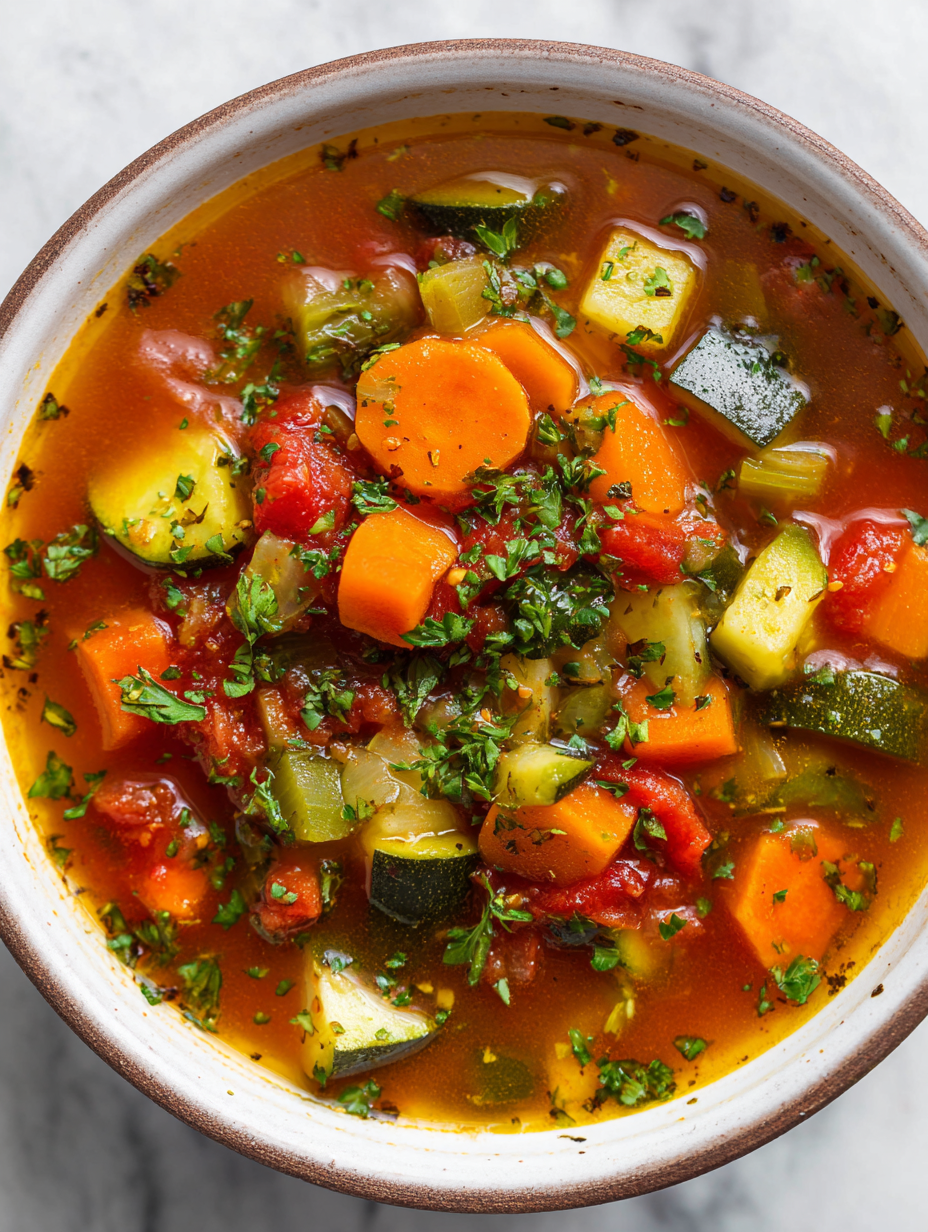
Crockpot Vegetable Soup
Ingredients
Equipment
Method
- Gather your equipment: a large crockpot, a cutting board, a sharp knife, and a wooden spoon for stirring.
- Peel and chop the carrots into half-inch pieces, dice the celery stalks, and finely chop the onion. This creates colorful, evenly sized pieces that will cook uniformly and look appealing in the final dish.
- Add the chopped carrots, celery, and onion into the crockpot, spreading them out evenly at the bottom. The layers help ensure all vegetables cook thoroughly and develop their flavors.
- Pour in the vegetable broth, making sure it covers the vegetables comfortably. The broth will act as the cooking liquid, infusing the vegetables with savory flavor as they simmer.
- Add the diced tomatoes along with their juices, then sprinkle in the dried thyme and place the bay leaves on top. These seasonings deepen the herbal aroma and add complexity to the soup’s flavor.
- Cover the crockpot with its lid and set it to low. Let the soup cook gently for 6 to 8 hours, until the vegetables are tender and the flavors have melded into a fragrant, hearty broth.
- Once the cooking time is up and the vegetables feel soft when pierced with a fork, stir in the frozen peas. Cover and cook on high for an additional 30 minutes to warm the peas and incorporate their sweet flavor.
- Remove the bay leaves and taste the soup, adjusting salt and pepper as needed. Squeeze in a little lemon juice if you desire a bright, fresh finish.
- Give the soup a gentle stir and let it rest for a few minutes to settle the flavors. The vegetables should be tender, and the broth flavorful and vibrant.
- Serve the hot vegetable soup in bowls, garnished with fresh herbs if desired, for a comforting, nourishing meal full of color and texture.
Tips & Tricks for Better Soup
- Bolded mini-head: Sear vegetables briefly before slow cooking for a deeper flavor.
- Bolded mini-head: Layer harder vegetables at the bottom to ensure even cooking and prevent sogginess.
- Bolded mini-head: Use fresh herbs towards the end to preserve their bright aroma and flavor.
- Bolded mini-head: Keep the lid on during cooking to trap flavors, but crack it open in the last 30 minutes for a slight reduction.
- Bolded mini-head: Stir occasionally to prevent sticking at the bottom and promote even heat distribution.
- Bolded mini-head: Add acidic ingredients like lemon juice after cooking to brighten up the overall flavor.
- Bolded mini-head: For a smoother texture, blend a portion of the soup before serving, but leave some chunks for texture.
Common mistakes and how to fix them
- FORGOT to check vegetables’ tenderness → Test with fork, cook longer if needed.
- DUMPED too much salt early → Adjust seasoning at the end, taste before adding more.
- OVER-TORCHED the soup → Keep an eye on heat; low and slow prevents burning.
- MISSED to remove bay leaf before serving → Always fish out herbs for cleaner flavor.
Quick fixes and pantry swaps
- When in doubt, splash some lemon juice to brighten dull flavors.
- If soup is too thick, add a quick splash of hot water and stir well.
- When vegetables are undercooked, set on high for 30 minutes more.
- DUMPED too much salt? Stir in a peeled raw potato to absorb excess salt.
- Splash a bit of vinegar if the soup tastes flat or dull.
Prep, store, and reheat tips
- Chop all vegetables the night before; keep them in airtight containers to preserve freshness and prevent odors in the fridge.
- Store the prepped vegetables in the fridge for up to 24 hours; they should stay crisp and vibrant, ready for slow cooking.
- Soup develops deeper flavor after sitting overnight in the fridge—up to 3 days; just reheat gently to avoid overcooking the veggies.
- Reheat on the stove over medium heat, stirring occasionally until steaming and fragrant, about 5-7 minutes; watch for bubbling around the edges.
- For longer storage, freeze the cooled soup in airtight containers for up to 3 months; the flavors mellow but still delicious after reheating.
Top questions about crockpot vegetable soup
1. How do I prepare the vegetables for best texture?
Use a sharp knife to chop vegetables into bite-sized pieces, ensuring even cooking and easy eating.
2. Can I substitute other vegetables?
You can swap in zucchini or green beans for a fresher, crunchier bite near the end of cooking.
3. How long does it take to cook in the crockpot?
Add the vegetables to the crockpot in the morning, set it on low, and let it cook for 6-8 hours.
4. When should I season the soup?
Taste the soup at the end and adjust salt, pepper, or herbs before serving for balanced flavor.
5. Can I make this soup low-sodium?
Use low-sodium broth to control salt, and add extra herbs for a fresh, vibrant flavor.
6. How should I store leftovers?
Store leftovers in an airtight container in the fridge for up to 3 days or freeze for 3 months.
7. How do I reheat the soup?
Reheat on the stove over medium heat, stirring occasionally, until steaming hot and fragrant.
8. How can I thicken the soup if it’s too watery?
If the soup is too watery, remove the lid during the last 30 minutes to help it thicken slightly.
9. How can I enhance the flavor before serving?
Add a splash of lemon juice or vinegar at the end to brighten the flavors and add freshness.
10. When should I add peas?
Use frozen peas or fresh peas at the end of cooking for a sweet, vibrant burst of color.
This crockpot vegetable soup is a quiet reminder that simple ingredients can create something nourishing and comforting. It’s perfect for those busy days when you need dinner without the fuss, filling the house with a warm, savory aroma.
Even after a long day, the act of ladling out this soup feels like a small victory—an easy way to bring a bit of kindness to the table. It’s not fancy, but it’s honest, practical, and made to be enjoyed with no regrets.

Hi, I’m Isabella Cury, the creator behind Elevating Simple. Food has always been my passion, but it’s not just about creating meals—it’s about taking everyday ingredients and transforming them into something extraordinary.
My journey in the culinary world has been a blend of education, dedication, and a deep love for sharing food with others. Through this blog, I aim to inspire people to find joy in simple, flavorful cooking.