
This asparagus and pea pasta is a celebration of spring’s brief but brilliant window. I love how the bright green hues and crisp textures remind me of those early days when everything feels fresh and new. It’s simple, quick, and needs just a handful of ingredients—yet each bite feels like a little burst of that season’s promise.
Cooking this dish is a meditative act, gently coaxing out the sweetness of the peas and the tender snap of the asparagus without overpowering them. I find myself savoring the process, from boiling the pasta to tossing everything together with a splash of lemon and a pat of butter. It’s about capturing that fleeting moment of peak freshness and holding onto it for just a little longer.
Focusing on the fleeting peak of spring when asparagus and peas are at their freshest, this recipe captures that crisp, slightly sweet burst of seasonality. It’s about celebrating the brief window of tender, vibrant greens with minimal fuss—just butter, garlic, and a splash of lemon to keep their bright, grassy notes alive. Cooking these ingredients gently preserves their delicate textures and flavors, making each bite a reminder of spring’s quick, fleeting beauty.
The story behind this recipe
- This dish came together one spring afternoon when I had just a handful of fresh peas and the last of the asparagus from my garden. I wanted something simple, honest, that celebrated those vibrant green flavors without fuss. Cooking became almost meditative, gently warming the vegetables just enough to keep their snap and sweetness intact. It’s a reminder that sometimes, the purest ingredients need the least interference to shine.
- I remember the first time I made it—standing at the kitchen counter, smelling those grassy notes mingling with garlic and lemon. The combination felt like a small, bright celebration of spring’s fleeting peak. Every time I revisit this recipe, I think about those short-lived windows of perfection, and how a simple meal can hold onto that season’s promise.
- heading: The story behind this recipe
Ingredient breakdown: key components
- Asparagus: I love how the bright green tips turn tender yet still have a slight snap. For maximum flavor, snap off the woody ends and give them a quick blanch—just a minute in boiling water until vibrant and crisp.
- Peas: Fresh peas burst with sweetness and a slight pop when you bite into them. If frozen, rinse under cold water to thaw quickly, then add directly to the pan for a sweet, juicy boost.
- Pasta: I prefer a sturdy shape like bucatini or rigatoni that holds onto the light sauce. Cook until al dente, about 1 minute less than package directions, for that perfect bite without mush.
- Lemon: The zest and juice bring brightness. Use a microplane for zest to get those tiny, fragrant shreds. Adjust the lemon to taste—more zest for punch, more juice for a citrusy splash.
- Butter: I use unsalted, preferably European-style for richness. Let it melt gently in the pan, then toss your pasta in to coat—watch for that silky sheen and faint nutty aroma.
- Garlic: Sauté until just fragrant, about 30 seconds, to avoid bitterness. It should smell warm and inviting, not burnt or sharp. Fresh is best, but garlic powder can work if you’re in a pinch.
- Olive Oil: Use a good-quality extra virgin for flavor. Drizzle a little over the finished dish for a fruity, peppery note—just enough to shimmer without overwhelming.
Spotlight on Key Ingredients
Asparagus and Peas:
- Asparagus: I love how the bright green tips turn tender yet still have a slight snap. For maximum flavor, snap off the woody ends and give them a quick blanch—just a minute in boiling water until vibrant and crisp.
- Peas: Fresh peas burst with sweetness and a slight pop when you bite into them. If frozen, rinse under cold water to thaw quickly, then add directly to the pan for a sweet, juicy boost.
Notes for ingredient swaps
- Dairy-Free: Swap butter for olive oil or a nut-based spread. The flavor will be brighter and less creamy, but still deliciously fresh.
- Vegan: Use olive oil instead of butter and skip cheese. Add a handful of toasted nuts for texture and richness.
- Gluten-Free: Choose a gluten-free pasta variety like rice or chickpea pasta. Keep an eye on cooking times—they vary widely.
- Fresh Peas: If out of fresh, frozen peas work perfectly—just rinse and add straight from the freezer. They thaw quickly and keep their sweetness.
- Lemon: For a milder citrus flavor, substitute with a splash of vinegar or a few drops of lemon-infused oil. Keeps the brightness without the acidity.
- Asparagus: If unavailable, green beans or snap peas can add a similar crunch and freshness. Adjust cooking time accordingly.
- Herbs: Fresh basil or mint can brighten the dish further. If none are on hand, a pinch of dried herbs adds a subtle note.
Equipment & Tools
- Large pot: Boil the pasta efficiently.
- Skillet: Sauté vegetables and coat pasta with sauce.
- Tongs: Toss and serve the pasta gently.
- Colander: Drain pasta without losing heat or starchy water.
- Microplane or zester: Zest the lemon finely for maximum aroma.
Step-by-step guide to asparagus and pea pasta
- Gather all your equipment: large pot for boiling, skillet for sautéing, tongs, and a colander. Have everything within arm’s reach before you start.
- Fill a large pot with water, add a generous pinch of salt, and bring to a rolling boil at 100°C (212°F).
- While waiting, snap off the woody ends of the asparagus—just bend until it naturally breaks at the right spot. Rinse well.
- Add the pasta to boiling water. Cook until just shy of al dente, about 1 minute less than package instructions—aim for a firm bite. Stir occasionally to prevent sticking.
- In a large skillet over medium heat (~160°C/320°F), melt 2 tablespoons of butter. Once it’s foamy and fragrant, add 2 minced garlic cloves. Sauté for about 30 seconds until warm and aromatic, not browned.
- Add the asparagus tips and a handful of fresh or thawed peas to the skillet. Sauté gently for 2-3 minutes, just until the vegetables are tender but still vibrant and slightly crisp. They should smell sweet and grassy, and the peas should pop gently when pressed.
- Drain the pasta, reserving about ½ cup of starchy cooking water. Add the pasta directly to the skillet with vegetables. Toss to coat in the buttery garlic, allowing the flavors to meld for 1 minute over low heat.
- Zest one lemon over the mixture, then squeeze in 1-2 tablespoons of lemon juice. Toss again, adding a splash of reserved pasta water if needed to loosen the sauce and help everything cling together.
Serve immediately with an extra squeeze of lemon and a drizzle of olive oil if desired. Toss lightly to distribute the flavors evenly. No resting needed—best enjoyed hot and fresh for that crisp, vibrant bite.
How to Know It’s Done
- Vegetables: asparagus tips are bright green, tender yet crisp, with a sweet aroma.
- Pasta: al dente, with a slight resistance when bitten, not mushy or overcooked.
- Sauce: silky and lightly coats the pasta, with a fresh lemon scent and buttery sheen.
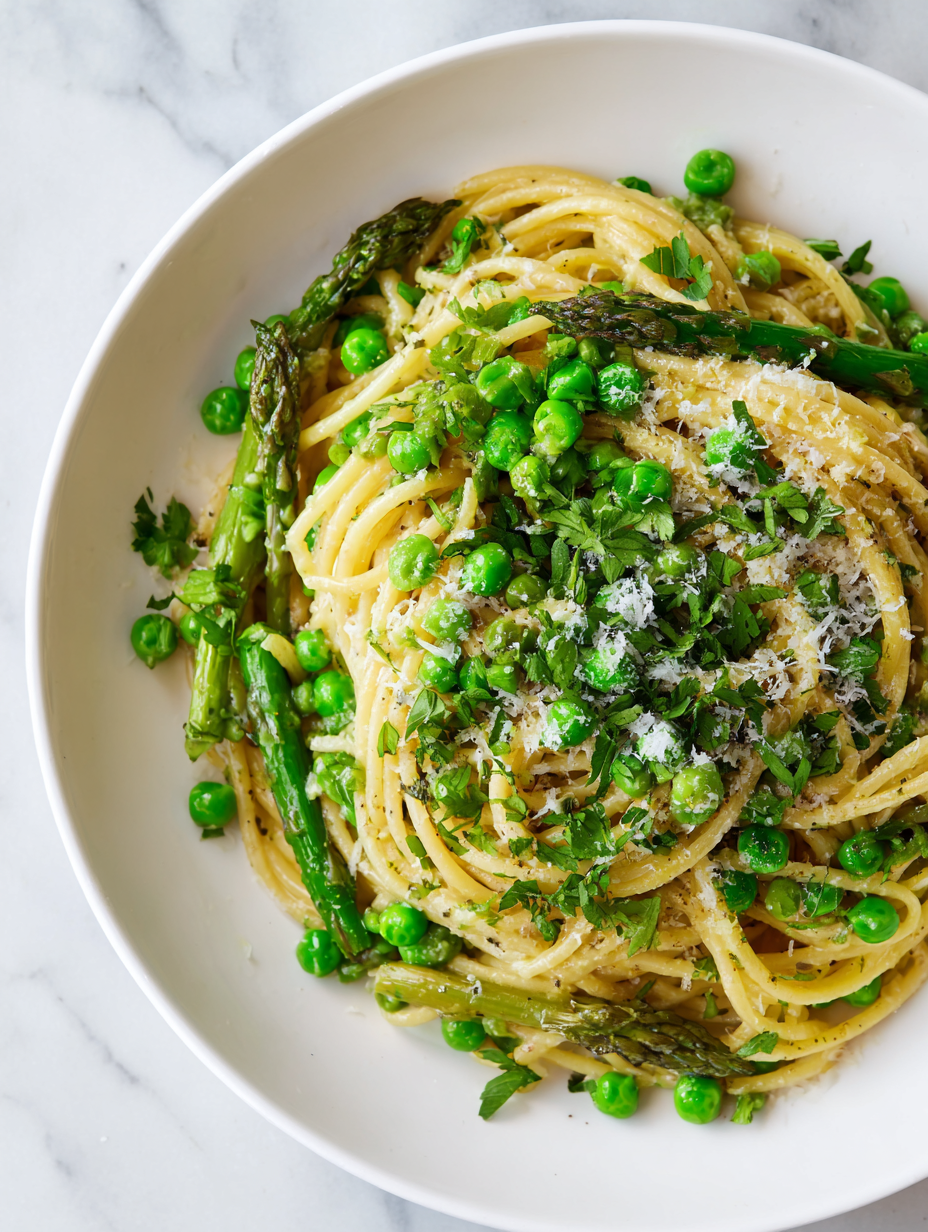
Spring Asparagus and Pea Pasta
Ingredients
Equipment
Method
- Bring a large pot of salted water to a rolling boil. Meanwhile, snap off the woody ends of the asparagus and rinse the tips thoroughly. Once boiling, add the pasta and cook until just shy of al dente, about 1 minute less than package instructions, stirring occasionally.
- While the pasta cooks, heat the skillet over medium heat and melt the butter. Add the minced garlic and sauté for about 30 seconds until fragrant and warm, smelling sweet and inviting.
- Add the asparagus tips and peas to the skillet. Sauté gently for 2-3 minutes, stirring occasionally, until the vegetables are tender yet still vibrant green and slightly crisp. You should see the peas pop gently when pressed and the asparagus tips turn bright green.
- Drain the pasta, reserving about ½ cup of the starchy cooking water. Add the drained pasta directly to the skillet with the vegetables. Toss everything together over low heat for about a minute, allowing the flavors to meld and coating the pasta in the buttery garlic mixture.
- Using a microplane, zest the lemon directly over the pasta mixture, then squeeze in 1-2 tablespoons of fresh lemon juice. Toss again, adding a splash of the reserved pasta water if needed to loosen the sauce and help it cling to every strand and piece.
- Finish by drizzling with olive oil, tasting, and adding salt as needed. Serve immediately, garnished with extra lemon zest or herbs if desired, for a bright, crisp bite that celebrates spring’s fleeting freshness.
Pro tips for perfect asparagus and pea pasta
- Blanch asparagus: Quickly cook for 1 minute in boiling water until vibrant green and tender-crisp, then shock in ice water to halt cooking and preserve color.
- Reserve pasta water: Save about half a cup before draining; starchy water helps loosen the sauce and cling to the pasta.
- Sauté garlic: Add minced garlic just until fragrant, about 30 seconds, to avoid bitterness—look for a warm, inviting aroma.
- Cook vegetables gently: Sauté asparagus tips and peas over medium heat until just tender and fragrant, avoiding overcooking into mush.
- Add lemon at the end: Zest and juice the lemon after removing from heat to keep brightness and prevent bitterness, creating a fresh, zingy flavor.
- Use the right pasta: Choose a sturdy shape like rigatoni or bucatini to hold the light sauce—aim for al dente, slightly resistant when bitten.
- Finish with a splash: Toss the pasta with reserved water and lemon zest just before serving to create a silky, bright coating.
Common mistakes and how to fix them
- FORGOT to check vegetable doneness → Test asparagus snap and pea tenderness.
- DUMPED pasta water too early → Save starchy water for sauce consistency.
- OVER-TORCHED garlic → Sauté until fragrant, not browned or bitter.
- MISSED seasoning balance → Taste and adjust lemon and salt before serving.
Quick fixes and pantry swaps
- If asparagus turns limp, splash with ice water to shock and restore crispness.
- When peas are frozen, rinse under cold water to thaw quickly and preserve sweetness.
- Splash a bit of olive oil if pasta sticks to prevent clumping.
- Patch overcooked garlic by adding a squeeze of lemon for brightness and cut bitterness.
- Shield delicate vegetables from overcooking by removing from heat early and letting residual heat finish the job.
Prep, store, and reheat tips
- Prep the vegetables: snap, rinse, and blanch the asparagus tips and peas up to a day ahead. Keep refrigerated, sensory note: vibrant green, crisp-tender texture.
- Cook the pasta in advance, drain, toss lightly with oil to prevent sticking, and store in an airtight container for up to 24 hours. Reheat briefly if desired—pasta should still have a slight bite.
- Zest and juice the lemon ahead of time. Store in a small jar or sealed container in the fridge; expect bright, fragrant citrus with minimal loss for up to 2 days.
- Reheat leftovers gently in a skillet over low heat, adding a splash of water or lemon juice to refresh the sauce. Look for a glossy, aromatic finish, not dry or dull.
- Asparagus and peas are best used fresh, but if stored for a day or two, their color may fade slightly, and they might lose some snap. Consume quickly for optimal freshness.
Top questions about asparagus and pea pasta
1. How do I know when asparagus is perfectly cooked?
Fresh asparagus tips are bright green, tender, and have a slight snap when cooked properly. They should be vibrant and crisp-tender, not limp or mushy.
2. Can I use frozen peas instead of fresh?
Frozen peas are a quick way to add sweetness; rinse under cold water to thaw, then toss them in the skillet directly from the freezer.
3. How do I ensure my pasta isn’t overcooked?
Cook the pasta until just al dente, about 1 minute less than package directions. It should be firm but tender, with a slight resistance when bitten.
4. How much lemon should I add?
Zest the lemon finely with a microplane to release the fragrant oils, then squeeze in fresh juice for a bright, tangy flavor.
5. What pasta shape works best for this dish?
Use a sturdy pasta shape like rigatoni or bucatini to hold the light sauce; cook until just shy of al dente for the best bite.
6. How do I prevent garlic from burning?
Sauté garlic until fragrant, about 30 seconds, to avoid bitterness. It should smell warm and inviting, not burnt.
7. Why should I save pasta water?
Reserve some pasta water before draining. It’s starchy and helps loosen the sauce, making it cling better to the pasta.
8. Can I make this ahead of time?
Serve immediately for the freshest flavor. Toss with extra lemon and olive oil if not eating right away.
9. How do I fix limp asparagus or peas?
If the vegetables look dull or limp, splash with ice water to shock and restore some crispness before use.
10. How do I season this dish properly?
Add a pinch of salt to the cooking water and taste the dish before serving to balance brightness and flavor.
Cooking this asparagus and pea pasta feels like capturing a fleeting moment of spring’s peak—bright, crisp, and full of life. It’s satisfying to turn simple ingredients into something that tastes like a quick walk through a garden after rain.
Whenever I make it, I’m reminded to appreciate those brief seasons when everything feels fresh and vibrant. It’s a humble dish, but it carries the essence of spring—quick to make, easy to love, and impossible to forget.

Hi, I’m Isabella Cury, the creator behind Elevating Simple. Food has always been my passion, but it’s not just about creating meals—it’s about taking everyday ingredients and transforming them into something extraordinary.
My journey in the culinary world has been a blend of education, dedication, and a deep love for sharing food with others. Through this blog, I aim to inspire people to find joy in simple, flavorful cooking.


