
This asparagus potato soup is a reminder that good things often come from simple, seasonal ingredients. I first stumbled on it during a spring trip, where the fresh green of asparagus and earthy potatoes seemed to whisper, ‘Make something cozy.’ Now, it’s my comfort in a bowl—something to turn to after a busy day or when I need a quick, nourishing meal that feels special.
What I love most is how the flavors mingle—bright, grassy asparagus blending with the creamy richness of potatoes. It’s not fancy, but it’s honest, with a humble charm that’s perfect for spring. Plus, it’s surprisingly forgiving—one of those recipes that makes you feel like a real cook, even if you’re just throwing things together.
This recipe is all about transforming humble, everyday ingredients—potatoes and asparagus—into a comforting, vibrant soup that feels like a warm hug after a long day. I love how the tender, earthy potatoes balance the bright, grassy asparagus, creating a dish that’s both simple and unexpectedly elegant. It’s my go-to for those days when I want something nourishing but not fussy, with just a hint of spring in every spoonful.
The story behind this recipe
- One spring, I was rummaging through my grandmother’s old kitchen drawer and found a worn recipe card for a green asparagus and potato soup. It wasn’t fancy, just simple ingredients she loved during her garden’s peak. That moment made me realize how much comfort can come from humble, seasonal foods, cooked with care and a bit of improvisation.
- This soup isn’t just about flavor; it’s about reconnecting with those quiet, honest moments in the kitchen. The earthy potatoes and vibrant asparagus remind me of lazy Sunday mornings, when everything feels slow and full of promise. It’s a dish that feels like a little piece of spring, wrapped up in a warm bowl.
- heading
- story_type
Ingredient breakdown: key components
- Asparagus: I love how fresh asparagus smells—sweet and grassy, like spring in full bloom. If yours isn’t very tender, try peeling the lower stalks to avoid stringiness, and don’t overcook to keep that bright green color.
- Potatoes: I prefer starchy potatoes—they give the soup a velvety texture and subtle earthiness. Waxy varieties can make it a bit gloopy, so stick with Russets or Yukon Golds for creaminess.
- Vegetable broth: I use homemade if I have it—rich, deeply savory, with a hint of roasted veggie notes. Store-bought works fine, but look for low-sodium options so you can control the salt and flavor.
- Onion & garlic: The aroma of gently sweating onions and garlic is my favorite part. If they start to brown too fast, reduce the heat and stir more often to keep the sweetness intact.
- Cream or milk: I like adding a splash of heavy cream—makes the soup luxuriously smooth. For dairy-free, coconut milk adds a subtle richness and a hint of tropical aroma, but it’s a different vibe.
- Lemon juice: Just a squeeze brightens everything. I do it right at the end, to keep that fresh, zesty pop that lifts the earthy flavors without overpowering.
- Salt & pepper: I season in layers, tasting as I go. Sometimes a pinch of smoked paprika adds a smoky warmth, which is a nice twist if you want a deeper flavor.
Spotlight on key ingredients
Asparagus:
- I love how fresh asparagus smells—sweet and grassy, like spring in full bloom. If yours isn’t very tender, try peeling the lower stalks to avoid stringiness, and don’t overcook to keep that bright green color.
- Potatoes: I prefer starchy potatoes—they give the soup a velvety texture and subtle earthiness. Waxy varieties can make it a bit gloopy, so stick with Russets or Yukon Golds for creaminess.
Potatoes:
- I love how the earthy, starchy potatoes break down into a smooth, creamy base. If they’re not cooked enough, the soup feels grainy, so cook until they’re just falling apart.
- Asparagus: The tips are the real show-stoppers—vivid green and tender, bursting with grassy flavor. Overcooked, they turn limp and dull, so aim for just tender, with a slight snap.
Notes for ingredient swaps
- Dairy-Free: Swap heavy cream for coconut milk. It adds richness but a slightly tropical flavor that’s different from creamy dairy.
- Vegetarian Broth: Use mushroom broth instead of vegetable stock for an earthier, umami-rich base that deepens the flavor.
- Potato Types: If Yukon Gold isn’t available, go for sweet potatoes for a sweeter, slightly softer texture, or use regular Russets for classic creaminess.
- Fresh vs Frozen Asparagus: Frozen asparagus works in a pinch, but fresh gives a brighter, more vibrant flavor and better texture.
- Onion Variations: Shallots or leeks can replace onions for a milder, sweeter note in the base; cook them gently to unlock their delicate aroma.
- Lemon Juice: Lime juice can substitute for lemon, adding a slightly different citrus brightness that pairs well with the greens.
- Herb Garnish: Fresh parsley or tarragon can replace chives or dill, offering a different aromatic profile and fresh finish.
Equipment & Tools
- Large heavy-bottomed pot: For even heat distribution and simmering the soup.
- Immersion blender or countertop blender: To puree the soup until smooth.
- Knife and chopping board: For trimming and chopping vegetables.
- Ladle: For serving the hot soup.
Step-by-step guide to asparagus potato soup
- Gather your equipment: a large heavy-bottomed pot for simmering, a blender or immersion blender for smoothness, and a ladle for serving. Have your knife and chopping board ready for prep.
- Trim the asparagus: snap off the woody ends, then chop into 2-inch pieces. Keep some tips aside for garnish if you like. This ensures even cooking and a tender bite.
- Peel and dice the potatoes: aim for 1-inch cubes to help them cook quickly and blend smoothly. Rinse in cold water to remove excess starch, which keeps the soup from getting gloopy.
- Heat 2 tbsp olive oil in the pot over medium heat (about 160°C/320°F). Add diced onion and garlic, cook until fragrant—about 3–4 minutes—until softened and translucent. Stir often to prevent browning.
- Add the potatoes and asparagus to the pot. Sauté for 2–3 minutes, then pour in 4 cups vegetable broth. Bring to a gentle boil, then reduce heat to low and cover. Simmer for 15–20 minutes, until vegetables are very tender.
- Check for doneness: potatoes should be soft and easily mashable, asparagus tender but still vibrant green, with a faint sweet aroma filling the kitchen. If the soup looks too thick, add a splash more broth or water.
- Puree the soup: use an immersion blender directly in the pot or transfer in batches to a countertop blender. Puree until silky smooth, about 1 minute. If it’s too thick, thin with a little hot water or broth.
- Return to low heat. Stir in 1/4 cup heavy cream or coconut milk for richness. Taste and season with salt and pepper. If you want a brighter flavor, add a squeeze of lemon juice now.
- Finish with a gentle stir, then let sit off heat for 2–3 minutes to meld flavors. Ladle into bowls, garnish with reserved asparagus tips or a drizzle of olive oil if desired.
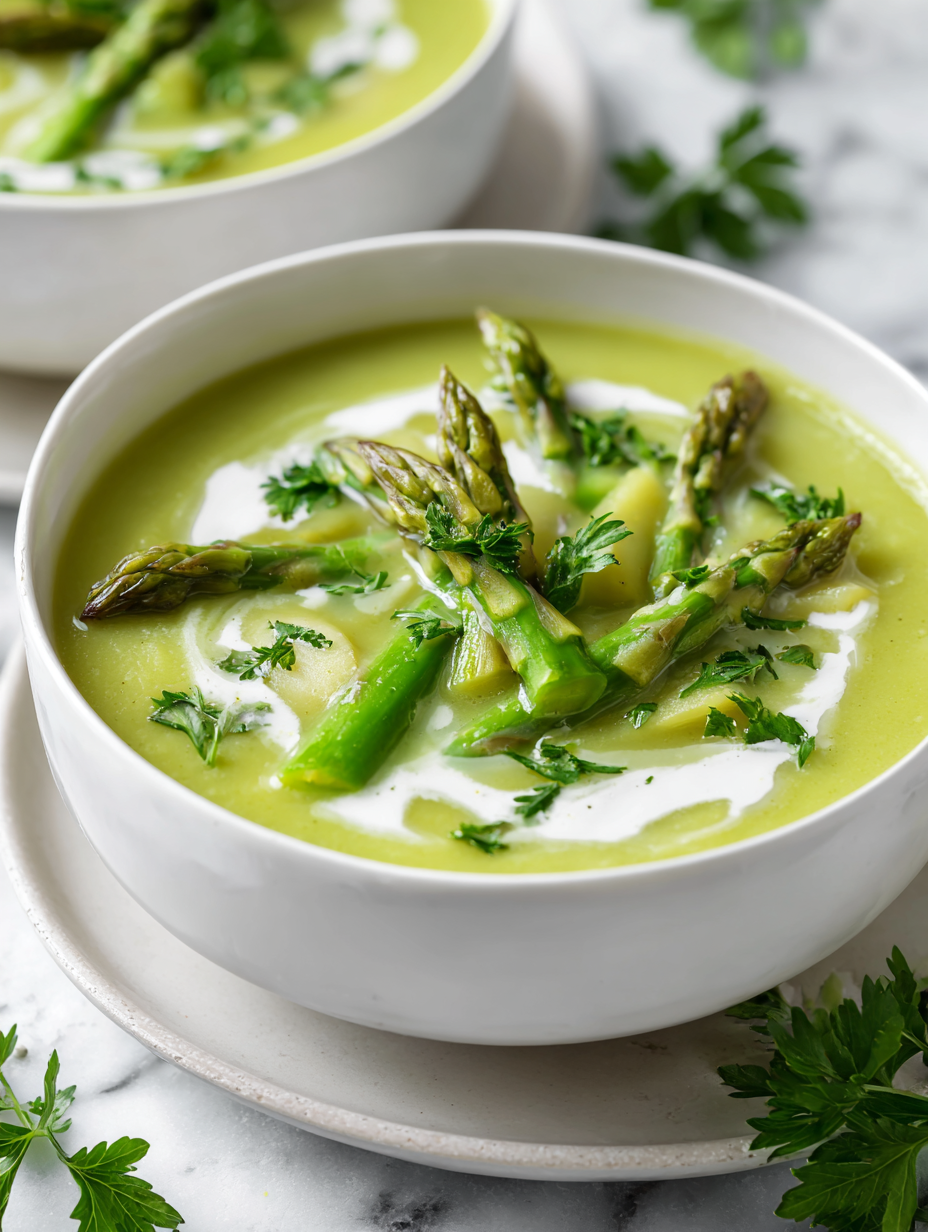
- Serve hot. The soup should be velvety, with a bright asparagus flavor balanced by earthy potatoes. It’s best enjoyed immediately, but leftovers reheat well with a quick stir.
Let the soup rest off heat for 2–3 minutes before serving to allow flavors to settle. Garnish with reserved asparagus tips or a drizzle of olive oil. Serve immediately for best velvety texture and fresh flavor.
How to Know It’s Done
- Vegetables are tender and easily mashed during simmering.
- Soup is smooth and velvety after blending.
- Bright, fresh aroma of asparagus fills the kitchen, with a hint of sweetness.
Asparagus Potato Soup
Ingredients
Equipment
Method
- Begin by trimming the woody ends off the asparagus, then peel the lower stalks if they seem tough or stringy. Chop the asparagus into 2-inch pieces, keeping some tips aside for garnish if you like.
- Peel and dice the potatoes into roughly 1-inch cubes. Rinse them in cold water to remove excess starch, which helps keep the soup smooth and velvety.
- Heat the olive oil in a large heavy-bottomed pot over medium heat. Add the chopped onion and minced garlic, sautéing gently until fragrant and translucent, about 3–4 minutes. The kitchen should fill with a sweet aroma as they soften.
- Add the diced potatoes and chopped asparagus to the pot. Stir well and cook for another 2–3 minutes, allowing the vegetables to mingle and develop a slight sheen.
- Pour in the vegetable broth, then bring everything to a gentle boil. Reduce the heat to low, cover the pot, and let it simmer for 15–20 minutes, until the potatoes are very tender and the asparagus tips are soft but still vibrant green.
- Once cooked, carefully remove the pot from heat. Use an immersion blender directly in the pot to puree the soup until smooth and silky, or transfer in batches to a blender. Be cautious and blend until the mixture is velvety, about 1 minute.
- Return the pureed soup to low heat. Stir in the heavy cream or coconut milk, then season with salt and pepper to taste. Squeeze in the juice of half a lemon to brighten the flavors, stirring gently to combine.
- Let the soup sit off heat for a couple of minutes to meld the flavors. Taste and adjust seasoning if needed, adding more salt, pepper, or lemon juice for balance.
- Ladle the hot, velvety soup into bowls. Garnish with reserved asparagus tips or a drizzle of olive oil if desired. Serve immediately, enjoying the vibrant color and comforting texture.
Pro tips for perfect asparagus potato soup
- Use a sharp knife to ensure clean cuts, which help asparagus cook evenly and stay bright green.
- Sauté the onions and garlic gently over medium heat until fragrant—about 3 minutes—to develop sweetness without bitterness.
- When simmering, keep the lid slightly ajar to prevent over-foaming and to help excess moisture evaporate, concentrating flavors.
- Puree in batches if your blender is small—this prevents splashes and ensures a smooth, velvety texture.
- Taste and season the soup at the end—adding lemon juice or salt gradually—so flavors stay bright and balanced.
- Finish the soup with a splash of cream or coconut milk off heat for a rich, silky finish that won’t curdle.
- For an extra pop of flavor, garnish with fresh herbs or reserved asparagus tips just before serving—adds texture and freshness.
Common mistakes and how to fix them
- FORGOT to check the soup’s texture before blending, resulting in a grainy puree.
- DUMPED ingredients into the pot without sautéing garlic first, losing depth of flavor.
- OVER-TORCHED the asparagus tips, turning them dull and bitter—stir more frequently to prevent this.
- MISSED adjusting seasoning after blending—taste and add salt or lemon for brightness.
Quick fixes and pantry swaps
- When soup looks grainy, blend it longer or strain to smooth out texture.
- Splash cold water on over-salted soup to dilute excess salt quickly.
- Patch burnt asparagus tips with fresh stalks for a brighter flavor.
- Shield the garlic from browning too fast by lowering heat or stirring constantly.
- If you’re short on time, swap fresh asparagus for frozen—just adjust cooking time accordingly.
Prep, store, and reheat tips
- Chop the asparagus and potatoes ahead of time; store in airtight containers in the fridge for up to 24 hours. The fresh-cut aroma will be brightest within this window.
- Cooked soup can be refrigerated for 3–4 days. Reheat gently over low heat, stirring often, until steaming and fragrant—look for a velvety texture and bright aroma.
- For longer storage, freeze in individual portions for up to 2 months. Thaw in the fridge overnight, then reheat, adjusting with a splash of broth if needed to restore creaminess.
- Reheating may cause slight separation; blend briefly again if needed to regain smoothness. Expect a slightly muted asparagus scent, but the flavors will still shine through.
- The flavor deepens after a day or two in the fridge, with a richer, more integrated earthiness—just reheat and give it a good stir before serving.
Top questions about asparagus potato soup
1. How do I pick fresh asparagus?
Look for bright green, firm stalks with tightly closed tips. The smell should be sweet and grassy, not sour or musty.
2. Should I peel the asparagus?
Peeling the lower, woody parts helps keep the soup smooth and tender. Use a vegetable peeler for even results.
3. What potatoes work best for this soup?
Use starchy potatoes like Russets or Yukon Golds—they break down into a creamy, velvety base when cooked.
4. How do I know when the vegetables are cooked?
Simmer until potatoes are very soft, about 15–20 minutes, and check that asparagus tips are tender but still vibrant green.
5. How smooth should the soup be?
Puree until silky smooth, either with an immersion blender or in a blender in batches. If too thick, thin with broth or water.
6. When should I add lemon juice?
Add lemon juice at the end for brightness. It lifts the flavors and balances the earthiness of potatoes and asparagus.
7. Can I make it dairy-free?
Stir in cream or coconut milk after blending for extra richness. Taste and adjust seasoning before serving.
8. How do I reheat leftovers?
Reheat gently over low heat, stirring often. The soup may thicken; add a splash of broth to loosen it.
9. What if the soup is grainy or too salty?
If the soup turns grainy, blend it longer or strain to smooth out texture. Over-salting can be fixed by adding water or broth.
10. How should I serve the soup?
Garnish with fresh herbs, reserved asparagus tips, or a drizzle of olive oil just before serving for extra texture and flavor.
This soup feels like a quiet celebration of spring, with its bright green hues and fresh aroma. It’s simple, honest, and unexpectedly comforting, especially on those days when you need something nourishing without fuss.
Sometimes, it’s the humble ingredients—potatoes and asparagus—that remind us how good food can be when cooked with care. Sitting down with a warm bowl, I find that little moments of connection and satisfaction are what really matter.

Hi, I’m Isabella Cury, the creator behind Elevating Simple. Food has always been my passion, but it’s not just about creating meals—it’s about taking everyday ingredients and transforming them into something extraordinary.
My journey in the culinary world has been a blend of education, dedication, and a deep love for sharing food with others. Through this blog, I aim to inspire people to find joy in simple, flavorful cooking.


