
This Crockpot Cabbage Soup is my secret weapon for those hectic weeks when time feels tight but I still crave something warm and nourishing. It’s incredible how a handful of humble ingredients, simmered slowly, can turn into a dish that feels like a hug in a bowl. I’ve come to rely on this recipe not just for its simplicity but for the comfort it brings after long days.
What I love most is how forgiving it is—no need for constant stirring or fussing over every step. Just toss everything in, set it, and forget it. The aroma alone, with hints of garlic and smoky broth, makes the house feel cozy and inviting, even if I’m running around trying to get everything done.
Focusing on how this humble cabbage soup became my go-to comfort during busy weeks, proving that simple ingredients can nurture the soul when slow-cooked with care.
The story behind this recipe
- This soup started as a way to clear out the fridge before a busy week. I threw in whatever greens and vegetables I had, let it simmer, and discovered how comforting simple, slow-cooked cabbage can be. It’s become a weekly ritual now, especially on those days when I need something honest and unpretentious.
- One winter, I was feeling under the weather, craving something warm but easy to make. I threw everything into the crockpot — a bit of this, a bit of that — and the smell alone lifted my spirits. That pot of soup became my little salvation, proving how a handful of humble ingredients can be transformed into something nourishing and soul-soothing.
- heading
Ingredient breakdown: key components
- Cabbage: I love how it turns sweet and tender as it cooks, releasing a subtle, earthy aroma. Feel free to add more for bulk—just watch it soften to your liking.
- Vegetable broth: I prefer homemade for depth, but store-bought works fine. Look for a smoky or umami-rich variety to boost flavor without extra fuss.
- Onions and garlic: These form the savory backbone. Sauté them briefly if you have time—smells earthy and sweet, really lifts the dish.
- Carrots: I toss in a few for a touch of sweetness and color. Thin slices cook faster, so adjust your prep accordingly.
- Tomatoes (canned or fresh): They add brightness and a bit of acidity. If using fresh, make sure they’re ripe for that juicy, lemon-bright kick.
- Seasonings: Salt, pepper, maybe a dash of smoked paprika or hot sauce. Adjust at the end—trust your nose, it should smell warm and inviting.
- Optional extras: Beans or leftover cooked grains can turn this into a hearty meal. Just toss them in towards the end to warm through without overcooking.
Spotlight on key ingredients
Cabbage and broth:
- Cabbage: I love how it turns sweet and tender as it cooks, releasing a subtle, earthy aroma. Feel free to add more for bulk—just watch it soften to your liking.
- Vegetable broth: I prefer homemade for depth, but store-bought works fine. Look for a smoky or umami-rich variety to boost flavor without extra fuss.
Notes for ingredient swaps
- Broth: I prefer homemade vegetable broth for depth, but store-bought works fine. Look for smoky or umami-rich varieties to boost flavor without extra fuss.
- Cabbage: If you want a milder flavor, try Napa cabbage—softer and sweeter. For crunch, add it at the end, just briefly warming.
- Tomatoes: Fresh, ripe tomatoes bring brightness; canned diced tomatoes are convenient and consistent. Use fire-roasted for a smoky twist.
- Onions and garlic: Use shallots or leeks if you want a gentler, sweeter aroma. If skipping garlic, add a pinch of garlic powder later.
- Carrots: Swap with parsnips or sweet potatoes for a different sweetness; keep in mind their cook time varies. Thin slices help them cook faster.
- Seasonings: Experiment with smoked paprika or cayenne for smoky heat. A splash of apple cider vinegar can brighten the broth at the end.
- Add-ins: Beans or leftover grains can bulk up the soup. Use canned beans for convenience and add during the last 30 minutes to warm through.
Equipment & Tools
- Crockpot: Slow cooking all ingredients evenly over hours.
- Wooden spoon: Stirring and mixing without damaging the crockpot.
- Sharp knife: Chopping vegetables cleanly and safely.
- Cutting board: Providing a stable surface for prepping ingredients.
Step-by-step guide to crockpot cabbage soup
- Gather your equipment: a large crockpot, a wooden spoon, a sharp knife, and a cutting board. These will help you prep and cook efficiently.
- Chop the vegetables: Dice 1 onion, 2 carrots, and 3 cloves of garlic. Keep the pieces uniform for even cooking.
- Layer ingredients: Place chopped onion, carrots, garlic, half of the chopped cabbage, and a can of diced tomatoes into the crockpot.
- Add liquids: Pour 4 cups of vegetable broth over the ingredients. Season with salt, pepper, and a teaspoon of smoked paprika if you like a smoky note.
- Set to cook: Cover the crockpot and cook on low for 6-8 hours or on high for 3-4 hours. The aroma will start filling your house with savory scents.
- Check the texture: After cooking time, the cabbage should be tender and the broth flavorful. If it looks too watery, turn to high and cook uncovered for 15-20 minutes to reduce slightly.
- Adjust seasonings: Taste and adjust salt and pepper. If you want a little heat, add hot sauce or crushed red pepper flakes now.
- Finish with greens: Stir in the remaining cabbage and cook for another 15 minutes until wilted but still vibrant.
- Rest and serve: Let the soup sit for 5 minutes. Ladle into bowls, maybe add a splash of vinegar or a squeeze of lemon for brightness.
Let the soup rest for 5 minutes before serving. Ladle into bowls, garnish with fresh herbs if desired, and enjoy the comforting warmth.
How to Know It’s Done
- The cabbage is tender and slightly caramelized around the edges.
- Broth is rich, with a smoky, savory aroma.
- Vegetables are soft but not mushy, with a slight jiggle when stirred.
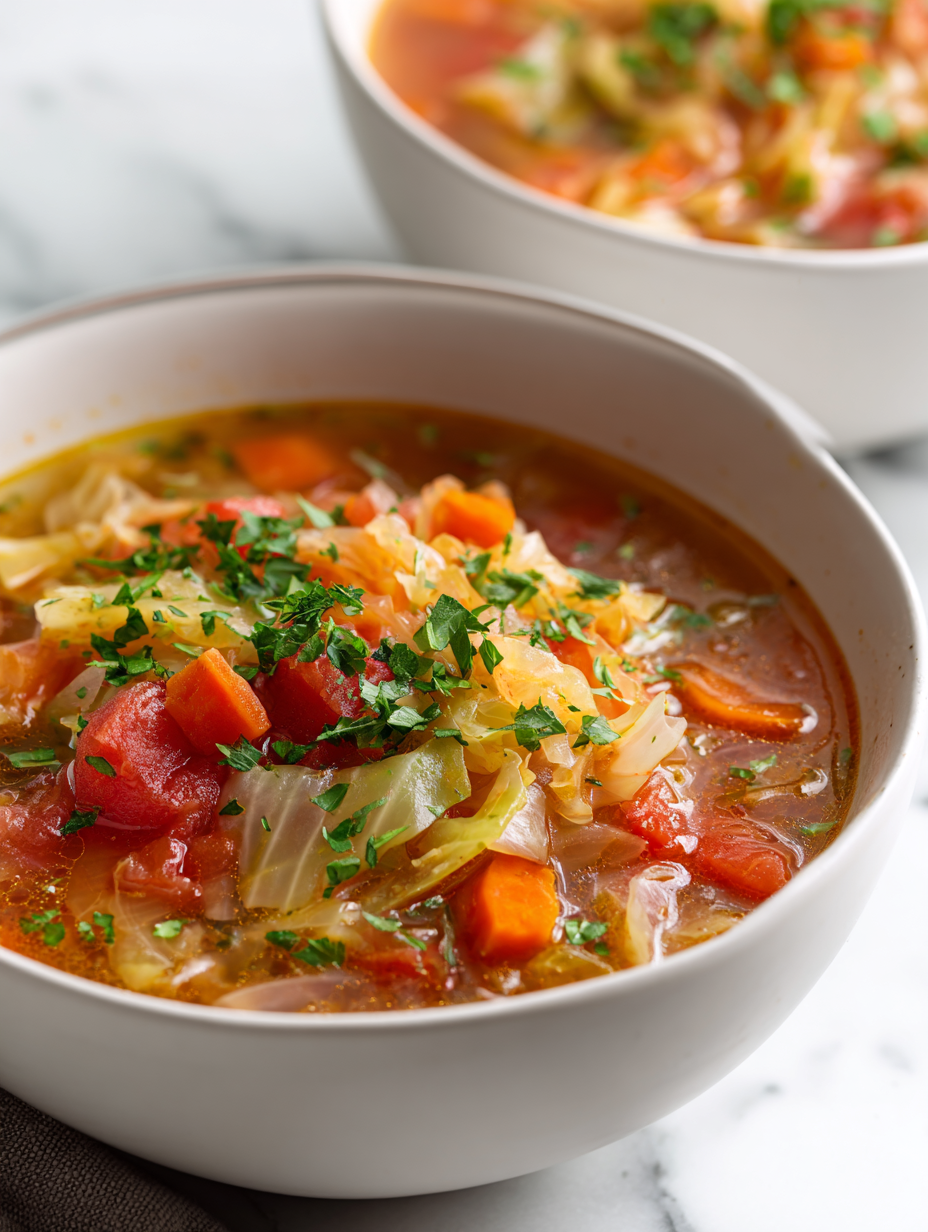
Crockpot Cabbage Soup
Ingredients
Equipment
Method
- Begin by gathering your crockpot, wooden spoon, sharp knife, and cutting board to prepare for cooking. Dice the onion, slice the carrots, and mince the garlic, keeping everything uniform for even cooking and a pleasant presentation.
- Layer the chopped onion, sliced carrots, and minced garlic into the crockpot. Add half of the chopped cabbage on top, creating a colorful base for your soup.
- Pour in the vegetable broth, making sure it covers the vegetables generously. Add the can of diced tomatoes, along with salt, pepper, and smoked paprika if using, to build a savory, smoky aroma.
- Cover the crockpot with its lid and set it to cook on low for 6 to 8 hours, or on high for 3 to 4 hours. During this time, the ingredients will soften, and the flavors will meld into a fragrant, comforting broth.
- Once the cooking time is up, check that the cabbage is tender and the broth is flavorful. If the soup appears too watery, uncover and cook on high for an additional 15–20 minutes to reduce the liquid slightly.
- Stir in the remaining chopped cabbage and cook for another 15 minutes until it wilts yet still retains some vibrant color and texture. Taste the broth and adjust seasonings if needed.
- Once the cabbage is tender and the flavors are balanced, turn off the crockpot. Let the soup sit for a few minutes to settle and deepen in flavor.
- Scoop the hearty, fragrant soup into bowls. Optionally, add a splash of vinegar or hot sauce for a bright, lively finish. Serve hot, and enjoy the warm, comforting hug in a bowl.
Tips for Perfect Crockpot Cabbage Soup
- Bolded mini-head: Use fresh, firm cabbage for the best texture and flavor. It holds up well during slow cooking.
- Bolded mini-head: Sear onions and garlic briefly before adding to deepen their aroma with a slight caramelization.
- Bolded mini-head: Layer ingredients in the crockpot to ensure even cooking and flavor distribution.
- Bolded mini-head: Adjust cooking time for softer or firmer cabbage—less time for crunch, more for melting softness.
- Bolded mini-head: Taste broth near the end and tweak seasonings—adding vinegar or hot sauce for a flavor boost.
- Bolded mini-head: For richer broth, add a splash of soy sauce or smoked paprika during the last hour of cooking.
- Bolded mini-head: Let the soup rest for 5 minutes after cooking to allow flavors to meld and settle.
Common mistakes and how to fix them
- FORGOT to adjust seasoning → Always taste and tweak at the end.
- DUMPED too much liquid → If too watery, cook uncovered for extra flavor.
- OVER-TORCHED the cabbage → Use low heat near the end to prevent burning.
- MISSED the vegetable prep → Chop evenly for consistent cooking and texture.
Quick fixes and pantry swaps
- When soup is too thick, splash in hot broth and stir to loosen.
- If the cabbage isn’t soft enough, extend cooking time by 30 minutes.
- Splash a little vinegar if broth lacks brightness after cooking.
- Patch blandness with a pinch of smoked paprika or hot sauce.
- Shield from overcooking by removing cabbage early if it softens too quickly.
Prep, store, and reheat tips
- Chop vegetables a day ahead for quicker assembly; store in airtight containers in the fridge, where they stay fresh for up to 24 hours. The crispness fades, but flavors meld beautifully overnight.
- Prepare the broth and seasonings in advance; keep refrigerated and give it a good stir before pouring into the crockpot. The aroma will already hint at the savory depth to come.
- Cook the soup in the crockpot up to 2 days ahead. Once cooled, transfer to an airtight container and refrigerate. Expect flavors to deepen overnight, making it even more comforting.
- Reheat gently on the stovetop or in the microwave. Simmer until steaming hot, about 5–7 minutes. The cabbage softens further, and the broth becomes even richer—smell that smoky warmth as it heats.
Top questions about crockpot cabbage soup
1. Can I use green cabbage instead of purple?
Yes, you can use green cabbage; it has a slightly crisper texture but still softens nicely during cooking.
2. Can I substitute green cabbage?
Absolutely. Just keep in mind that green cabbage has a milder flavor and may need a touch more seasoning.
3. How can I make the broth more flavorful?
If you want a richer broth, add a splash of soy sauce or a smoked paprika during cooking to boost umami.
4. Can I use frozen cabbage?
Yes, frozen cabbage works fine. Just thaw slightly and add a few extra minutes for cooking.
5. How do I know when the soup is ready?
The soup is done when the cabbage is tender, and the broth is flavorful and slightly thickened. It should smell savory and smoky.
6. What if the soup is too watery?
To keep the soup from becoming too watery, cook uncovered for the last 15 minutes to reduce excess liquid.
7. Can I add citrus or vinegar?
Yes, adding a squeeze of lemon or a splash of vinegar at the end brightens the flavors and adds freshness.
8. How do I prevent overcooked cabbage?
To prevent overcooking the cabbage, check the texture after 6 hours on low and remove the lid to reduce liquid if needed.
9. How long does the leftovers last?
Storing it in an airtight container in the fridge keeps it fresh for up to 3 days. Reheat gently on the stove or microwave.
10. Can I add meat or beans?
If you want to add protein, toss in cooked beans or leftover cooked chicken during the last 30 minutes for a heartier soup.
This humble soup has become my go-to when I need something honest and warm, especially after long, chaotic days. The slow-cooked aroma of garlic, smoky broth, and tender cabbage somehow makes everything feel a little calmer. It’s simple, reliable, and always hits the spot when time’s tight but I still crave comfort.
In the end, this dish reminds me that a handful of everyday ingredients, treated with care, can turn into something nourishing and satisfying. It’s a reminder to keep it real in the kitchen, even on the busiest days. That bowl of soup, with its rich, comforting scent, feels like a quiet victory every time.

Hi, I’m Isabella Cury, the creator behind Elevating Simple. Food has always been my passion, but it’s not just about creating meals—it’s about taking everyday ingredients and transforming them into something extraordinary.
My journey in the culinary world has been a blend of education, dedication, and a deep love for sharing food with others. Through this blog, I aim to inspire people to find joy in simple, flavorful cooking.