
There’s something about a slow-cooked stew that wraps you in a blanket of nostalgia. This Crockpot Pork Stew is my go-to when I need a comforting meal that’s easy to toss together after a busy day. The smell alone—rich, savory, with a hint of caramelized pork—makes the whole house feel warmer, even before dinner is served.
What I love most is how this dish turns simple ingredients into something deeply satisfying. It’s like a little magic trick: throw everything in the crockpot in the morning, and by evening, you’ve got a hearty, flavorful stew that feels like a well-worn family recipe. No fuss, no fuss, just pure comfort in every spoonful.
Focusing on the nostalgic comfort of a slow-cooked stew that feels like a warm hug after a hectic day, emphasizing the simplicity and richness that only a crockpot can deliver, making it perfect for busy weekends or unexpected guests.
The story behind this recipe
- This recipe came together one chilly fall weekend when I had a handful of pork shoulder and a craving for something soul-warming but simple. I remember the smell of the browned pork mingling with the earthy aroma of root vegetables—that comforting scent that instantly makes a house feel like home.
- I’ve always loved slow-cooker meals because they seem to unlock a secret about patience and flavor. This stew was my way of turning everyday ingredients into a dish that feels like a warm hug, especially on days when time is tight but I still want something hearty and satisfying. It’s become a bit of a ritual, tossing everything in before rushing out, then coming home to a meal that’s already waiting, rich and tender.
- heading: The story behind this recipe
Ingredient breakdown
- Pork shoulder: I love how it becomes fall-apart tender after slow-cooking; you can swap with pork butt, just expect slightly less marbled richness.
- Carrots: Their sweet, earthy aroma intensifies as they cook, adding a gentle brightness—try parsnips for a sweeter, milder twist.
- Onions: They melt into the broth, releasing a deep, savory sweetness; shallots work well if you want a more delicate flavor.
- Garlic: I always add extra garlic for that punch of pungency and aroma that fills the kitchen—try roasting a few cloves first for a smoky depth.
- Tomato paste: It adds a subtle tang and richness, making everything feel more vibrant—skip if you prefer a creamier, less acidic stew.
- Beef broth: The backbone of flavor, making everything savory and deep. Use homemade or a good-quality store-bought—avoid overly salty versions.
- Herbs (bay leaves + thyme): They lend a fragrant, herbal aroma that ties the stew together—fresh thyme can be swapped for rosemary if you like a piney note.
Spotlight on key ingredients
Pork shoulder:
- I love how it becomes fall-apart tender after slow-cooking; you can swap with pork butt, just expect slightly less marbled richness.
- Pork shoulder’s fat melts down during cooking, infusing the stew with a rich, savory depth that’s hard to beat.
- It releases juices slowly, keeping the stew moist and flavorful even after hours in the crockpot.
Carrots:
- Their sweet, earthy aroma intensifies as they cook, adding a gentle brightness—try parsnips for a sweeter, milder twist.
- Carrots soften beautifully, releasing a subtle sweetness that balances the savory pork—look for firm, fresh ones for best flavor.
- Their vibrant orange color brightens the stew, making each spoonful visually inviting.
Notes for ingredient swaps
- Pork shoulder: I love how it becomes fall-apart tender after slow-cooking; you can swap with pork butt, just expect slightly less marbled richness.
- Carrots: Their sweet, earthy aroma intensifies as they cook, adding a gentle brightness—try parsnips for a sweeter, milder twist.
- Onions: They melt into the broth, releasing a deep, savory sweetness; shallots work well if you want a more delicate flavor.
- Garlic: I always add extra garlic for that punch of pungency and aroma that fills the kitchen—try roasting a few cloves first for a smoky depth.
- Tomato paste: It adds a subtle tang and richness, making everything feel more vibrant—skip if you prefer a creamier, less acidic stew.
- Beef broth: The backbone of flavor, making everything savory and deep. Use homemade or a good-quality store-bought—avoid overly salty versions.
- Herbs (bay leaves + thyme): They lend a fragrant, herbal aroma that ties the stew together—fresh thyme can be swapped for rosemary if you like a piney note.
Equipment & Tools
- crockpot: Main cooking vessel for slow braising
- skillet: For browning pork and sautéing aromatics
- wooden spoon: Stirring and scraping flavor bits
- sharp knife: Cutting meat and vegetables
Step-by-step guide to crockpot pork stew
- Gather your equipment: a large crockpot, a skillet, a wooden spoon, and a sharp knife. The skillet is for browning the pork, which adds depth of flavor.
- Cut the pork shoulder into 2-inch chunks. Season generously with salt and pepper. This helps build a flavorful crust during browning.
- Heat the skillet over medium-high heat until shimmering. Add a tablespoon of oil. Brown the pork in batches until golden brown on all sides, about 5 minutes per batch. Transfer to the crockpot as you go.
- In the same skillet, add chopped onions and garlic. Cook until fragrant, about 2 minutes, scraping up any browned bits. Transfer to the crockpot.
- Add chopped carrots, potatoes (if using), tomato paste, bay leaves, thyme, and a splash of beef broth to the crockpot. Stir everything together to combine.
- Pour in the remaining beef broth until the ingredients are just covered. Set the crockpot to low, and cook for 6-8 hours. The house will fill with a rich, savory aroma.
- Check the stew after 6 hours; the pork should be falling apart and the vegetables tender but not mushy. If not, cook a bit longer. The sauce should be thick and glossy.
- Once done, turn off the crockpot and let the stew rest for 10 minutes. Remove bay leaves and thyme sprigs. Taste and adjust salt and pepper as needed.
- Serve hot, garnished with chopped parsley if desired. Ladle into bowls, enjoy the deep, comforting flavors that have melded beautifully during slow cooking.
Once cooked, turn off the crockpot and let the stew sit uncovered for 10 minutes. Remove any bay leaves or herb stems. Taste and adjust seasoning before serving, garnished with fresh parsley if desired.
How to Know It’s Done
- Pork is tender and easily shreds when pierced with a fork.
- Stew has a rich, thickened sauce that coats the ingredients.
- Vegetables are cooked through but still hold their shape.
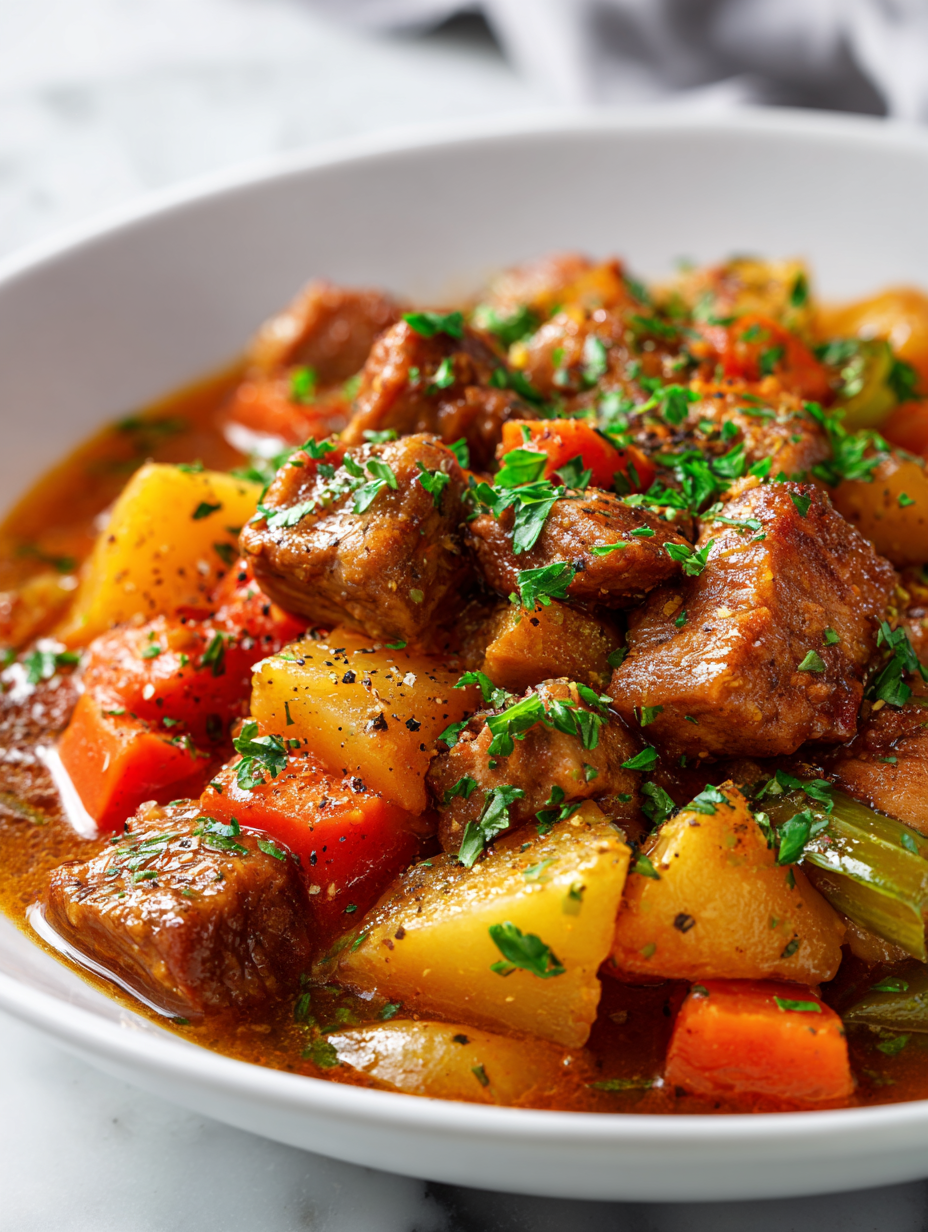
Crockpot Pork Stew
Ingredients
Equipment
Method
- Begin by cutting the pork shoulder into 2-inch chunks and seasoning them generously with salt and pepper. Heat a skillet over medium-high heat, add a tablespoon of oil, and brown the pork in batches until each piece has a deep golden crust, about 5 minutes per batch. Transfer the browned pork to your crockpot as you go.
- In the same skillet, add chopped onions and minced garlic. Sauté until fragrant and slightly softened, about 2 minutes, scraping up any browned bits from the bottom of the pan. Transfer this aromatic mixture to the crockpot.
- Add sliced carrots and dollops of tomato paste to the crockpot. Pour in the beef broth and toss in the bay leaves and thyme, stirring everything together to combine. Nestle the browned pork and sautéed aromatics into the mixture.
- Cover the crockpot with its lid and set it to low. Let everything cook slowly for 6 to 8 hours, until the pork is incredibly tender and falling apart, and the vegetables are soft but still hold their shape. The house will fill with a rich, savory aroma as the flavors meld.
- Once the cooking time is up, turn off the crockpot and remove the bay leaves and thyme stems. Give the stew a gentle stir, tasting and adjusting the seasoning with salt and pepper if needed. The sauce should be thick and coats the shredded pork beautifully.
- Scoop the hearty stew into bowls, garnished with fresh herbs if desired. Serve hot with crusty bread or over mashed potatoes for a complete, comforting meal.
Tips and tricks for best results
- BOLD BROWNING: Use high heat to develop a deep, savory crust on the pork—this adds richness to every bite.
- SEAR IN BATCHES: Avoid overcrowding the skillet—crowding traps moisture, preventing that perfect caramelization.
- DEEPEN FLAVOR: Add a splash of soy sauce or Worcestershire during browning for an umami boost.
- VEGETABLE CARVING: Cut carrots and potatoes into uniform pieces—ensures even cooking and a consistent bite.
- AROMATIC START: Sauté onions and garlic until fragrant and slightly softened—this layer of flavor will permeate the stew.
- LID ON, LOW AND SLOW: Keep the crockpot lid sealed tight—steam retention keeps everything tender and flavorful.
- FINAL TOUCH: Taste and adjust salt at the end—stews often need a little extra seasoning after cooking.
Common mistakes and how to fix them
- FORGOT to brown the pork: Skip this step and end up with bland, less flavorful stew.
- DUMPED in too much liquid: Use just enough broth to cover ingredients, or stew becomes watery.
- OVER-TORCHED the stew: Keep an eye on the cooking time to avoid burnt, bitter flavors.
- MISSED removing herbs before serving: Leaves herbs in, stew can taste overly woody or bitter.
Quick fixes and pantry swaps
- When stew is watery, splash in a cornstarch slurry—shimmering sauce will thicken quickly.
- If pork isn’t tender enough, cover and cook longer—rescue with a quick 30-minute boost on low.
- DUMPED in too much liquid? Add diced potatoes to absorb excess moisture and enrich the stew.
- Over-torched the stew? Soften with a splash of broth and a touch of sugar to mellow bitterness.
- Splash soy sauce or Worcestershire if flavor feels flat—deepens richness and adds umami shimmer.
Prep, store, and reheat tips
- Chop vegetables and season the pork a day in advance to save time and enhance flavor infusion.
- Store prepped ingredients in airtight containers in the fridge for up to 24 hours; the pork stays tender and juicy.
- Cooked stew keeps well in the fridge for 3-4 days; the flavors deepen and meld, becoming even more comforting.
- Freeze leftovers in individual portions for up to 3 months; thaw overnight in the fridge before reheating.
- Reheat gently on the stovetop or in the microwave until steaming hot, about 2-3 minutes, until aroma and warmth return, with the sauce slightly bubbling.
Top questions about crockpot pork stew
1. Can I use a different cut of pork?
Use pork shoulder for the best tenderness; it becomes melt-in-your-mouth after slow cooking. Pork loin is too lean and may dry out.
2. Can I swap out the broth?
Yes, you can substitute beef broth with chicken or vegetable broth, but the flavor will be milder and less rich.
3. How long should I cook it in the crockpot?
Cooking on low for 6-8 hours ensures the pork is tender and the flavors meld beautifully. Check at 6 hours if you want it slightly firmer.
4. Can I add other vegetables?
Add more vegetables like parsnips or turnips for extra sweetness and texture. Keep in mind, they may need slightly longer cooking.
5. How do I thicken the stew?
Yes, if you prefer a thicker stew, mash some of the cooked vegetables or stir in a cornstarch slurry during the last 15 minutes of cooking.
6. How do I know when it’s done?
To prevent overcooking, check the stew at 6 hours and adjust the time as needed. Pork should be falling apart, but vegetables should still hold their shape.
7. How long does it keep?
Leftovers can be refrigerated for up to 3 days or frozen for 3 months. Reheat gently until steaming hot, smelling the rich aroma again.
8. What if I skip browning?
If you forgot to brown the pork, the stew will be less flavorful but still delicious. To fix, add a splash of soy sauce or Worcestershire during cooking.
9. How can I enhance the flavor at the end?
Adding a splash of vinegar or lemon juice at the end brightens the flavors and balances the richness of the stew.
10. How do I add a smoky note?
For a smoky flavor, add a teaspoon of smoked paprika or a few drops of liquid smoke during cooking.
This crockpot pork stew really captures the essence of slow cooking—rich, tender, and deeply comforting. It’s the kind of dish that makes you appreciate simple ingredients transformed over hours into something memorable.
Whenever I make this, I think about how the house fills with that smoky, savory aroma, and how easy it is to come home to a meal that’s practically ready. It’s honest home cooking, perfect for cozy weekends or unexpected guests showing up hungry.

Hi, I’m Isabella Cury, the creator behind Elevating Simple. Food has always been my passion, but it’s not just about creating meals—it’s about taking everyday ingredients and transforming them into something extraordinary.
My journey in the culinary world has been a blend of education, dedication, and a deep love for sharing food with others. Through this blog, I aim to inspire people to find joy in simple, flavorful cooking.


