
This recipe is all about capturing the peak freshness of spring’s first peas. I love how their sweet, slightly grassy flavor can turn a simple soup into something bright and satisfying. Picking those tiny green gems from the pod and then blending them up feels like a little celebration of the season.
I’ve made this soup on lazy weekends when I want something nourishing but quick, and it never fails to lift my mood. It’s honest, unpretentious, and relies on the pure flavor of fresh peas. No fuss, just a blender, some good broth, and a pinch of salt — that’s all it takes to make something really special.
This recipe focuses on using fresh, just-picked peas to create a vibrant, sweet, and slightly earthy soup that captures the fleeting peak of spring. It’s about celebrating the seasonal bounty and turning simple ingredients into a comforting bowl that feels like a breath of fresh air, straight from the garden.
The story behind this recipe
- One spring, I was wandering through my local farmer’s market and stumbled upon a mound of tiny, bright green peas still in their pods. I remembered how my grandma used to shell peas on lazy weekend afternoons, the air smelling sweet and grassy. That moment, with the sun warm on my back and the smell of fresh produce all around, made me realize how simple ingredients can carry so much nostalgia and joy.
- Since then, I’ve always kept a bag of fresh peas in the freezer for those days when I need a quick reminder of spring’s fleeting bounty. Making this soup is my way of holding onto that season a little longer — blending all the freshness into something cozy, bright, and just a touch indulgent.
- heading: ‘The story behind this recipe’
Ingredient breakdown
- Fresh peas: I love the burst of sweetness and bright green color they bring; if yours are a bit starchy, blanch and peel for a smoother soup, but skip peeling if they’re tiny and tender—just blend as is for a rustic feel.
- Vegetable broth: Using homemade or store-bought adds depth; if you want a richer flavor, a splash of good-quality chicken broth works, but veggie broth keeps it light and fresh.
- Onion: Sauté until translucent and fragrant, about 5 minutes; a little caramelization adds a subtle sweetness that complements the peas’ brightness.
- Garlic: Crush and cook with the onion; it should smell warm and inviting, not burnt—if it starts to brown too fast, turn the heat down and add a splash of water to prevent bitterness.
- Fresh mint: Adds a refreshing burst; toss in a few leaves at the end, or even blend some in—just be cautious, a little goes a long way to avoid overpowering the delicate pea flavor.
- Olive oil: Drizzle a good quality extra virgin on top before serving; the fruity, peppery notes really lift the soup and add a silky finish.
- Lemon: A squeeze right before serving brightens everything; if you don’t have lemon, a splash of vinegar can add a similar zing, but keep it subtle to preserve that fresh, springy vibe.
Spotlight on key ingredients
Fresh peas:
- I love their bright, sweet burst and how they turn a vibrant green when cooked; if they’re starchy, blanch and peel for a smoother texture, but skip peeling for rustic charm.
- Their flavor is a fleeting, grassy sweetness that really shines in this soup, making it feel like spring in a bowl.
Fresh mint:
- Mint: Adds a refreshing, cool note that lifts the whole bowl; toss in whole leaves at the end or blend a few in for a subtle, aromatic brightness.
- Mint: The aroma of fresh mint leaves should be fragrant and lively, not dull or overpowering, balancing the sweetness of the peas perfectly.
Notes for ingredient swaps
- Dairy-Free: Swap regular cream for coconut cream or oat milk. Keeps it rich without dairy, but may add a subtle coconut note.
- Vegetarian Broth: Use mushroom broth for an earthy umami boost, or water with a splash of soy sauce for deeper flavor.
- Onion: Replace with shallots for a sweeter, milder taste, or leeks for a more delicate, onion-like aroma.
- Garlic: Use roasted garlic for a mellow, caramelized sweetness, or garlic powder in a pinch if fresh isn’t available.
- Herbs: Swap mint for basil or tarragon for different fresh herby notes; dried herbs work, but fresh are brighter.
- Oil: Use avocado oil for a neutral, buttery finish, or sesame oil for a nutty undertone—use sparingly.
- Lemon: Substitute with a splash of white wine vinegar or apple cider vinegar for acidity, but keep it subtle to preserve freshness.
Equipment & Tools
- Large soup pot: For simmering vegetables and broth
- Immersion blender or regular blender: For pureeing the soup until smooth
- Ladle: For serving and portioning
- Sharp knife: For shelling peas and chopping ingredients
Step-by-step guide to fresh pea soup
- Gather your equipment: a large soup pot (for simmering), a blender (for pureeing), a ladle (for serving), and a sharp knife (for prepping).
- Heat the pot over medium heat (~160°C/320°F). Add a splash of olive oil and sauté finely chopped onion for about 5 minutes, until translucent and fragrant.
- Add minced garlic to the onions, cook for another 30 seconds until fragrant but not browned. If garlic starts to brown too quickly, lower the heat or splash with a little water.
- Pour in vegetable broth—about 4 cups (960 ml)—and bring to a gentle simmer. Let it warm for 3 minutes, just enough to meld flavors.
- Meanwhile, shell fresh peas—about 2 cups (300 g)—into a bowl. If your peas are tiny and tender, you can skip peeling; if larger or starchy, blanch briefly in boiling water for 1 minute, then peel for a smoother soup.
- Add the peas to the simmering broth. Cook for about 4-5 minutes, until they turn bright green and are just tender. Keep an eye on the color and smell—you want that fresh, grassy aroma.
- Remove from heat. Using an immersion blender or transfer to a regular blender in batches, puree the soup until smooth. Be careful blending hot liquids—leave a small vent or cover with a towel to prevent splatters.
- Taste and adjust seasoning with salt. If you want a touch more brightness, add a squeeze of lemon or a splash of vinegar at this stage.
- Ladle the soup into bowls. Drizzle with a good-quality olive oil, garnish with chopped fresh mint if desired, and serve hot.
- Let the soup sit for 2-3 minutes after blending to settle and cool slightly, then serve. Enjoy the vibrant green, silky texture, and fresh sweetness.
Let the soup rest for 2-3 minutes after blending to settle. Finish with a drizzle of olive oil and fresh mint, then serve immediately while vibrant and warm.
How to Know It’s Done
- Soup is bright green and fragrant, not dull or cooked out.
- Peas are tender but not mushy, with a slight bite.
- Consistent smooth texture without lumps or graininess.
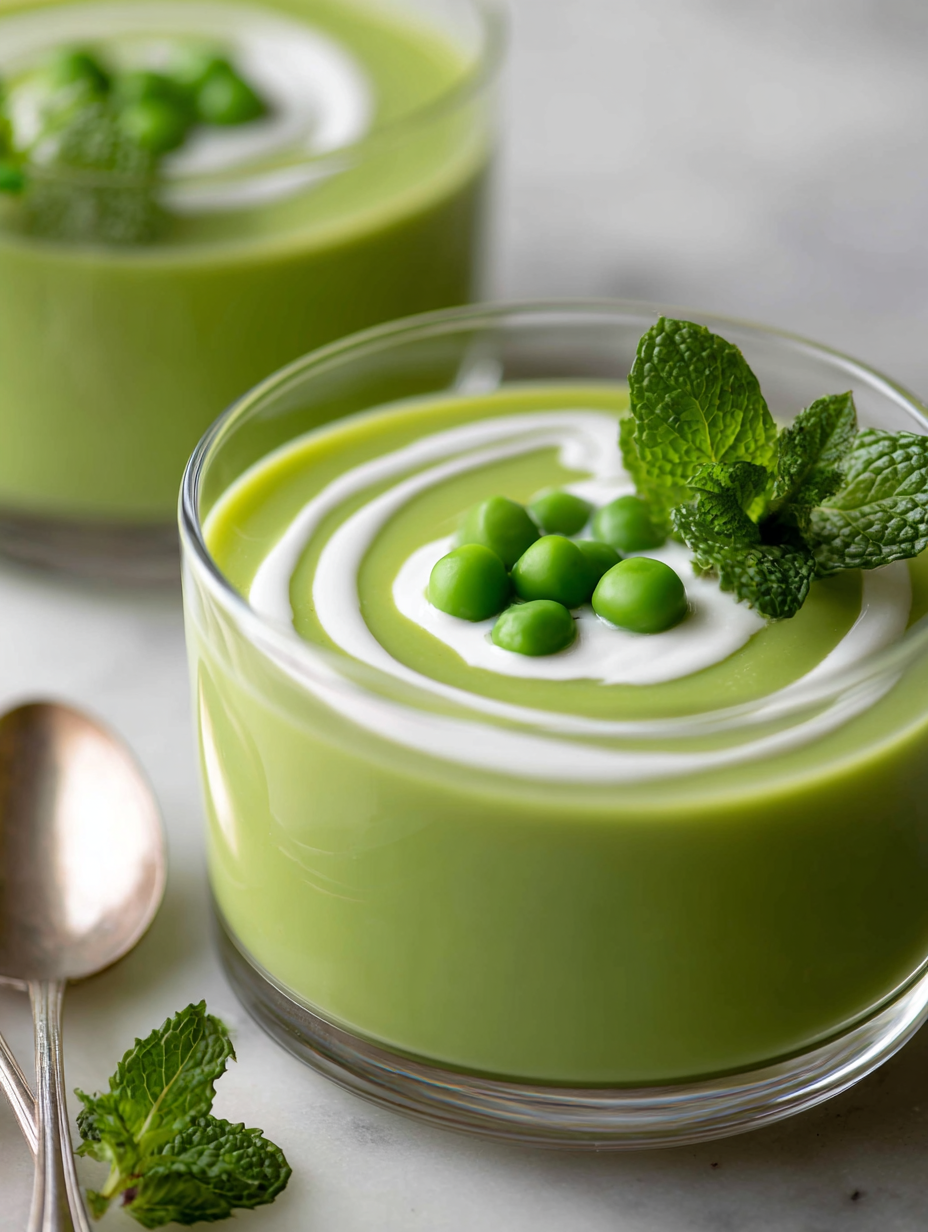
Spring Fresh Pea Soup
Ingredients
Equipment
Method
- Start by heating your large soup pot over medium heat, then add the olive oil and let it warm until it shimmers and begins to smell fruity.
- Add the finely chopped onion to the pot and sauté gently, stirring occasionally, until it becomes translucent and fragrant—about 5 minutes. It should smell sweet and look soft and slightly golden at the edges.
- Stir in the crushed garlic and cook for another 30 seconds until aromatic, being careful not to let it brown too quickly—that can turn bitter.
- Pour in the vegetable broth and bring the mixture to a gentle simmer, allowing the flavors to meld for about 3 minutes.
- Meanwhile, shell your fresh peas into a bowl. If they are larger or starchy, blanch them in boiling water for 1 minute, then peel off their skins for a smoother soup—set aside.
- Add the fresh peas to the simmering broth and cook for 4 to 5 minutes until they turn a bright, vibrant green and are just tender. You'll notice the aroma intensify with that sweet, grassy scent of spring.
- Remove the pot from heat and, using an immersion blender or transfer the contents in batches to a regular blender, puree until the soup is completely smooth and silky. Be cautious with hot liquids—leave a vent or wrap the lid with a towel.
- Taste the soup and season with salt as needed. Squeeze a bit of lemon juice into the bowl for a bright, fresh finish—this helps lift the natural sweetness of the peas.
- Ladle the soup into bowls, then garnish with fresh mint leaves and a drizzle of good-quality olive oil for added richness and aroma. Serve immediately while the vibrant green color and silky texture are at their best.
Pro tips for fresh pea soup
- Use fresh peas for a sweeter, more vibrant flavor; frozen works in a pinch but won’t have that pop.
- Sauté onions slowly until translucent and fragrant—this develops sweetness and depth in your soup.
- When blending hot soup, leave a small vent or use a towel to prevent splatters and accidents.
- Add lemon or vinegar at the end to brighten the flavor—don’t add too early or it might turn dull.
- For a smoother texture, peel larger peas after blanching—tiny ones can go straight in for rustic charm.
- Drizzle good olive oil on top before serving—fruity and peppery oils add a silky, rich finish.
- Use an immersion blender if possible—it’s quicker, safer, and easier to control the texture during blending.
Common mistakes and how to fix them
- FORGOT to check pea freshness → Use freshly picked peas for best flavor.
- DUMPED the peas directly into boiling water → Blanch briefly, then peel for a smoother soup.
- OVER-TORCHED the garlic → Cook on low heat, or add water if it starts to brown too fast.
- MISSED the seasoning at the end → Always taste and adjust with salt or lemon before serving.
Quick fixes and pantry swaps
- If peas look dull, splash them with lemon juice after blending for a fresh pop.
- When soup is too thick, add a splash of hot water to loosen and stir well.
- Splash a bit of olive oil if the soup feels flat or dull in flavor.
- Patch over overly salty soup with a squeeze of lemon and a pinch of sugar.
- Shield your blender from hot splashes by leaving a vent or using a towel during pureeing.
Prep, store, and reheat tips
- Prepare the soup base: sauté onions and garlic in advance, then refrigerate for up to 24 hours. Reheat until fragrant and warm before blending to preserve aroma.
- Shell and blanch fresh peas: do this ahead and store in an airtight container for up to 2 days. The bright green color and fresh sweetness are best kept intact by quick cooling.
- Store leftovers in an airtight container in the fridge for up to 3 days. The flavors deepen slightly overnight, making for an even more comforting bowl.
- Reheat gently on the stove over low heat, stirring occasionally. Look for the soup to shimmer and steam; avoid boiling vigorously to prevent loss of freshness.
- For longer storage, freeze the soup in portions for up to 2 months. Expect some change in texture—blend again briefly after thawing to restore smoothness.
FAQs about fresh pea soup
1. Why use fresh peas instead of frozen or dried?
Fresh peas give the soup a bright, sweet flavor and vibrant green color that feels like spring in every spoonful.
2. How do I keep the pea color vibrant?
Peas can turn dull if overcooked or stored too long. Blanching briefly and serving immediately keeps their freshness lively.
3. Can I add lemon to the soup?
Adding a splash of lemon juice or vinegar right before serving enhances the bright, grassy notes of the peas.
4. What broth works best for this soup?
You can substitute vegetable broth with mushroom broth for a richer, earthier flavor or water for a lighter touch.
5. My soup is too thick—what should I do?
If your soup is too thick, stir in a little hot water or broth until it reaches your desired consistency.
6. Should I peel the peas first?
Peeling larger peas after blanching results in a smoother, more refined soup, but isn’t necessary if you like rustic texture.
7. Can I swap mint for other herbs?
Fresh mint adds a cooling, aromatic lift, but basil or tarragon can give a different herbal twist if you prefer.
8. What’s the best way to blend the soup?
Using an immersion blender makes pureeing safer and quicker, especially with hot liquids, avoiding splatters.
9. How should I store and reheat leftovers?
Leftovers can be refrigerated up to 3 days or frozen for up to 2 months. Reheat gently on the stove, watching for shimmering and steam.
10. What if the soup loses flavor after sitting?
If the soup tastes flat, a drizzle of good olive oil or a squeeze of lemon can brighten and revive it quickly.
This simple pea soup feels like catching a moment of early spring—bright, sweet, and unexpectedly soothing. It’s a reminder that sometimes, the best dishes come from the purest ingredients and a little patience in the kitchen.
Sharing this bowl on a quiet afternoon lets me reconnect with the fleeting freshness of the season, making every spoonful a small celebration of those first green shoots and longer days. It’s honest, unpretentious, and perfect for when you want something nourishing and real without fuss.

Hi, I’m Isabella Cury, the creator behind Elevating Simple. Food has always been my passion, but it’s not just about creating meals—it’s about taking everyday ingredients and transforming them into something extraordinary.
My journey in the culinary world has been a blend of education, dedication, and a deep love for sharing food with others. Through this blog, I aim to inspire people to find joy in simple, flavorful cooking.


