
There’s something about the way asparagus caramelizes in the oven that makes it feel like a little celebration on a plate. The slight char and tender bite contrast beautifully with the glossy, sweet-tart balsamic glaze drizzled on top, turning what might be a simple vegetable into a memorable side. It’s a quick, honest way to elevate a humble bunch of asparagus, no fancy ingredients required.
I love how this dish hits all the right notes without fuss—crispy edges, a smoky aroma, and that burst of acidity from the balsamic. It’s the kind of recipe that feels like comfort food but with a bit of finesse, perfect for both weeknights and casual gatherings. Every time I make it, I’m reminded how straightforward ingredients can come together to create something surprisingly special.
This roasted asparagus with balsamic glaze is also a reminder of why I keep coming back to simple techniques. There’s an honest pleasure in watching the spears turn golden and slightly charred, then finishing with a sweet splash that makes everything sing. It’s a dish that feels rooted in the season, celebrating fresh produce with just a few honest touches.
Focusing on the sensory contrast between the tender, slightly caramelized asparagus and the sharp, sweet balsamic glaze, I want to highlight how this simple pairing awakens the taste buds with every bite—almost like a little dance of textures and flavors that makes a humble vegetable feel special.
The inspiration behind this dish
- I first discovered the magic of roasting asparagus when I was trying to use up a bunch that was just a bit too thick and unruly to enjoy raw. The oven transformed it, bringing out this smoky sweetness I hadn’t fully appreciated before. That moment made me realize how simple veggies can surprise you with a little heat and patience.
- This recipe was born out of a lazy weekend afternoon when I wanted something quick but special. The balsamic glaze, with its tangy richness, started as an afterthought but quickly became the star. Now, it’s a go-to for me when I want to turn humble into memorable without breaking a sweat.
- heading: ‘The story behind this recipe’
Ingredient breakdown for roasted asparagus
- Asparagus: I love how fresh, green asparagus turns tender yet retains a slight crunch when roasted. If yours is too thick, cut in half lengthwise for even cooking.
- Olive oil: Drizzled generously, it helps the spears caramelize beautifully and adds a fruity aroma. Use a good quality oil for richer flavor.
- Salt: A simple pinch enhances the natural sweetness. Don’t overdo it—just enough to make the flavors pop without overpowering.
- Balsamic glaze: The thick, syrupy sweetness with its tangy punch brightens the dish. If yours is too thick, warm it slightly to loosen for easier drizzling.
- Black pepper: Freshly cracked adds a subtle heat and depth. Skip it if you prefer a milder, more delicate profile.
- Optional garlic: Minced garlic can be tossed with the asparagus before roasting for a smoky, savory layer. Use sparingly—it can burn quickly.
- Lemon zest (if using): Brightens the whole dish with a citrusy zing. Add just before serving to keep its lively aroma fresh.
Spotlight on Key Ingredients
Asparagus:
- I love how fresh, green asparagus turns tender yet retains a slight crunch when roasted. If yours is too thick, cut in half lengthwise for even cooking.
- Olive oil: Drizzled generously, it helps the spears caramelize beautifully and adds a fruity aroma. Use a good quality oil for richer flavor.
- Salt: A simple pinch enhances the natural sweetness. Don’t overdo it—just enough to make the flavors pop without overpowering.
Balsamic glaze:
- The thick, syrupy sweetness with its tangy punch brightens the dish. If yours is too thick, warm it slightly to loosen for easier drizzling.
- Black pepper: Freshly cracked adds a subtle heat and depth. Skip it if you prefer a milder, more delicate profile.
Notes for ingredient swaps
- Vegetarian/vegan: Balsamic glaze can be swapped with a drizzle of honey or maple syrup for a different sweetness profile, but it might lack that deep tang. Think about balancing with a squeeze of lemon if you skip the glaze altogether.
- Nut allergy: Use a neutral oil like vegetable or avocado instead of olive oil if allergies are a concern; you won’t lose that fruity aroma but will miss some richness.
- Low-sodium: Salt can be reduced or replaced with a salt alternative; the dish will taste less salty, so boost other flavors like lemon zest or garlic for punch.
- Gluten-free: No change needed here; this dish is naturally gluten-free, just check your balsamic glaze for added ingredients if store-bought.
- Herb addition: Sprinkle fresh thyme or basil after roasting for extra aroma—skip if you prefer a cleaner, simpler flavor. Fresh herbs add brightness and a hint of earthiness.
- Extra acidity: A splash of apple cider vinegar or lemon juice can replace or enhance the balsamic for a sharper bite, especially if you want more zing.
- Texture tweak: For a smoky taste, toss the asparagus with smoked paprika before roasting—watch closely, it can turn bitter if overused.
Equipment & Tools
- Baking sheet: To roast the asparagus evenly.
- Parchment paper (optional): Prevents sticking and makes cleanup easier.
- Small saucepan or microwave: To gently warm the balsamic glaze.
- Tongs or a spatula: To toss and turn the asparagus during roasting.
- Grater or microplane: To zest lemon, if using.
Step-by-step guide to roasted asparagus
- Preheat your oven to 220°C (430°F).
- Trim the woody ends off the asparagus, about 2-3 cm, and lay them on a baking sheet in a single layer.
- Drizzle the asparagus generously with olive oil, about 2 tablespoons per bunch, and toss to coat evenly.
- Sprinkle with salt—about 1/2 teaspoon—and freshly cracked black pepper. Toss again for even seasoning.
- Place the baking sheet in the oven on the middle rack. Roast for 12-15 minutes, until the spears are tender and have some caramelized spots.
- While the asparagus roasts, warm the balsamic glaze slightly if it’s too thick, just a few seconds in the microwave or in a small pan over low heat.
- Check the asparagus at 12 minutes: they should be vibrant green with some golden brown edges and a bit of crispness when pierced.
- Once done, remove from the oven and transfer to a serving platter. Drizzle with the warm balsamic glaze while still hot.
- Finish with a light sprinkle of lemon zest or additional black pepper if desired. Let sit for 2 minutes to let flavors meld.
Let the roasted asparagus rest for 2 minutes after roasting. Drizzle with balsamic glaze immediately while still warm to soak up the flavors. Serve on a platter, garnished with lemon zest or extra pepper if desired.
How to Know It’s Done
- Color: Bright green with golden brown spots, not burnt.
- Texture: Tender yet still slightly crisp when pierced.
- Appearance: Glazed and caramelized in spots, shiny from olive oil.
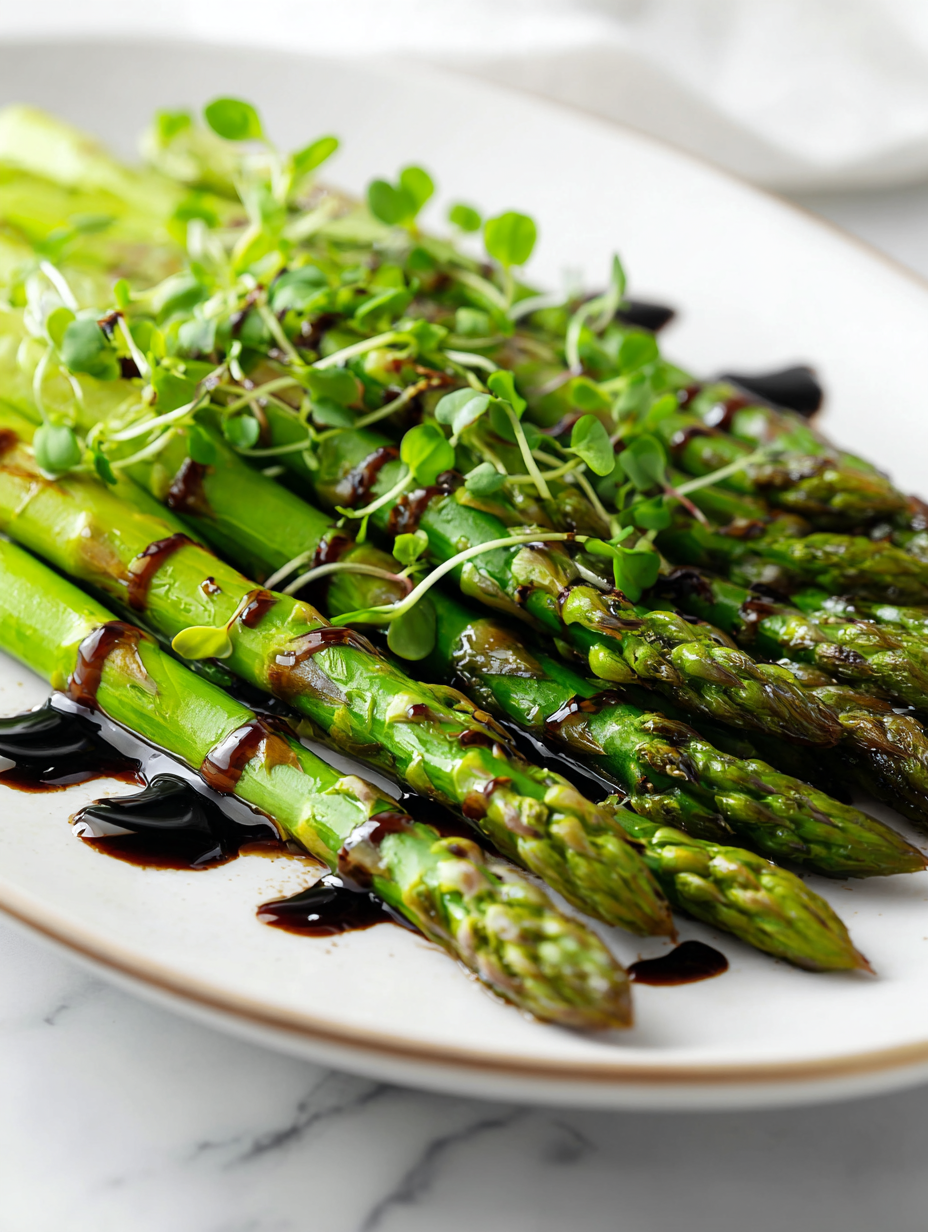
Roasted Asparagus with Balsamic Glaze
Ingredients
Equipment
Method
- Preheat your oven to 220°C (430°F). Line a baking sheet with parchment paper for easy cleanup.
- Trim the tough ends off the asparagus, about 2-3 cm from the bottom, and spread them out in a single layer on the prepared baking sheet.
- Drizzle the asparagus generously with olive oil, then toss gently with your hands or tongs to coat each spear evenly.
- Sprinkle with salt and freshly cracked black pepper, then give everything a light toss again to distribute the seasonings.
- Place the baking sheet in the oven and roast for 12-15 minutes, until the asparagus is tender and has some golden brown, caramelized spots. Listen for a gentle sizzling and watch for some crispy edges.
- While the asparagus roasts, warm the balsamic glaze slightly in a small saucepan or microwave until it's pourable and shiny.
- Once the asparagus is tender and slightly charred, remove it from the oven and transfer to a serving platter.
- Drizzle the warm balsamic glaze generously over the hot asparagus, allowing it to soak in and create a glossy, flavorful coating.
- If desired, sprinkle with lemon zest to add a bright citrus note and toss lightly to distribute.
- Serve immediately while the asparagus is warm, showcasing its vibrant color and glossy finish. Enjoy the tender, caramelized bites with the tangy balsamic glaze for a simple yet elegant side dish.
Pro tips for perfect roasted asparagus
- Bolded temperature: Roast asparagus at high heat (220°C/430°F) for a tender-crisp finish and caramelized edges.
- Visual cue: Look for bright green color with golden brown spots, not burnt or darkened too much.
- Smell: A fragrant, smoky aroma signals perfect caramelization—don’t rush the process or it can turn bitter.
- Timing: Roast for 12-15 minutes; start checking at 12 to prevent overcooking or limp textures.
- Balsamic glaze: Warm slightly before drizzling; a thinner consistency makes for a prettier, less drippy finish.
- Tossing technique: Use tongs or a spatula to evenly coat the asparagus in oil and seasoning for consistent roasting.
- Resting: Let the asparagus sit for 2 minutes after roasting—this helps flavors meld and prevents burns from hot glaze.
Common mistakes and how to fix them
- FORGOT to watch asparagus closely, it can burn quickly if overcooked.
- DUMPED the balsamic glaze directly from jar, warm slightly for better drizzling.
- OVER-TORCHED the asparagus, lower oven temp to avoid burnt spots.
- MISSED the resting step, let it sit 2 mins for better flavor absorption.
Quick fixes and pantry swaps
- If asparagus is limp, splash with lemon juice and blast in the oven for 2 minutes.
- When glaze is too thick, gently warm it until shiny and pourable.
- Splash olive oil if spears stick or burn during roasting.
- Patch burnt spots by scooping out charred parts and adding fresh herbs for flavor.
- Shield delicate spears with foil if they start to over-torch, preserving tender texture.
Prep, store, and reheat tips
- Trim and prep the asparagus a day ahead; keep refrigerated in a sealed container for up to 24 hours, maintaining its fresh snap and vibrant green color.
- You can roast the asparagus and let it cool completely; store in an airtight container in the fridge for up to 2 days. Reheat gently to avoid sogginess, checking for warmth and slight crispness.
- Balsamic glaze can be made or bought ahead. Keep it at room temperature or in the fridge; rewarm slightly if it thickens, until it’s pourable. The glaze’s sharp, sweet aroma intensifies as it sits.
- Reheating roasted asparagus: warm in a low oven (around 150°C/300°F) for 5-8 minutes, until heated through but not limp. The smell of roasted garlic and caramelized edges will guide you.
- Note: Asparagus may lose some brightness and crispness after refrigeration. A quick reheat or serving at room temp can restore some of that fresh, lively texture.
FAQs about roasted asparagus with balsamic glaze
1. How do I pick good asparagus?
Look for bright green spears with a slight bend. If they’re limp, they won’t roast well. Freshness makes a big difference in flavor and texture.
2. How do I prepare the asparagus for roasting?
Trim the woody ends, about 2-3 cm from the bottom. Peeling isn’t necessary, just snap off the tough part. This ensures even cooking and tender bites.
3. What’s the right oven temperature and timing?
Roast at 220°C (430°F) for 12-15 minutes until they’re tender with some caramelized spots. Keep an eye after 12 minutes to prevent burning.
4. When should I add the balsamic glaze?
Drizzle the balsamic glaze while the asparagus is still hot. Warm it slightly if it’s too thick. This helps it soak into the spears and makes for a glossy finish.
5. Can I use a different oil?
Yes, you can substitute olive oil with vegetable or avocado oil for a neutral flavor. The caramelization might be slightly less pronounced, but it still works.
6. What if my asparagus sticks or burns?
If the asparagus sticks to the pan or burns, toss it more frequently or reduce oven temperature slightly. Using parchment paper can also help prevent sticking.
7. Can I add herbs or lemon?
Sprinkle fresh herbs like thyme or basil after roasting for added aroma and brightness. They won’t stand up well to high heat, so add at the end.
8. How should I store leftovers?
Store roasted asparagus in an airtight container in the fridge for up to 2 days. Reheat gently in a low oven to restore some crispness and warmth.
9. How do I fix thickened balsamic glaze?
If the glaze thickens, gently warm it in the microwave or on the stove for a few seconds until pourable. It’s better to apply it warm for a shiny coating.
10. How can I reheat the asparagus?
When asparagus turns limp after refrigeration, reheat at 150°C (300°F) for 5-8 minutes. A quick blast in the oven helps revive its texture and aroma.
This dish might seem simple, but its balance of smoky, tender asparagus with that sharp balsamic glaze makes it feel just a bit more special. It’s perfect for a quick weeknight side or an easy appetizer that impresses without fuss.
Whenever I make this, I appreciate how a few honest ingredients can come together to create something both bright and comforting. It’s a reminder that sometimes, simplicity really is key, especially when fresh, seasonal produce is at its peak.

Hi, I’m Isabella Cury, the creator behind Elevating Simple. Food has always been my passion, but it’s not just about creating meals—it’s about taking everyday ingredients and transforming them into something extraordinary.
My journey in the culinary world has been a blend of education, dedication, and a deep love for sharing food with others. Through this blog, I aim to inspire people to find joy in simple, flavorful cooking.


