
This roasted carrots and asparagus recipe is all about celebrating the humble vegetable in a way that surprises the senses. The natural sweetness of carrots caramelizes beautifully in the oven, while the asparagus develops a smoky, tender bite that feels both rustic and refined. It’s a simple dish, but one that makes you pause and really taste what’s in front of you.
What I love most is how this combo highlights the season’s best produce without fuss. No fancy sauces or complicated steps—just good ingredients, a hot oven, and a little patience. It’s the kind of dish that feels like a quiet victory after a busy day, when you want something nourishing but not heavy.
And honestly, it’s the kind of recipe that can go from a quick weeknight side to a centerpiece if you toss in some nuts or a sprinkle of cheese. It’s versatile, honest, and it reminds me that sometimes, the simplest things are the most memorable.
This recipe focuses on the unexpected harmony of caramelized sweetness from roasted carrots combined with the smoky, tender bite of asparagus, highlighting how simple ingredients can create a complex, seasonally vibrant dish that feels both rustic and refined.
The inspiration behind this dish
- This dish came together one rainy afternoon when I was craving something warm but not heavy, and I had these two vegetables sitting in my fridge. I remembered how my grandmother used to toss carrots with a splash of honey before roasting, giving them this deep, sweet flavor. Then I thought about asparagus, which always reminds me of spring, tender and slightly smoky when roasted just right. Combining them felt like capturing a moment of transition — from winter’s heaviness to spring’s promise.
- I’ve always loved how roasting transforms vegetables — the way they soften, caramelize, and develop these complex, slightly charred edges. It’s honest cooking, the kind that lets ingredients speak for themselves. Plus, it’s forgiving. A little over-roasting doesn’t ruin it; it just adds a bit more smoky depth.
- heading
- story_type
Ingredient breakdown: key components
- Carrots: I love how their natural sweetness intensifies and develops a rich, caramel-like aroma when roasted; you can skip the honey if you want a less sweet profile.
- Asparagus: When fresh, it turns a vibrant green and develops a slight smoky char; thicker spears hold up better to roasting and offer a more tender bite.
- Olive oil: I use good quality, fruity olive oil to boost flavor; if you prefer a milder taste, a neutral oil like avocado works well too.
- Salt: Just enough to enhance sweetness and bring out the flavors—don’t overdo it early, taste as you go.
- Lemon zest or juice: Brightens the dish with a fresh, zingy contrast; if you want extra punch, add a splash right after roasting.
- Optional herbs: A sprinkle of thyme or rosemary adds earthy notes; fresh or dried, just a pinch to keep it subtle.
- Optional toppings: Crumbled feta or toasted nuts bring texture and richness, but skip if you want a cleaner, simpler flavor.
Spotlight on key ingredients
Carrots and asparagus:
- Carrots: I love how their natural sweetness intensifies and develops a rich, caramel-like aroma when roasted; you can skip the honey if you want a less sweet profile.
- asparagus: When fresh, it turns a vibrant green and develops a slight smoky char; thicker spears hold up better to roasting and offer a more tender bite.
Notes for ingredient swaps
- Dairy-Free: Use coconut yogurt or tahini instead of feta for creaminess without dairy, but expect a slightly different tang.
- Vegan: Swap honey for maple syrup or agave nectar to maintain sweetness while keeping it plant-based.
- Gluten-Free: Ensure your honey or syrup is pure and not processed with gluten-containing additives.
- Herb Variations: Fresh thyme can be replaced with rosemary or basil, though each will add a distinct aromatic note.
- Oil Choices: Avocado oil offers a mild, buttery flavor; sesame oil will add a nutty, toasted aroma at the end.
- Sweeteners: Brown sugar or maple syrup can substitute honey, giving a richer or more caramelized flavor, respectively.
- Vegan Cheese: Nutritional yeast or vegan cheese crumbles can add umami and richness if you love cheese-like toppings.
Equipment & Tools
- Baking sheet: To roast the vegetables evenly.
- Parchment paper or silicone mat: Prevent sticking and make cleanup easier.
- Mixing bowls: Toss vegetables with oil and seasonings.
- Vegetable peeler: Peel carrots smoothly.
- Tongs or spatula: Flip vegetables halfway through roasting.
Step-by-step roasting guide
- Preheat your oven to 220°C (430°F). Line a baking sheet with parchment paper or a silicone mat for easy cleanup.
- Prepare the vegetables: peel the carrots into thick, even sticks about 1/2 inch wide. Trim the woody ends off the asparagus, keeping the spears whole.
- In a large bowl, toss the carrots with 2 tablespoons of olive oil, a pinch of salt, and a teaspoon of honey or maple syrup if using. Spread them out on one side of the baking sheet.
- Toss the asparagus with 1 tablespoon of olive oil, a pinch of salt, and a squeeze of lemon juice or zest if you like. Place on the other side of the baking sheet, making sure not to overcrowd.
- Roast in the oven for 20-25 minutes, flipping the vegetables halfway through. The carrots should be golden and tender, with caramelized edges; the asparagus should be vibrant green with slight char marks.
- Check for doneness: carrots should be soft enough to pierce easily, asparagus should have a slight wobble but not be mushy, and the edges should be crisp and browned.
- Remove from the oven and let rest for 2 minutes. Drizzle with a little more lemon juice or olive oil if desired. Serve immediately or let cool slightly before plating.
Once out of the oven, let the vegetables rest for 2 minutes to allow flavors to settle. Finish with a squeeze of lemon or a drizzle of olive oil. Serve warm, straight from the oven or at room temperature.
How to Know It’s Done
- Carrots are deeply caramelized and tender when pierced.
- Asparagus has slight charring, vibrant color, and a tender yet crisp texture.
- Vegetables emit a warm, roasted aroma with hints of sweetness and smoky notes.
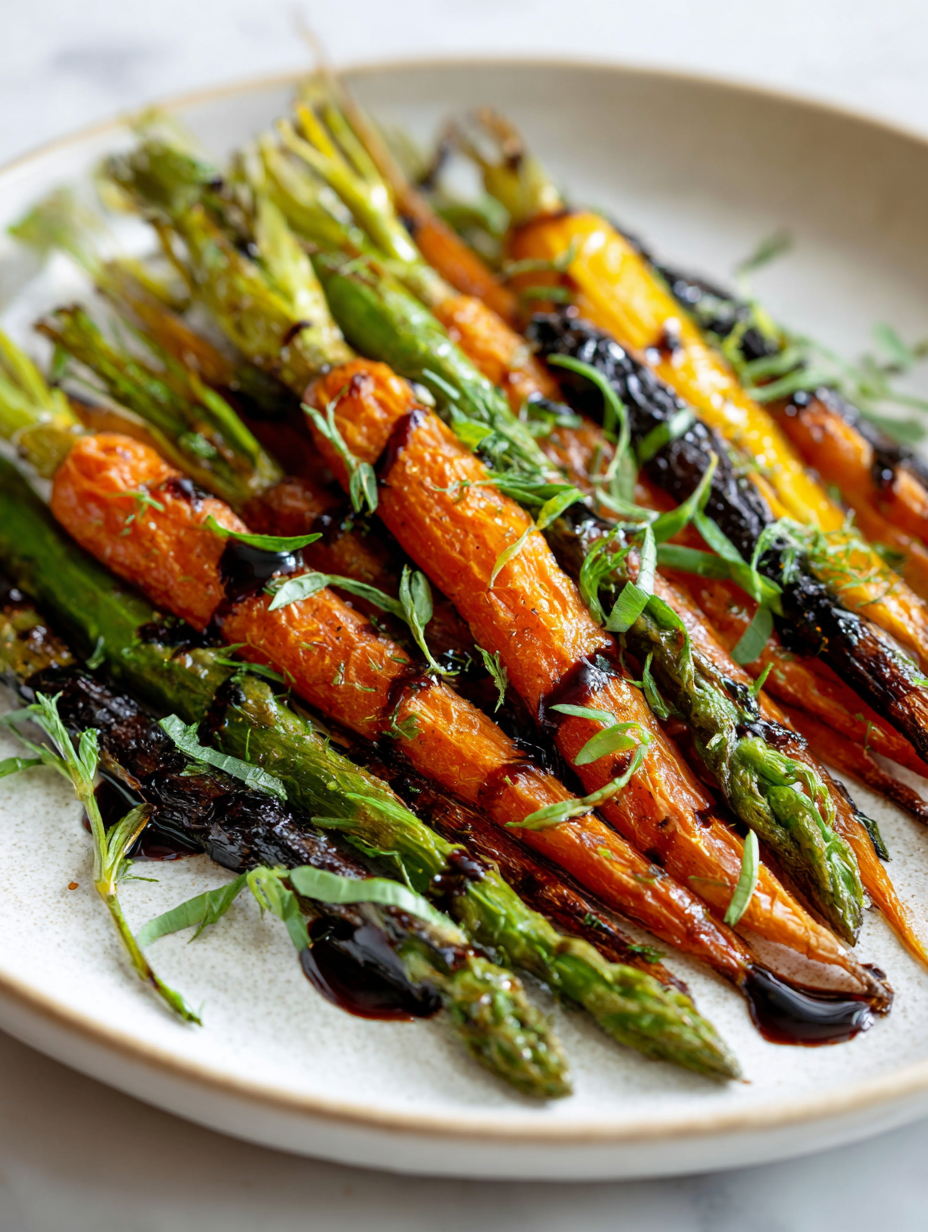
Roasted Carrots and Asparagus
Ingredients
Equipment
Method
- Preheat your oven to 220°C (430°F). Line a baking sheet with parchment paper or a silicone mat for easy cleanup.
- Peel the carrots into thick, even sticks about 1/2 inch wide. Trim the woody ends off the asparagus, keeping the spears whole.
- In a large bowl, toss the carrots with 2 tablespoons of olive oil, a pinch of salt, and the honey or maple syrup if using. Spread them out on one side of the prepared baking sheet.
- In the same bowl, toss the asparagus with 1 tablespoon of olive oil, a pinch of salt, and a bit of lemon zest or juice. Place the asparagus on the other side of the baking sheet, making sure they aren’t overcrowded.
- Slide the baking sheet into the oven and roast for 20-25 minutes, flipping the vegetables halfway through. The carrots should become golden and tender, with caramelized edges, while the asparagus develops slight charring and remains vibrant green.
- Check for doneness: the carrots should be deeply caramelized and easily pierced with a fork, and the asparagus should have a slight wobble but be tender and lightly charred.
- Remove the vegetables from the oven and let them rest for 2 minutes. Drizzle with a little more lemon juice or olive oil, if desired, and sprinkle with herbs or toppings like feta or nuts for added texture.
- Serve the roasted carrots and asparagus warm or at room temperature, enjoying their tender, caramelized, and smoky flavors—simple yet satisfying.
Pro Tips for Perfect Roasting
- Use high heat—220°C (430°F)—for even caramelization and charring.
- Toss vegetables with oil and seasonings thoroughly—this ensures even roasting and flavor.
- Flip halfway—this promotes uniform browning and prevents burning on one side.
- Watch for color—carrots should be golden and tender, asparagus slightly charred and vibrant.
- Rest briefly after roasting—this helps flavors settle and prevents sogginess.
- Use a sharp knife—properly cut vegetables roast more evenly and quickly.
- Adjust times based on thickness—thicker carrots may need a minute or two longer.
Common mistakes and how to fix them
- FORGOT to check oven temperature → Use an oven thermometer for accuracy.
- DUMPED too much oil → Use sparingly; excess causes soggy vegetables.
- OVER-TORCHED carrots → Reduce roasting time or lower heat slightly.
- MISSED flipping veggies halfway → Flip to ensure even caramelization and charring.
Quick fixes and pantry swaps
- If vegetables burn quickly, lower oven temperature and extend roasting time.
- When carrots are soggy, remove from oven and spread out to cool on paper towels.
- Splash a bit of lemon juice if asparagus turns bitter or dull in color.
- Patch over undercooked veggies with a quick blast under the broiler, 2-3 minutes.
- Shield delicate asparagus tips with foil if they start to over-brown.
Prep, store, and reheat tips
- Prepare the vegetables: peel and trim carrots and asparagus up to a day in advance, storing them in an airtight container in the fridge. They stay fresh and crisp for about 24 hours.
- You can toss the carrots in oil, honey, and seasonings ahead of time. Keep covered in the fridge for up to 24 hours—flavors may deepen slightly overnight.
- Roasted vegetables are best eaten fresh, but leftovers can last 2-3 days in the fridge. Reheat in the oven at 180°C (350°F) until warmed through, about 10 minutes, until they shimmer and regain some caramelized appeal.
- Reheating may soften the vegetables; a quick broil for a couple of minutes can help refresh the crispy, smoky edges. Keep a close eye to prevent overdone or burnt spots.
- Avoid freezing roasted vegetables as they tend to become mushy upon thawing. If you must freeze, do so within 24 hours and reheat with care to avoid sogginess.
Common questions about roasted carrots and asparagus
1. How do I pick the best vegetables for roasting?
Use fresh, firm carrots and bright green asparagus for the best flavor and texture. Avoid limp or discolored vegetables.
2. Should I peel the carrots or trim the asparagus beforehand?
Peel the carrots if they’re thick or have rough skin. Trim the woody ends of the asparagus for tenderness.
3. What oven temperature is best for roasting these vegetables?
Roast at 220°C (430°F) until carrots are caramelized and tender, and asparagus has slight charring, about 20-25 minutes.
4. Do I need to flip the vegetables during roasting?
Flip the vegetables halfway through to promote even caramelization and prevent burning on one side.
5. Can I substitute the olive oil with another oil?
Use a high-quality olive oil for richer flavor and better caramelization. Neutral oils work if you prefer a subtler taste.
6. How can I enhance the flavor after roasting?
Add lemon zest or juice after roasting for brightness. You can also sprinkle herbs or nuts for added flavor and texture.
7. How do I know when the vegetables are properly roasted?
Overcooking causes sogginess and loss of color. Check for tender yet crisp vegetables; they should be slightly caramelized and vibrant.
8. How should I store and reheat leftovers?
Store leftovers in an airtight container in the fridge for up to 3 days. Reheat in a hot oven or skillet for best results.
9. What if my vegetables over-brown or burn?
If vegetables burn or char too much, lower the oven temperature and extend roasting time. Cover with foil if needed.
10. Any tips for prepping vegetables evenly?
Use a sharp knife to cut vegetables evenly, ensuring uniform roasting and avoiding undercooked or overcooked spots.
This dish is a reminder that simple ingredients, treated honestly, can create something unexpectedly vibrant. The caramelized carrots paired with smoky asparagus offer a taste of seasonality and rustic charm that feels just right for now. It’s a small act of comfort that’s easy to put together and hard to forget.
Whenever I make this, I think about how vegetables can surprise us with their depth. It’s not just about eating well, but about appreciating the quiet moments of flavor that come from a straightforward roast. Sometimes, that’s all you need to mark the day.

Hi, I’m Isabella Cury, the creator behind Elevating Simple. Food has always been my passion, but it’s not just about creating meals—it’s about taking everyday ingredients and transforming them into something extraordinary.
My journey in the culinary world has been a blend of education, dedication, and a deep love for sharing food with others. Through this blog, I aim to inspire people to find joy in simple, flavorful cooking.


